Best Turquoise Coves Near Valencia for a Day Trip in Summer
The best turquoise coves near Valencia for a summer day trip — from city beaches to hidden calas on the Costa Blanca. Real distances, parking tips, paella spots.
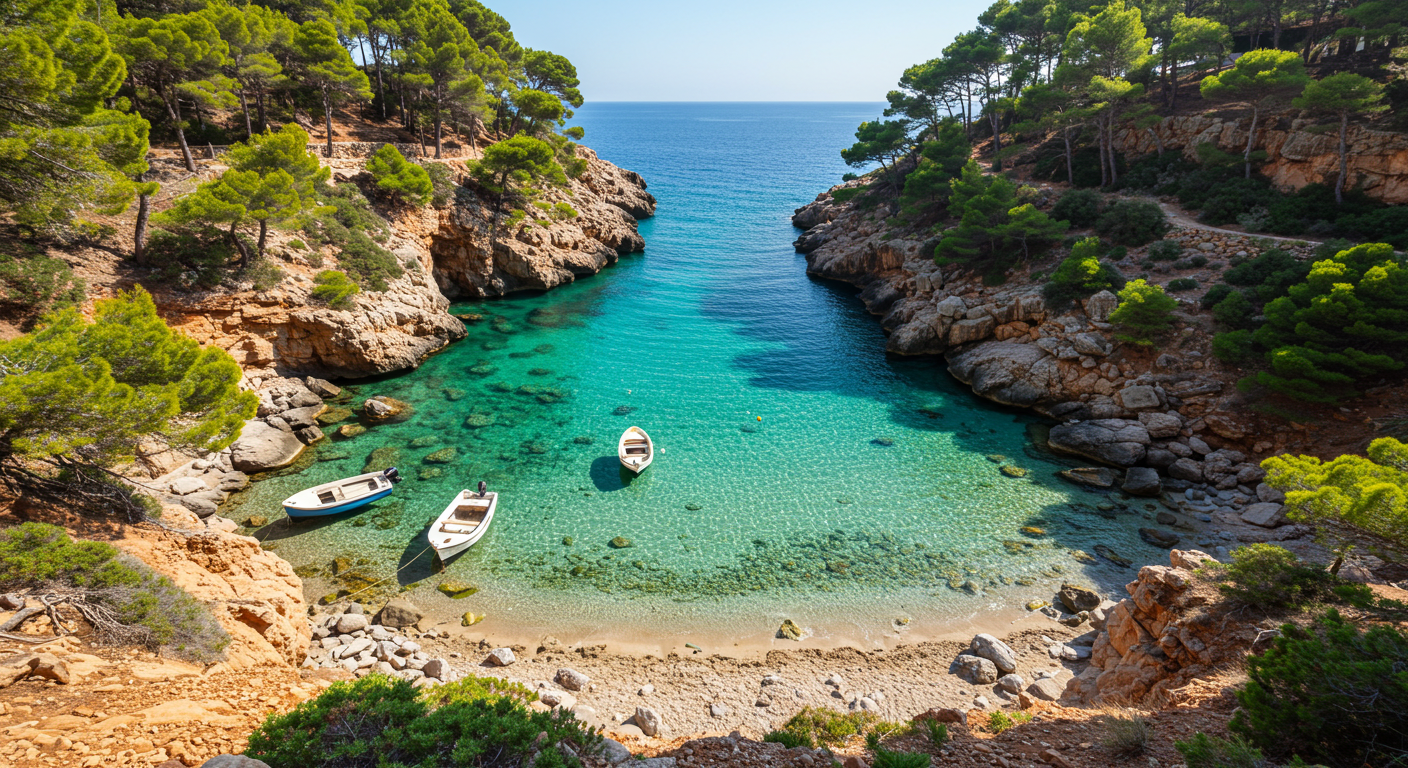
The sea at Granadella goes a colour that makes you stop mid-sentence. Not blue, not green — something between the two that looks implausible from the clifftop car park. It's about 120 kilometres south of Valencia city and it is, without question, one of the finest coves on the entire Spanish Mediterranean coast. Yet most people spending a summer week in Valencia never get there. They stay on the Malvarrosa, which is fine, or they take the tram to El Saler, which is better. But the best turquoise coves near Valencia for a summer day trip require a car, a bit of planning, and a willingness to leave before nine in the morning.
Here's the short answer if you're researching this before you arrive: the closest genuinely turquoise water to Valencia city is around Xàbia (Jávea) and the Montgó headland, roughly 100 km south — about 90 minutes by car. Granadella, Portitxol and Cala del Moraig are the standouts. You can do any of them as a long day trip from Valencia, but you'll want an early start in July and August, because the car parks fill completely by 10am and there is no realistic public transport alternative for most of these spots.
What the City Beaches Actually Offer
Before heading south, it's worth being honest about Valencia's own coastline. The city beaches — Malvarrosa, Cabanyal, Patacona — are urban beaches. Long, flat, sandy, with proper facilities, plenty of chiringuitos, and the particular pleasure of being able to walk off the sand and into a bar without anyone raising an eyebrow. The water is clean enough (Blue Flag certified in recent years), but it's not the Aegean. It's a working Mediterranean coast with modest wave action and a slight greenish murk in August when the sea warms up. Go for the atmosphere, not the colour of the water.
Lunch on the Malvarrosa strip is a rite of passage. The paella restaurants here — Casa Carmela on Calle Isabel de Villena, La Pepica a little further along — have been feeding Valencians on proper rice dishes since the early twentieth century. Casa Carmela still cooks over orange-wood fire. Expect to pay around €18–22 per person for the full sit-down paella valenciana at lunch, plus wine. Avoid the places with photographs of the food on laminated menus. Always.
The 90-Minute Rule: Why You Need to Go South
The Costa Blanca proper begins around Gandia, about 65 km south of Valencia on the AP-7. Gandia itself is a perfectly serviceable resort town — big sandy beach, lots of Spanish families, a decent market — but the water still doesn't have that startling clarity you're after. For that, you need to get past Dénia and around the Montgó massif, where the coast suddenly becomes rocky, the coves get smaller, and the water turns that ridiculous shade of turquoise.
The drive from Valencia to Xàbia (Jávea) takes around 90 minutes on a clear morning. In July, leave by 8am. In August, 7:30am is not an overreaction.
Granadella: The One Worth the Effort
Cala Granadella is the cove people mean when they say the Costa Blanca has some of the best swimming in Spain. It's a small pebble-and-rock beach enclosed by pine-covered cliffs, with water that goes from pale turquoise in the shallows to deep ink-blue twenty metres out. There's a restaurant at the back of the beach — simple grilled fish, cold beer, no pretensions — and a small car park at the top of a steep, winding road that holds perhaps 80 cars. By 10am in August it's full. There's a paid shuttle bus from Xàbia town in summer (check the local Xàbia council website for the current timetable and price — it changes each season, but was around €3–4 return as of 2025).
Bring water shoes. The entry is rocky. Snorkelling here is excellent — sea grass, rockfish, the occasional octopus.
Portitxol: Quieter, Wilder
A few kilometres north of Granadella, Cala Portitxol requires a walk of about 20–25 minutes down a rough track from a small roadside parking area. That walk is enough to keep the numbers manageable. The cove itself is tiny — maybe 30 metres of pebble — but the water is extraordinary, and on a weekday in early July you might have it almost to yourself. No facilities whatsoever. Bring everything you need.
Cala del Moraig: The One with the Cave
This is technically in Benitatxell, just south of Xàbia, and it has a feature that makes it genuinely memorable: a sea cave at the far right end of the beach that you can swim into. The water inside glows an eerie green. There's also a popular dive spot off the rocks. The beach is larger than Granadella, more pebble than sand, and has a restaurant and toilets. Car parking is limited but slightly less brutal than Granadella — arrive by 9am in peak season. Free entry.
Paella: What to Eat and Where the Arguments Start
Valencians are serious about rice to the point of being occasionally exhausting about it. The authentic paella valenciana contains chicken, rabbit, ferradura (flat green beans), garrofó (a local white bean), tomato, saffron, and — controversially — sometimes snails. No seafood. Not in the original. The seafood version is called arrós a banda or arrós amb marisc and is equally excellent but is a different dish entirely.
For the best paella of a summer trip, the formula is simple: eat it at lunch (never dinner — Valencians don't cook rice at night), eat it in a restaurant that specialises in rice dishes rather than a general menu, and eat it on the weekend when the kitchen has had a reason to prep properly.
Outside the city, the rice restaurants around El Palmar — a small village in the Albufera natural park, 15 km south of Valencia — are worth the short detour. The Albufera lagoon is where Valencian rice cultivation happens; the restaurants here are unpretentious and the arrós al forn (oven-baked rice) is exceptional. Restaurante Mateu and Raco de l'Olla are both reliable. Lunch for two with wine and a rice dish to share runs €35–50 depending on what you order.
Practical Notes for the Day Trip
Car hire from Valencia is the only realistic option for reaching the best coves. Europcar, Sixt and the local outfit Centauro all operate from Valencia airport; Centauro is usually the cheapest for last-minute bookings but read the excess waiver terms carefully. As of 2026, a basic day hire runs roughly €30–60 depending on season and how far ahead you book.
The AP-7 toll south towards Alicante costs around €8–10 from Valencia to the Xàbia exit, depending on which junctions you use. It's worth it — the free N-332 coastal road is scenic but adds 40 minutes and gets busy.
Petrol stations are sparse once you're in the Montgó area. Fill up in Dénia.
Parking at Granadella and Moraig: free but extremely limited. The shuttle bus from Xàbia is genuinely the better option in August. The Xàbia council runs it from the town centre and from Arenal beach.
Mobile signal is patchy on some of the cliff roads. Download offline maps (Maps.me or Google Maps offline) before you leave.
If You're Thinking of Staying Longer
The Xàbia–Dénia–Calp stretch of the Costa Blanca has become genuinely popular with remote workers and relocating families over the last few years. Rental prices are lower than Alicante city or the Costa del Sol, the pace is slower, and the quality of daily life — markets, local restaurants, year-round mild weather — is hard to argue with. If you're considering a longer stay or relocation, you'll need to work through the usual paperwork: residency registration, banking, and potentially a visa. Renting in Spain without a Spanish payslip is one of the first practical hurdles people hit, and it's more navigable than it sounds. If you're arriving on a digital nomad visa, the income thresholds and what they actually mean in practice are worth understanding before you commit.
For anyone planning to work freelance from the Costa Blanca, registering as autónomo is the standard route — whether you need a gestor to do it is a reasonable question, and the honest answer is: probably yes, at least the first time.
The Honest Summary
Valencia city beaches are for atmosphere and paella. The turquoise water is an hour and a half south, around Xàbia and the Montgó headland. Go early, take a car, bring your own food and water if you're heading to the smaller calas, and don't expect to find a parking space after 10am in August. Granadella is the one that will make you reconsider your life choices in the best possible way.
If you only have one day, skip the city beach entirely and drive straight to Moraig for the cave swim, then stop at El Palmar on the way back for rice. That's a near-perfect summer day on this coast.
Frequently asked questions
- How far are the turquoise coves from Valencia city?
- The closest genuinely turquoise-water coves — around Xàbia and the Montgó headland — are about 100–120 km south of Valencia city, which translates to roughly 90 minutes by car on the AP-7 toll motorway. There is no practical public transport option for most of the best coves.
- Can you visit Cala Granadella without a car?
- In summer, the Xàbia council runs a paid shuttle bus to Granadella from Xàbia town centre and Arenal beach (around €3–4 return as of recent seasons). Outside of that service — which typically runs July and August only — you need a car. Check the Ajuntament de Xàbia website for the current timetable before your trip.
- What's the difference between paella valenciana and seafood paella?
- Paella valenciana is the original: chicken, rabbit, flat green beans, white beans, tomato, saffron. No seafood. The seafood version — arrós amb marisc or arrós a banda — is a separate dish entirely. Both are excellent; just don't order seafood paella and call it 'proper paella' in front of a Valencian.
- What time should you arrive at Cala Granadella in August?
- The car park at Granadella holds around 80 vehicles and fills completely by 10am in July and August. Aim to arrive before 9am if driving, or take the council shuttle bus from Xàbia town, which is the more reliable option during peak season.
- Is the sea water clear at Valencia's city beaches?
- Valencia's Malvarrosa and Patacona beaches are clean (Blue Flag certified in recent years) but the water is typically murky green-grey in peak summer — not the crystal turquoise of the rocky coves further south. Go to the city beaches for the scene and the paella; go south for the water clarity.
- Are there any coves near Valencia accessible by train or tram?
- El Saler, reachable by bus from Valencia city, has a decent beach backed by pine forest with cleaner water than the urban beaches. The water isn't turquoise, but it's a significant step up in atmosphere. For genuinely clear water, you need to drive south — there's no train line serving the rocky cove coastline around Xàbia.
- What should I bring to a small cala like Portitxol?
- Everything. Small calas like Portitxol have no facilities at all — no toilets, no bar, no rental chairs. Bring water, food, sun cream, a towel, and water shoes (the entry is rocky). A small dry bag for your phone is worth it if you plan to snorkel.