Where to Eat Real Paella in Valencia: Local Rules Explained
Where to eat real paella in Valencia, the restaurants locals actually go to, the strict rules about ingredients, and the tourist traps to skip.
Where to Eat Real Paella in Valencia (And the Rules Locals Will Lecture You On)
If you want to eat real paella in Valencia, go on a Sunday, go at lunch, and do not — under any circumstances — order it with chorizo. That's the short answer. The longer answer involves a handful of specific restaurants, a set of unwritten rules that Valencians treat as though they were constitutional law, and a fairly brutal assessment of where the tourist versions end and the actual dish begins.
Valencia is the home of paella. Not a debatable point. And yet the city is full of bad paella — overpriced, overcooked, served in a pan the size of a hubcap to four people sharing a set menu at a beachfront restaurant with laminated photos on the menu. The good stuff exists, but you have to know where to look.
What Real Valencian Paella Actually Contains
Before the restaurants, the rules. Valencians are evangelical about this, and if you live here long enough, you will be lectured at a family lunch, at a bar, possibly by a stranger who overheard you say the word "seafood."
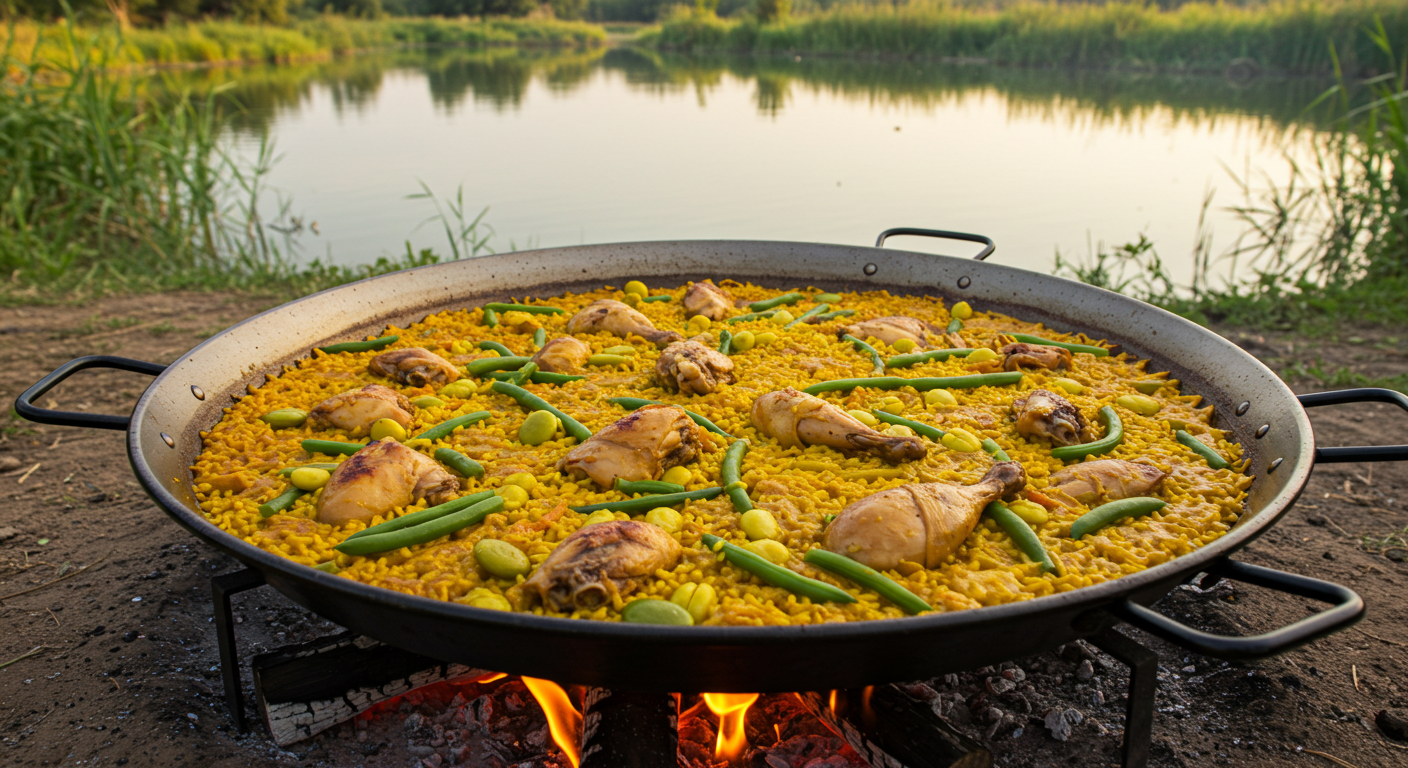
Authentic paella valenciana contains: chicken, rabbit, bajoqueta (flat green beans), garrofó (a large white butter bean local to the Valencia region), tomato, olive oil, saffron, water, and rice — specifically a short-grain variety like Bomba or Senia grown in the Albufera marshes just south of the city. Some recipes add rosemary, a sprig of which gets laid across the pan towards the end. Duck sometimes appears in winter versions, particularly around the Albufera itself.
What it does not contain: prawns, mussels, squid, chorizo, onion, peppers, or peas. Those are different dishes — paella de marisco, paella mixta, or just a rice dish — and Valencians will tell you this with the patience of someone explaining gravity. The socarrat, the slightly caramelised crust of rice at the bottom of the pan, is non-negotiable. If your paella arrives without it, something went wrong.
One more rule: it is a midday dish. Lunch, Sunday specifically, ideally cooked outdoors over orange wood or vine cuttings. Ordering it for dinner is technically allowed but raises eyebrows. Ordering it from a restaurant that serves it at 8pm every night of the week is a red flag.
The Restaurants Worth Going To
La Pepica (Paseo de Neptuno)
Yes, it's famous. Yes, Hemingway ate here. And yes, the prices reflect all of that. But La Pepica on the Malvarrosa beachfront has been making paella since 1898 and the paella valenciana here is genuinely the real thing. Go for Sunday lunch, book ahead (essential in summer), and budget around €25–30 per person for the rice plus a drink. The beachfront setting is lovely; the tourist density is high. Don't let that put you off the food itself.
El Palmar
This is where locals actually go for the real pilgrimage. El Palmar is a small village inside the Albufera Natural Park, about 15km south of the city centre — you'll need a car or a taxi, or you can take the bus to El Saler and a taxi from there. The village has a string of restaurants along the main road, almost all of them specialising in paella valenciana and all i pebre (eel with garlic and paprika, the other Albufera classic).
Restaurant Mateu and Casa dels Patos are the names you'll hear most from Valencians who grew up making this trip with their families. Both are straightforward, unfussy places — paper tablecloths, house wine by the jug, long waits for a table on Sundays because everyone else has had the same idea. Prices are reasonable: you're looking at €15–20 per person for the full rice course, depending on what else you order. The paella here is cooked over wood fire in the traditional way. It tastes different. The socarrat is reliable.
Restaurante Levante (Benissanó)
This one requires more of a commitment — Benissanó is about 25km northwest of Valencia, near Llíria. But Restaurante Levante is something of a pilgrimage for Spanish food people, a Michelin-starred restaurant that takes traditional Valencian rice as its central project. The chef Raúl Aleixandre has been refining his paella valenciana for decades. It's not a cheap lunch — expect €50–70 per person — but if you want to understand what the dish can be at its most precise, this is it.
Casa Roberto (Calle del Músico Magenti, Valencia city)
For something in the city itself, away from the beach restaurants, Casa Roberto in the Campanar neighbourhood is where a lot of working Valencians eat on a weekday. It's not glamorous. The room is functional, the service is matter-of-fact, and the paella valenciana is correct in all the ways that matter. Lunch menu with rice runs to about €18–22 per person. Book ahead; it fills up.
What to Skip
The restaurants along the Playa de la Malvarrosa and Playa del Cabanyal are a mixed bag. For every La Pepica there are ten places serving a wet, yellow rice with frozen prawns under the label "paella." If the restaurant has a tout outside, photos on the menu, and a set menu for €12 that includes paella, wine, and bread, the paella will not be worth eating. Walk past.
Also skip any restaurant in the old town — the Barrio del Carmen specifically — that serves paella to order in 15 minutes. Real paella takes 30–45 minutes minimum. If it arrives quickly, it was made in advance and reheated, which does unpleasant things to the rice.
The Rice, the Lake, and Why It Matters
The Albufera lake is the reason paella exists in its current form. The wetlands around it have been cultivated for rice since the Moorish period, and the local varieties — Senia, Bomba, Albufera — absorb stock differently from Italian risotto rice or long-grain varieties. They drink the broth while staying distinct, which is why the ratio of rice to liquid matters so much and why restaurants that make it properly need time to do it.
The Albufera is also worth visiting in its own right. A boat trip on the lake at dusk, followed by dinner at one of the El Palmar restaurants, is one of the genuinely good days you can have in this part of Spain. Nothing flashy about it. Just water, rice, and a bottle of local wine.
Practical Notes for Visiting Valencia
If you're planning to relocate to Valencia rather than just visit — it's a city with a significant and growing expat community — the food culture is one of the genuine draws. The city takes eating seriously in a low-key way: the Mercado Central is one of the best covered markets in Spain, the horchata from Horchatería Santa Catalina on Plaza de la Reina is the real thing (cold, sweet, made from chufa tiger nuts, nothing like the bottled version), and the Sunday paella lunch is a genuine social institution rather than a performance.
For the practicalities of actually moving here, there's a fair amount of bureaucracy involved — getting your NIE sorted can take longer than you'd expect, and finding a rental without a Spanish payslip requires knowing which landlords will accept foreign income documentation. If you're planning to work remotely from Valencia, the digital nomad visa income requirements are worth understanding before you commit. And if you're thinking about going freelance here, the question of whether you need a gestor to register as autónomo comes up almost immediately.
But before any of that: find a Sunday, get yourself to El Palmar, order the paella valenciana and a jug of whatever the house pours, and wait 40 minutes. That's the correct introduction to living in Valencia.
One More Thing About the Rules
Locals will disagree with each other about the rules, too. There are family arguments across the Valencian Community about whether onion is acceptable (it's not, officially), whether duck counts as traditional (yes, in winter), and whether paella cooked over gas instead of wood is a betrayal or just practical. The debate is part of the culture. Accept that you will be given contradictory advice, eat as much as you can, and form your own opinion.
The one thing everyone agrees on: it is a lunch dish. Don't order it for dinner unless you're at a very casual place and you've accepted the compromise.
Frequently asked questions
- Where do locals in Valencia actually eat paella?
- Most Valencians who want a proper paella on a Sunday drive out to El Palmar, the village inside the Albufera Natural Park about 15km south of the city. Restaurants like Mateu and Casa dels Patos serve paella valenciana cooked over wood fire. In the city itself, neighbourhood restaurants like Casa Roberto in Campanar are where working locals eat during the week.
- What is in a real Valencian paella?
- Authentic paella valenciana contains chicken, rabbit, flat green beans (bajoqueta), large white butter beans (garrofó), tomato, olive oil, saffron, water, and short-grain rice from the Albufera region. It does not contain seafood, chorizo, peppers, onion, or peas. The socarrat — the caramelised crust of rice at the bottom of the pan — is essential.
- Is seafood paella authentic?
- Not as 'paella valenciana' — that's a different dish. Paella de marisco (seafood rice) and paella mixta (mixed) are legitimate rice dishes but are not what Valencians consider the original. Ordering seafood paella in Valencia is fine; just don't call it authentic paella valenciana or a local will correct you.
- How much does paella cost in Valencia at a good restaurant?
- As of 2026, expect to pay €15–20 per person at a traditional restaurant in El Palmar, around €25–30 at somewhere like La Pepica on the beachfront, and €18–22 at a city neighbourhood restaurant like Casa Roberto. Michelin-level places like Restaurante Levante in Benissanó run to €50–70 per person.
- What time should you eat paella in Valencia?
- Lunch, ideally Sunday lunch. Paella is traditionally a midday dish — Valencians typically eat it between 2pm and 4pm. Restaurants that serve it at dinner every night are usually catering to tourists rather than following local custom. If a restaurant produces it in under 20 minutes at any hour, it was made earlier and reheated.
- Is La Pepica worth it or a tourist trap?
- It's a bit of both. La Pepica on Paseo de Neptuno is genuinely old, genuinely famous, and makes a legitimate paella valenciana. The prices are high by Valencia standards and the tourist crowd is real. But the food is not fake — it's one of the few beachfront restaurants where the paella is worth ordering. Book ahead for Sunday lunch and manage your expectations about the price.
- Can you visit El Palmar without a car?
- It's possible but awkward. The bus from Valencia goes to El Saler, from where you'd need a taxi to El Palmar — the whole journey takes 45–60 minutes each way. Most people either drive or book a taxi for the round trip. On a Sunday the village gets busy, so going mid-morning and planning a long lunch makes more sense than trying to rush it.