How to Survive — and Actually Enjoy — a Spanish Summer Heatwave
Timing, siestas, shaded plazas, cool-water escapes and local wisdom: your practical guide to thriving during a Spanish summer heatwave in 2026.
Spain in summer is one of the great pleasures of European life — long evenings, cold beer, the smell of jasmine over whitewashed walls. It is also, increasingly, genuinely hot. As of 2026, Spain has recorded temperatures above 40 °C in inland Andalusia, Extremadura and the Meseta for stretches of ten days or more during July and August. Seville regularly hits 42–44 °C in peak heatwaves; Madrid has seen 41 °C at street level. Even coastal cities that once offered relief — Valencia, Barcelona, Málaga — now regularly breach 35 °C in July.
None of this means you should stay home. It means you need a different relationship with the clock, the shade and the water. Spaniards have been navigating extreme summer heat for centuries, and the architecture, the meal times, the whole social rhythm of the country is quietly engineered to deal with it. The trick is learning to read the code.
Understanding the Heat: Where, When and How Bad
The Hottest Regions
The interior is always hotter than the coast. Seville, Córdoba and Jaén in Andalusia are Spain's furnace — regularly the hottest cities in continental Europe during July and August. The Meseta (the high plateau that covers much of Castile) bakes at 38–40 °C but cools dramatically at night thanks to altitude, which makes cities like Salamanca and Ávila more bearable than their daytime figures suggest.
Madrid sits at 667 metres above sea level, which gives it the same overnight relief as the Meseta — temperatures can drop 12–15 °C between 3 pm and 3 am. The coast is muggier: Barcelona's humidity makes 34 °C feel considerably worse than Seville's dry 40 °C. Valencia sits somewhere in between — hot, occasionally humid, but with reliable sea breezes.
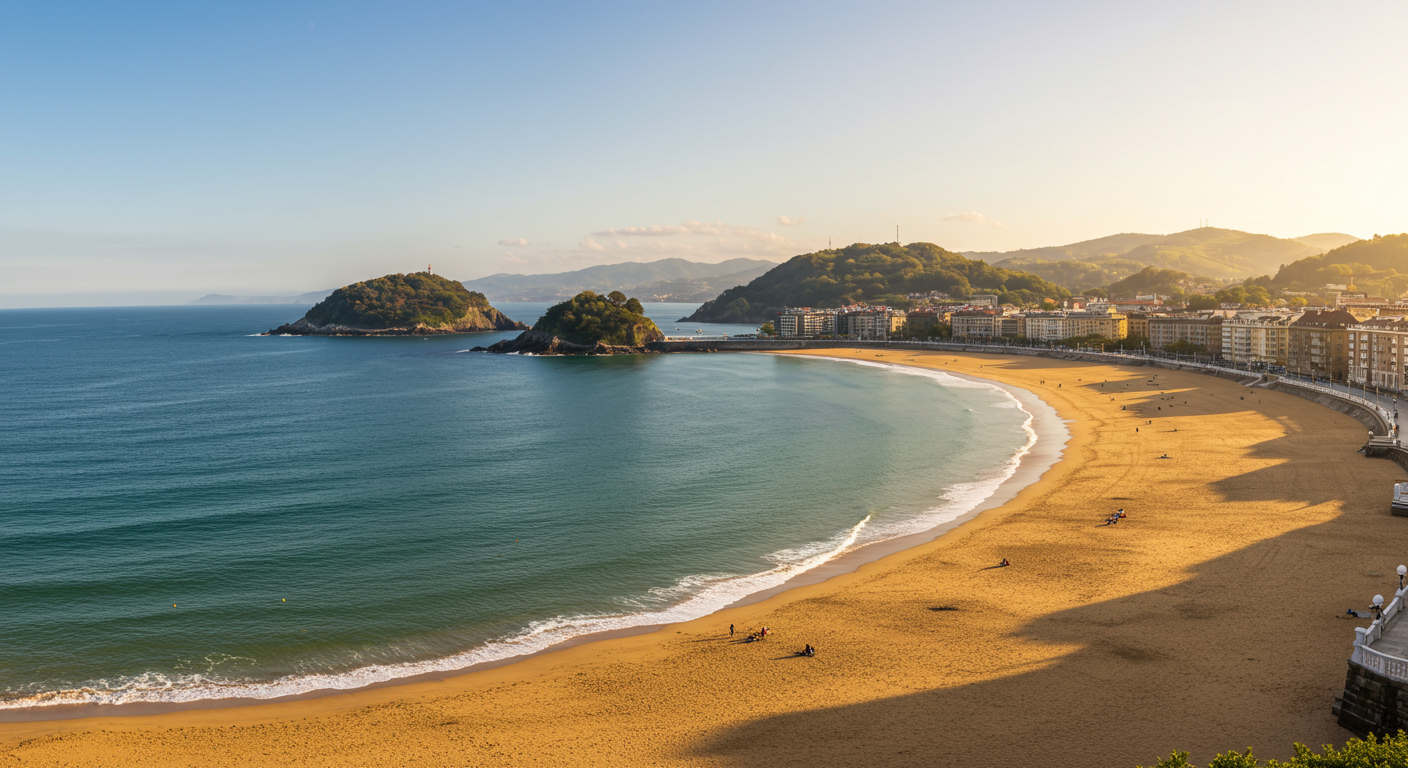
The far north is a different country entirely. The Basque Country, Cantabria and Galicia have a genuinely Atlantic climate: greener, cooler, with summer highs rarely above 28 °C. If you want summer in Spain without the heat, that is where to go — and the Beaches of the Basque Country offer some of the most dramatic coastline on the peninsula without the scorching temperatures of the south.
Peak Heat Hours
The danger window is roughly 12 noon to 6 pm. Within that window, 2–5 pm is when the sun is at its most punishing and the pavement has had hours to absorb and radiate heat. This is not the time to walk a city, hike a trail or sit on an unshaded beach. The Spanish know this. The streets empty. The shops close. The country, in the most pragmatic way imaginable, simply stops.
The Siesta Is Not a Myth — It Is Infrastructure
The siesta is often misunderstood by visitors as laziness or an endearing quirk. It is neither. It is a rational, time-tested response to a climate that makes outdoor activity genuinely dangerous for several hours each day. In smaller towns and villages across Andalusia, Extremadura and Castile, businesses still close between roughly 2 pm and 5 pm (sometimes 6 pm). Restaurants that serve lunch do so from 2 pm to 4 pm, then reopen for dinner at 9 pm or later.
For travellers and residents alike, the practical upshot is this: plan your day in two acts. Use the morning — from 8 am to 12 noon — for walking, sightseeing, errands and outdoor activity. Then retreat. Find an air-conditioned café, a shaded courtyard, a cool museum, or your own accommodation. Sleep if you can. Emerge again around 6 pm when the temperature begins to ease, and enjoy the long, golden evening that is Spain's great gift to summer visitors.
This rhythm, once you surrender to it, is genuinely pleasurable. You stop fighting the climate and start working with it.
Timing Your Trip: The Honest Calendar
July and August: Peak Heat, Peak Everything
These are the months of maximum heat, maximum crowds and maximum prices. Flights and accommodation on the coast cost significantly more in August than in June. Beaches are packed. Queues at major sights — the Alhambra in Granada, the Sagrada Família in Barcelona, the Alcázar in Seville — are long even with pre-booked tickets.
If you are visiting in July or August, lean into the Spanish schedule hard: early mornings, long siestas, late evenings. Book accommodation with air conditioning — not a luxury, a necessity. And consider whether the coast or the mountains suit you better than the inland cities during these weeks.
June: The Sweet Spot
June is, for many seasoned Spain travellers, the best summer month. The sea is warm enough for swimming on the Mediterranean coast (typically 22–24 °C by mid-June), the crowds are lighter, prices are lower and temperatures — while warm — are generally manageable. Seville in June averages around 32 °C; Madrid around 28 °C. You can still walk cities in the afternoon without genuine risk.
June also brings some of the country's best festivals. The Noche de San Juan on 23–24 June sees bonfires lit on beaches from Alicante to A Coruña — one of the most atmospheric nights of the Spanish summer. For a full picture of what is on, see our guide to Spain's Best Summer Festivals.
September: The Underrated Month
September is arguably the most comfortable month for anyone who wants warmth without punishment. The sea is at its warmest — often 26–27 °C on the Costa Blanca and Costa del Sol. Temperatures inland drop to more human levels. Crowds thin noticeably after the first week of September as Spanish school holidays end. Prices fall. The light turns golden and slightly softer.
For beach-focused trips, September on the Costa del Sol or the Balearic Islands is genuinely excellent — warm water, emptier sands, restaurants that are pleased to see you rather than merely processing you.
Where to Cool Off: A Practical Hierarchy
The Sea
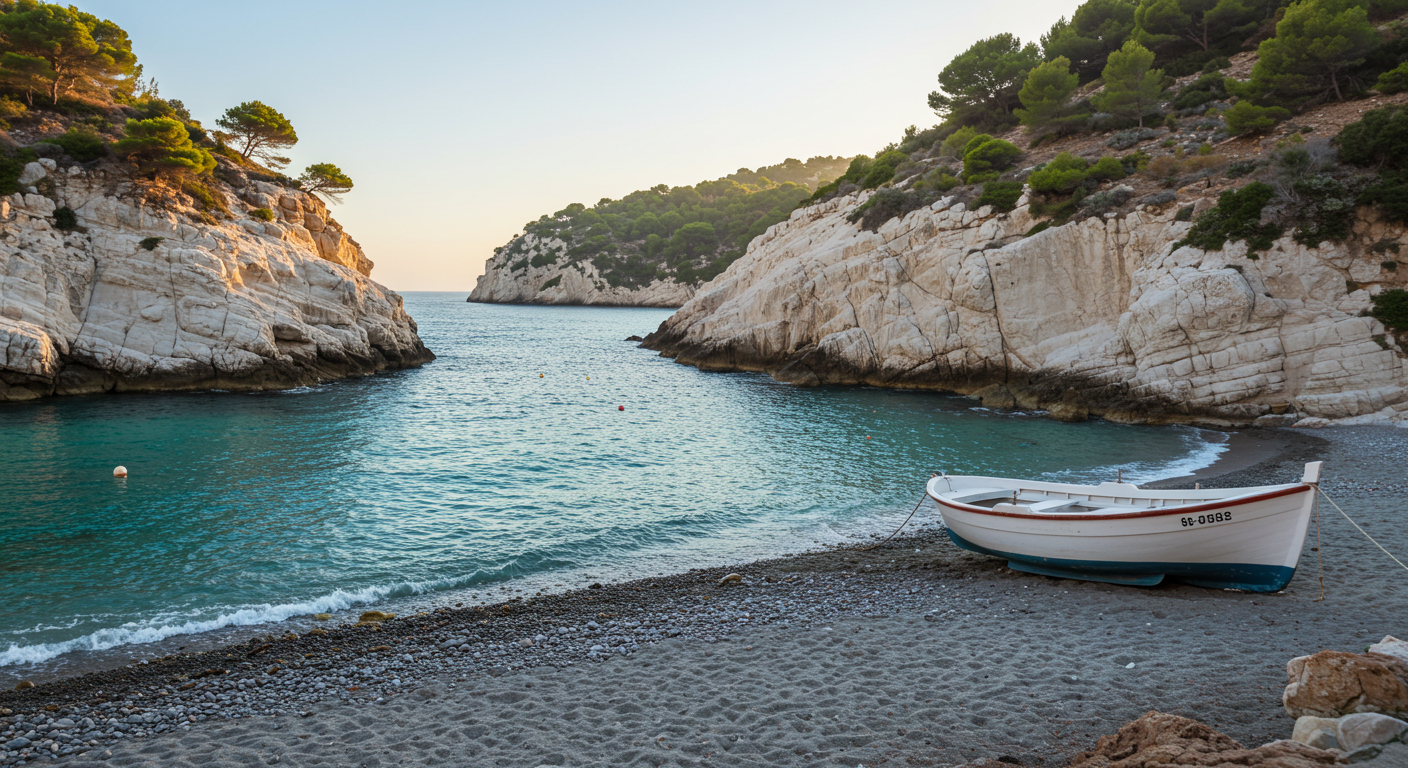
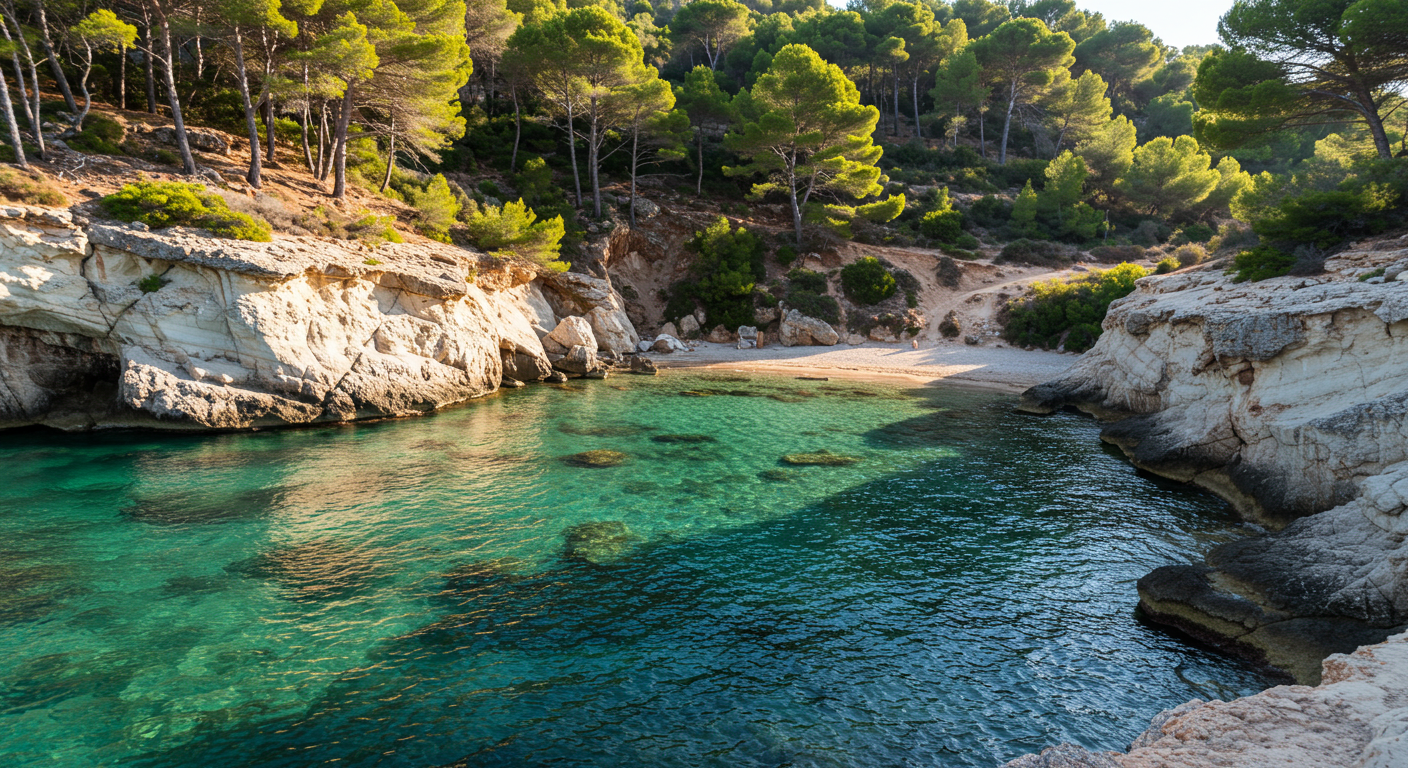
The most obvious escape, and often the best. Spain's coastline is vast and varied — from the wild Atlantic beaches of Galicia to the turquoise coves of the Costa Brava. The Mediterranean is warm, calm and generally swimmable from June through to October. The Atlantic coast is cooler and more dramatic.
For sheer variety of swimming options, the Valencia and Costa Blanca coast offers everything from city beaches with full facilities to remote coves accessible only by boat or a short hike. The Balearic Islands remain the gold standard for clear water and sheltered coves, though prices have risen sharply in recent years. For something more rugged and less crowded, the Costa Brava in northern Catalonia has hidden calas that reward the effort of finding them.
If you want guaranteed warmth year-round with no heatwave risk, the Canary Islands sit in the Atlantic off the coast of Africa and maintain temperatures of 22–26 °C even in January — though in summer they too can see warm spells, the trade winds keep them far more comfortable than mainland Spain.
Rivers, Gorges and Natural Pools
Less obvious but often more magical: Spain's interior is threaded with rivers and dotted with natural swimming holes (piscinas naturales) that offer cold, clear water in the middle of the heat. The Gredos mountains west of Madrid have some of the finest — pools fed by snowmelt streams, surrounded by granite boulders, at altitudes above 1,000 metres. Entrance is usually free or costs €2–5 as of 2026.
Extremadura's Jerte Valley has river pools beneath cherry trees. The gorges of the Río Tajo near Monfragüe are strikingly beautiful. In Andalusia, the Río Borosa walk in the Sierra de Cazorla leads to a turquoise river that is genuinely cold even in August. These places are known to locals and increasingly to savvy travellers — arrive early (before 10 am) in high season to secure a spot.
Shaded City Spaces
Spanish cities are better designed for heat than they are often given credit for. The key is knowing where to look.
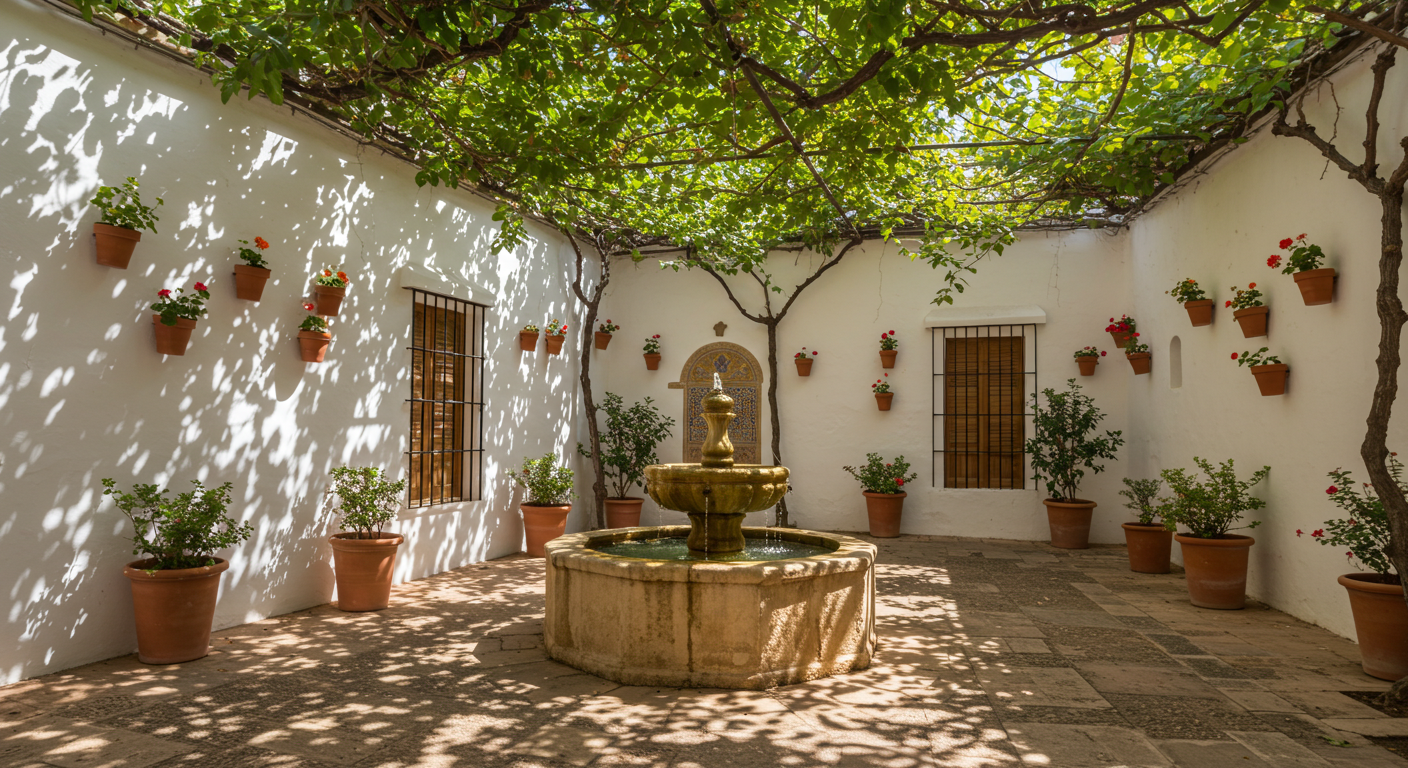
Patios and courtyards: Andalusia's patio culture — celebrated in Córdoba's famous Patio Festival in May — is fundamentally a heat-management system. Deep courtyards with central fountains create microclimates several degrees cooler than the street. Many are open to visitors, and the tourist offices in Córdoba, Seville and Granada maintain maps of accessible patios.
Churches and cathedrals: Thick stone walls, high ceilings and minimal windows make Spanish churches naturally cool. The Mezquita-Catedral in Córdoba, the Cathedral of Seville, the Gothic quarter churches of Barcelona — all are legitimately refreshing on a hot afternoon, quite apart from their obvious cultural interest.
Museums: Spain's major museums are well air-conditioned and, frankly, an excellent use of the 1–5 pm dead zone. The Prado and Reina Sofía in Madrid, the Picasso Museum and MNAC in Barcelona, the Museo de Bellas Artes in Seville — plan your museum visits for the hottest part of the day.
Underground spaces: The Madrid Metro is air-conditioned and extensive. Several cities have underground shopping centres (El Corte Inglés, for instance, is reliably cold) that serve as genuine refuges.
Higher Altitude
For every 1,000 metres of altitude, temperatures drop roughly 6 °C. This makes Spain's mountain ranges — the Sierra Nevada, the Pyrenees, the Picos de Europa, the Sierra de Gredos — dramatically cooler than the surrounding lowlands. Granada, at 738 metres, is noticeably cooler than Seville despite being in the same region. The Sierra Nevada above it has ski stations that, in summer, offer hiking at 2,000–3,000 metres where temperatures rarely exceed 25 °C even in August.
For a deeper look at how to use Granada as a base for both city culture and mountain escape, our slow travel guide to Granada covers the practicalities in detail.
Practical Heat Survival: The Unglamorous Essentials
Hydration
This sounds obvious until you are on your third museum and realise you have drunk nothing since breakfast. Carry a refillable water bottle — many Spanish cities now have public drinking fountains (fuentes) marked on Google Maps. Aim for at least 2–3 litres of water per day in high heat. Avoid alcohol before 6 pm if you are spending time outdoors; it accelerates dehydration significantly.
Spanish cafés will give you a glass of tap water (agua del grifo) with any drink order without charge — ask for it.
Clothing
Loose, light-coloured, natural fabrics (linen, cotton) are not a fashion statement — they are functional. A wide-brimmed hat is essential for any time spent outdoors between 10 am and 6 pm. Lightweight, long-sleeved shirts actually protect better than bare arms in direct sun.
Sun Protection
Factor 50 is the baseline for fair-skinned visitors in July and August. Reapply every two hours if you are outdoors. The Spanish sun at 38 °C is not the same as the British sun at 22 °C — it is possible to burn severely in under 30 minutes at midday.
Accommodation
Air conditioning (aire acondicionado) is standard in hotels and most holiday rentals in the south and east of Spain. In rural properties, mountain areas and the north, it is less common — check explicitly before booking. A fan (ventilador) is better than nothing but insufficient in a Seville summer. Ground-floor or basement rooms in old stone buildings are often cooler than upper floors even without air conditioning.
The Reward: Evenings in Summer Spain
Here is the thing nobody tells you clearly enough: Spanish summer evenings are among the finest experiences available to a human being. By 7 pm the temperature has dropped to something pleasant. By 8 pm the streets fill with people who have been sensibly resting all afternoon. By 9 pm you are at a table outdoors, the air is warm rather than hot, there is a glass of something cold in front of you and dinner is still an hour away.
This is not a consolation prize for enduring the afternoon. It is the whole point. The Spanish summer is structured so that the best hours — the golden light of early evening, the long slow dinners, the paseos that go on until midnight — come after the heat has broken. Once you understand that, the siesta stops feeling like lost time and starts feeling like preparation.
The heatwave is real. The discomfort is real. But so is the jasmine, the cold tinto de verano, the plaza that fills with noise and light at 10 pm, and the particular quality of Spanish summer nights that keeps people coming back year after year.
Spain in summer rewards those who adapt. Arrive early, rest at noon, emerge in the evening — and the heat becomes not an obstacle but the backdrop to one of the most pleasurable ways of spending time anywhere in Europe.
Frequently asked questions
- What is the hottest month in Spain?
- July and August are consistently the hottest months across most of Spain. Inland cities like Seville, Córdoba and Madrid regularly see temperatures of 38–44 °C during peak heatwaves. The coast is slightly cooler but can still reach 35 °C. June and September are considerably more comfortable for most visitors.
- Is it safe to visit Spain during a heatwave?
- Yes, with sensible precautions. Avoid being outdoors between noon and 6 pm, drink at least 2–3 litres of water daily, wear sun protection, and stay in air-conditioned accommodation. Vulnerable travellers — the elderly, young children, those with heart or respiratory conditions — should be especially careful and follow Spanish health authority guidance during official heatwave alerts (avisos por calor).
- Which parts of Spain are coolest in summer?
- The north — Galicia, the Basque Country, Cantabria and Asturias — has an Atlantic climate with summer highs rarely above 28 °C. The Canary Islands, despite being further south, are kept cool by trade winds and rarely exceed 30 °C. Mountain areas like the Pyrenees, Sierra Nevada and Sierra de Gredos are also significantly cooler than the lowlands.
- Do shops and restaurants really close in the afternoon in Spain?
- In smaller towns and villages, especially in the south and centre of Spain, many independent shops still close between roughly 2 pm and 5–6 pm. Large supermarkets, shopping centres and tourist-area businesses in cities tend to stay open. Restaurants serving lunch typically do so from 2–4 pm, then reopen for dinner from 9 pm onwards.
- What are natural swimming pools (piscinas naturales) in Spain?
- Piscinas naturales are natural freshwater swimming spots — river pools, gorge pools and mountain streams — found across Spain's interior. They are especially popular in the Sierra de Gredos west of Madrid, Extremadura and parts of Castile. Most are free or charge a small entry fee (typically €2–5 as of 2026). They offer cold, clear water and are a wonderful alternative to crowded coastal beaches in high summer.
- What is the best month to visit Spain for warm weather without extreme heat?
- June and September are widely considered the sweet spots. June offers warm temperatures (averaging 28–32 °C in the south), a swimmable Mediterranean sea, lighter crowds and lower prices than August. September has the warmest sea temperatures of the year (often 26–27 °C on the Costa Blanca), significantly fewer tourists after the first week, and comfortable daytime temperatures in most regions.
- What should I pack for a Spanish summer heatwave?
- Essentials include: factor 50 sunscreen (reapplied every two hours outdoors), a wide-brimmed hat, loose linen or cotton clothing in light colours, a refillable water bottle, and comfortable sandals or breathable shoes. If you wear contact lenses, bring lubricating drops — dry heat can be uncomfortable. A small portable fan is useful for nights when air conditioning is absent or noisy.