Balearic Islands Summer Guide: Beaches, Coves and Calm in Mallorca, Menorca and Ibiza
The best beaches, hidden coves and quieter corners of Mallorca, Menorca and Ibiza for summer 2026 — with practical tips on when to go and where to stay.
Why the Balearics Still Reward Those Who Look Carefully
The Balearic Islands have a reputation problem — not because they're bad, but because the loudest version of them (Magaluf's strip, Ibiza's super-clubs, the cruise ships queuing off Palma's harbour) tends to drown out everything else. The truth is that Mallorca, Menorca and Ibiza contain some of the most beautiful coastline in the Mediterranean, and a good deal of it remains genuinely peaceful, even in July and August, if you know where to go and when to move.
This guide is for people who want the warm turquoise water and the limestone cliffs and the late suppers under pine trees — and who are willing to do a little planning to avoid the parts that feel like a theme park. Whether you're flying in for a fortnight or considering a longer stay (the islands attract a growing number of remote workers and slow travellers; if that's you, it's worth reading about visa options that suit a longer Mediterranean sojourn before you book), the Balearics in summer 2026 still offer something genuinely extraordinary.
Mallorca: Bigger Than You Think, Better Than You Fear
Mallorca is the largest of the Balearics — about 3,640 square kilometres — and its sheer scale means that the package-holiday resorts concentrated around the Bay of Palma and the east coast barely touch the Serra de Tramuntana in the north-west, the quiet agricultural interior, or the wilder southern capes.
The Tramuntana Coast: Coves Worth the Effort
The UNESCO-listed Serra de Tramuntana runs along the north-western spine of the island, dropping steeply to the sea. The road between Andratx and Pollença (the MA-10) is one of the great coastal drives in Spain, but the real rewards are the coves accessible only on foot or by boat.
Cala Deià sits below the village of Deià — a short, steep walk down from the road — and is all grey pebbles, crystalline water and a single chiringuito (the Restaurant Ca's Patró March) that serves grilled fish and local wine to a pleasingly mixed crowd of artists, walkers and people who simply found it on a map. Arrive before 11am in August or accept that you'll be standing.
Sa Calobra is more famous and more dramatic: a narrow inlet reached via a vertiginous road of 26 hairpin bends, or by ferry from Port de Sóller. The water is an improbable shade of green-blue and the gorge of the Torrent de Pareis — which opens onto the beach — is one of the most photographed landscapes in the Balearics. Go on a weekday morning and leave by noon; by early afternoon the ferries have delivered their cargo and the pebble beach is genuinely crowded.
Cala Tuent, just around the headland from Sa Calobra and reachable by a separate road, is quieter and has proper sand. It's one of those places that still feels like a discovery.
Palma: A City Worth a Day or Three
Palma is routinely underestimated as a city in its own right. The old town — particularly the streets around the Casc Antic and the Arab quarter — has excellent restaurants, good independent shops and a cathedral (La Seu) that Gaudí himself worked on. The Mercat de l'Olivar is the best place to eat cheaply and well at lunchtime: a bocadillo of sobrassada and honey, a glass of local Binissalem wine, done.
As of 2026, Palma has become noticeably more expensive than it was five years ago. A decent hotel in the old town runs to €180–€280 per night in high season; a rental apartment for a week in July costs roughly €1,200–€2,000 depending on size and location. Budget accordingly.
Eastern Mallorca: The Coves of Artà and Beyond
The north-eastern corner around the Parc Natural de la Península de Llevant is less visited than the centre-east and rewards exploration. Cala Mesquida has reliable surf conditions (unusual for the Balearics) and a long, wide beach backed by dunes. Cala Torta and Cala Mitjana, reached via a dirt track from Artà, are small, sandy and genuinely quiet — no facilities, so bring water and food.
Menorca: The Island That Chose Quiet
Menorca is the second-largest Balearic island and, in temperament, the most different from its neighbours. In 1993 it was declared a UNESCO Biosphere Reserve, and the designation has shaped how it has developed — or rather, how it hasn't. There are no high-rise hotels. The coastline is protected. The island's 216 kilometres of coast contain around 120 beaches and coves, the majority of which are accessible only on foot or by kayak.
This makes Menorca the natural choice for anyone who finds Mallorca slightly overwhelming and Ibiza entirely the wrong idea.
The South Coast: Limestone Cliffs and Turquoise Water
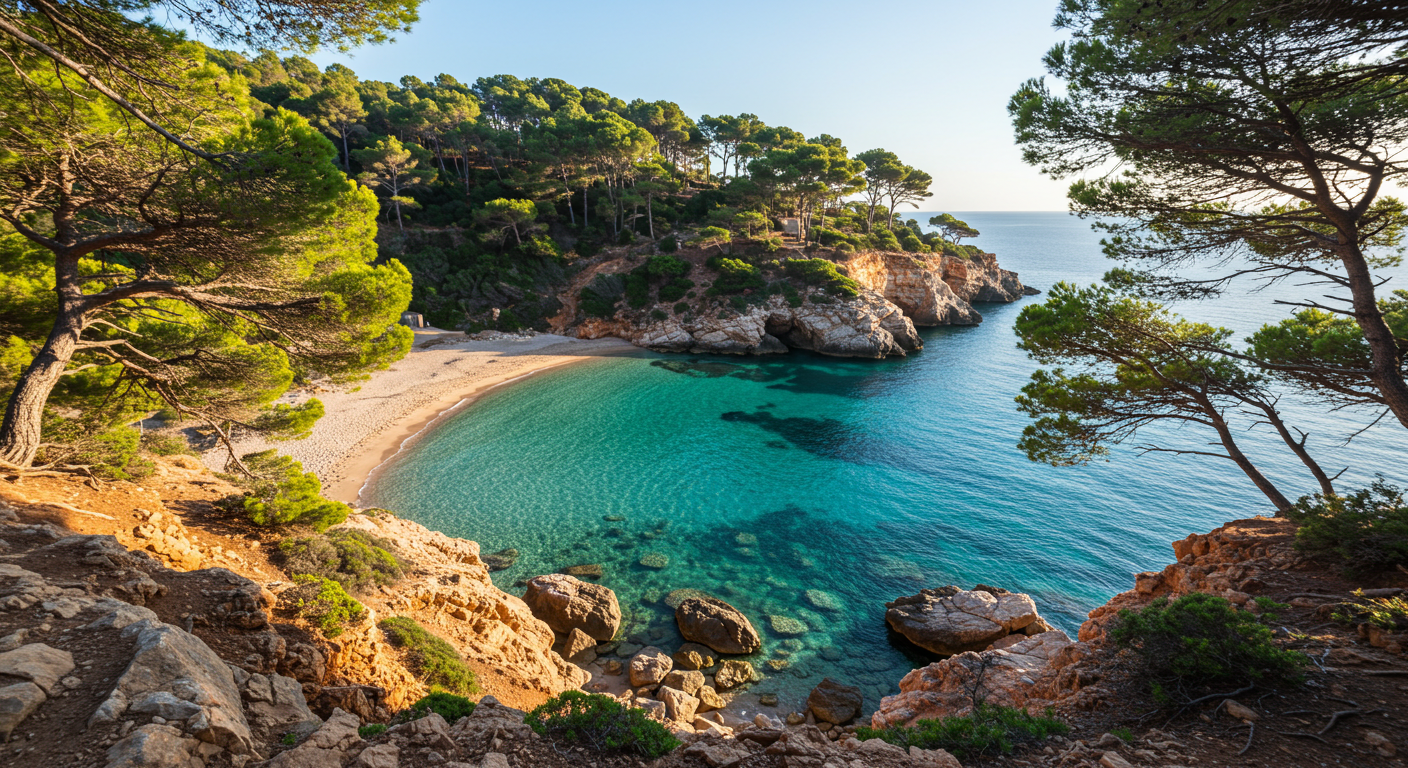
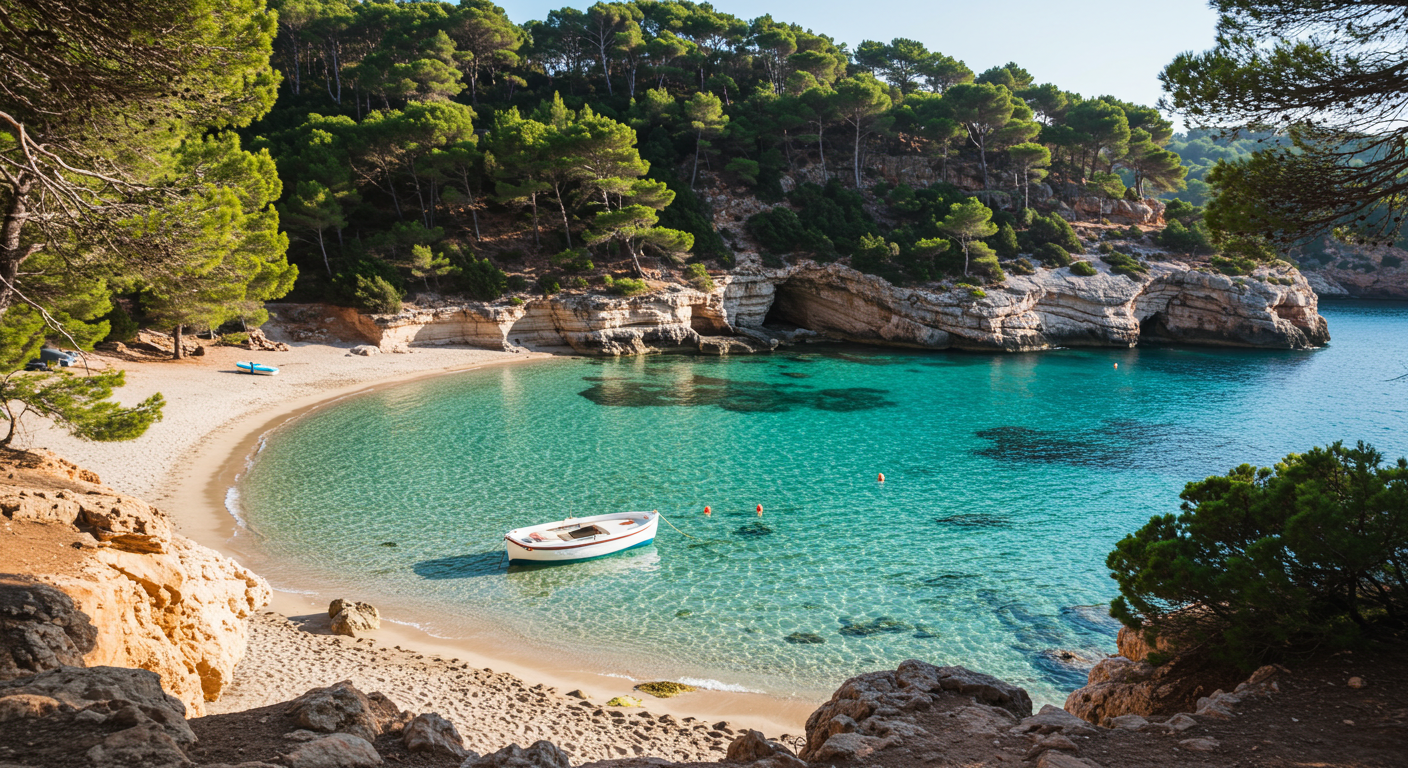
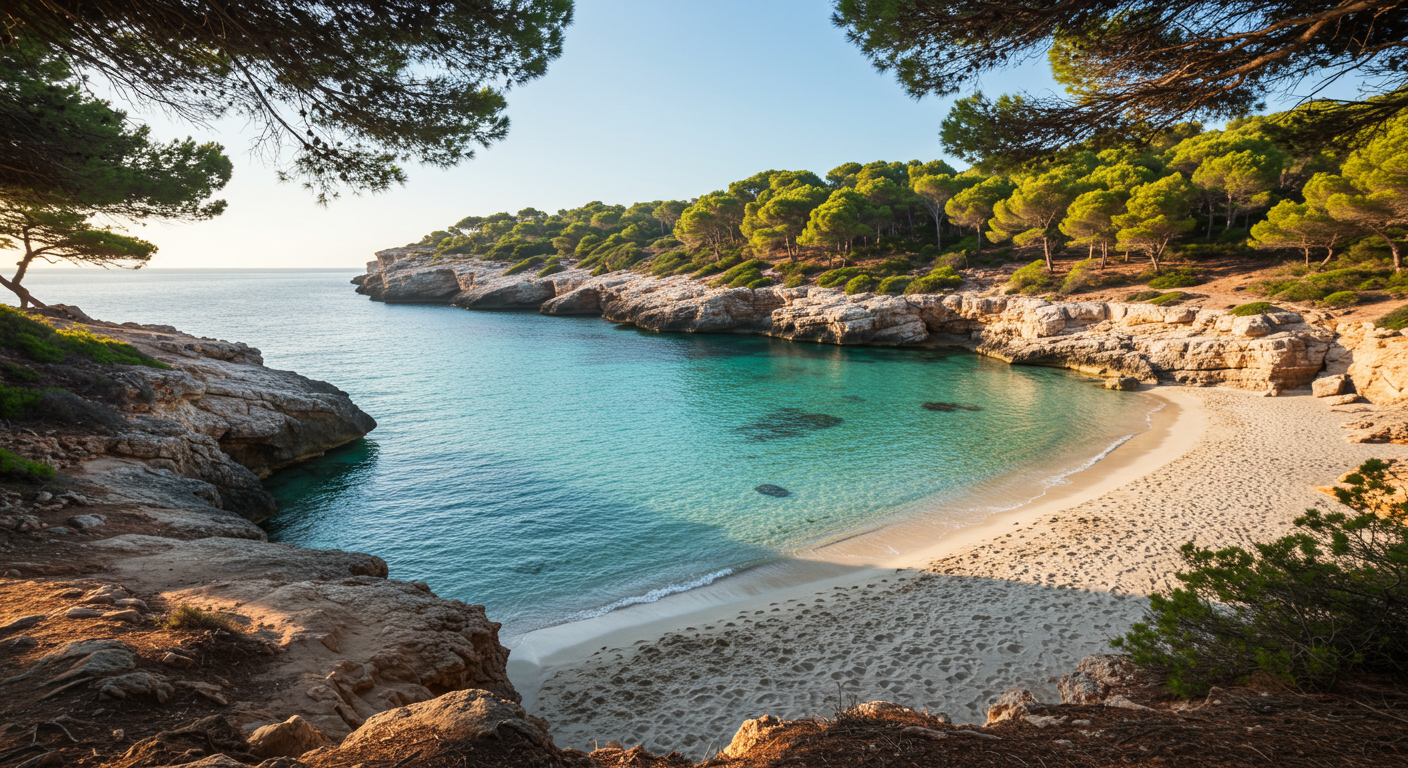
Menorca's south coast is more dramatic than the north — higher cliffs, more exposed, with coves that require a walk of 20–45 minutes through fragrant macchia scrubland. The reward is almost always a beach of fine white sand and water so clear you can see the bottom at four metres.
Cala Macarella and Cala Macarelleta are the most celebrated and, inevitably, the busiest. Macarelleta — the smaller of the two, around a headland — is the one to aim for. Arrive by 9am or accept company. The walk from the car park at Son Saura takes about 25 minutes.
Cala Turqueta and Cala des Talaier are slightly less visited and equally beautiful. Both are reached from the same car park (limited spaces; arrive early or use the shuttle bus that runs from Ciutadella in July and August).
Cala Mitjana near Ferreries is one of the finest on the island — a deep, narrow inlet flanked by pine-covered cliffs. The 20-minute walk from the road keeps numbers manageable even in peak season.
The North Coast: Wilder and Windier
The north coast faces the Tramuntana wind and is correspondingly rougher in character. Cala Pregonda is the standout — a wide beach of reddish sand surrounded by rocky islets, reached after a 40-minute walk from Binimel·là. It looks like nowhere else in the Balearics. Even in August, you'll rarely feel crowded.
Ciutadella and Maó: Two Towns Worth Knowing
Ciutadella, the former capital, is the more immediately beautiful: a compact old town of narrow streets, baroque palaces and a harbour lined with restaurants. The Plaça d'es Born is one of the most elegant squares in the Balearics. Maó (Mahón in Spanish) has the deepest natural harbour in the Mediterranean and a slightly more workaday charm — but the gin distillery (Xoriguer, on the waterfront) and the fish market are both worth your time.
For a broader sense of how the Balearics fit into Spain's coastal landscape, our coast-by-coast beach guide for summer 2026 puts them in useful context alongside the mainland.
Ibiza: Beyond the Clubs
Ibiza's nightlife reputation is so dominant that it obscures a genuine surprise: the island has some of the most beautiful rural landscapes and quietest coves in the Balearics, and the north and east of the island in particular are strikingly peaceful.
The North: Pine Forests and Fishing Villages
The area around Sant Joan de Labritja in the north is agricultural, quiet and largely unchanged. The village of Sant Carles de Peralta has an excellent market on Saturday mornings (Las Dalias, running since the 1950s) and the surrounding countryside — terraced fields, dry-stone walls, almond trees — looks nothing like the Ibiza of popular imagination.
Cala Xarraca, near Portinatx, is a wide, shallow bay popular with snorkellers and families. The water is warm and calm and the beach bar serves decent food. Cala d'en Serra, just around the headland, is smaller, less visited and has the remains of an unfinished hotel development that gives it a pleasingly melancholy quality.
The East Coast: Coves and Calm
Cala Nova and Cala Llenya near Santa Eulària des Riu are wide, sandy and relatively calm — good choices if you're travelling with children or simply want a beach you can walk to from a rental villa without a 45-minute trek. Santa Eulària itself is the most family-oriented of Ibiza's towns: a proper promenade, good restaurants, a weekly market.
Cala Mastella is tiny — perhaps 30 metres of sand — and has a small wooden shack restaurant (El Bigotes) that serves a single dish (bullit de peix, a Ibizan fish stew) at a communal table. Reservations are essential and the place operates on its own logic. It is, by general consensus, one of the best lunches you can have on the island.
Formentera: The Day Trip That Becomes a Week
Technically its own island, Formentera is reached by ferry from Ibiza in 30–40 minutes and is worth including in any Balearic itinerary. The water around Ses Illetes — a long sandbar on the north of the island — is consistently ranked among the clearest in the Mediterranean. As of 2026, the island has introduced vehicle restrictions in summer: hire a bicycle or a moped and you'll cover it more enjoyably anyway.
Practical Matters: Getting There, Getting Around and When to Go
Flights and Ferries
All three main islands have international airports. Palma de Mallorca (PMI) is the busiest in Spain by passenger numbers in summer. Ibiza (IBZ) and Menorca (MAH) are smaller but well-connected from the UK, Germany and northern Europe. Ferry connections between islands and from Barcelona and Valencia are operated by Baleària and Trasmediterránea; the overnight ferry from Barcelona to Palma (roughly 8 hours) is a civilised way to arrive.
Getting Around
Mallorca has a reasonable bus network (TIB) and a scenic narrow-gauge railway between Palma and Sóller. For the coves, however, a hire car is effectively essential — budget around €40–€65 per day in July and August as of 2026. Menorca is small enough to navigate by car or bicycle; Ibiza's roads are congested in August and a moped or bicycle is often faster for short distances.
When to Go
June and September are the honest answers. The water is warm (22–26°C), the crowds are manageable, prices are 20–30% lower than peak July/August, and the islands feel like themselves rather than like a temporary extension of northern Europe. If you must go in August, book accommodation by March and plan to be at any beach worth visiting before 10am.
For those comparing the Balearics with other Spanish coastal options, the Costa Brava's hidden calas offer a similarly dramatic limestone coastline with easier access from Barcelona and, in some spots, fewer crowds.
A Note on Longer Stays
The Balearics attract a significant number of people considering a longer move to Spain — drawn by the climate, the quality of life and, in Mallorca's case, an established international community. If you're thinking beyond a holiday, the practicalities of residency, banking and self-employment in Spain are worth understanding early. Our guides on getting your NIE and TIE and on the slow travel approach to settling into a Spanish city offer a useful starting point, even if your destination is an island rather than the mainland.
The Balearics in summer are not a secret, and there's no point pretending otherwise. But they contain more variety, more quiet and more genuine beauty than their reputation suggests. The key is simply to move a little earlier, walk a little further and resist the pull of the most obvious choices. The cove around the next headland is usually worth it.
Frequently asked questions
- Which Balearic island is best for families with young children?
- Menorca is generally considered the most family-friendly, thanks to its calm, shallow coves, lack of high-rise development and relaxed atmosphere. Santa Eulària des Riu on Ibiza and the eastern coast of Mallorca (particularly around Cala d'Or and Porto Colom) are also good options with wide, gentle beaches and good facilities.
- Is it possible to visit the Balearic Islands without a hire car?
- On Mallorca, the TIB bus network and the Palma–Sóller railway cover the main towns, but reaching the best coves without a car is genuinely difficult. Menorca is more manageable by bicycle or moped for shorter distances, though a car opens up the south coast significantly. On Ibiza, taxis and scooters work well for most purposes, especially in the north.
- When is the best time to visit the Balearic Islands to avoid the worst crowds?
- June and September offer the best balance of warm weather, swimmable sea temperatures (22–25°C) and manageable crowds. Prices for accommodation and car hire are also noticeably lower than in July and August. If you're visiting in peak season, aim to be at popular beaches before 10am and consider weekday visits to the most famous coves.
- How do I get between the Balearic Islands?
- Inter-island flights are operated by Air Europa and Iberia Regional, with journey times of 20–40 minutes. Ferries (Baleària and Trasmediterránea) connect Mallorca with Menorca, Ibiza and Formentera; the Palma–Ibiza crossing takes around 2.5 hours by fast ferry. Formentera is only accessible by ferry from Ibiza, a 30–40 minute crossing.
- Are the Balearic Islands expensive compared to mainland Spain?
- Yes, particularly in high season. As of 2026, accommodation, restaurant meals and car hire all carry a summer premium. Menorca is generally the most affordable of the three main islands; Ibiza the most expensive. Eating at local markets, booking accommodation well in advance and travelling in June or September can significantly reduce costs.
- Can I visit Formentera as a day trip from Ibiza?
- Yes — the ferry from Ibiza Town takes 30–40 minutes and runs frequently throughout the day in summer. A day trip gives you enough time to cycle to Ses Illetes, swim and have lunch. However, many visitors find Formentera compelling enough to warrant an overnight stay; the island is noticeably quieter once the day-trippers leave on the evening ferries.
- What is the water clarity like in the Balearics and is snorkelling worthwhile?
- The Balearics sit within the Posidonia oceanica seagrass meadows, which are protected by EU law and are largely responsible for the exceptional water clarity. Visibility of 15–20 metres is common in calm conditions. Snorkelling is excellent throughout the islands; particularly good spots include Cala Xarraca in Ibiza, Cala Pregonda in Menorca and the rocky edges of Cala Deià in Mallorca.