Balearic Islands Summer Guide: Beaches, Coves and Calm in Mallorca, Menorca and Ibiza
Mallorca, Menorca and Ibiza in summer — the best beaches, hidden coves, practical tips and honest advice for 2026. No hype, just real guidance.
Why the Balearics Still Deserve Your Attention in 2026
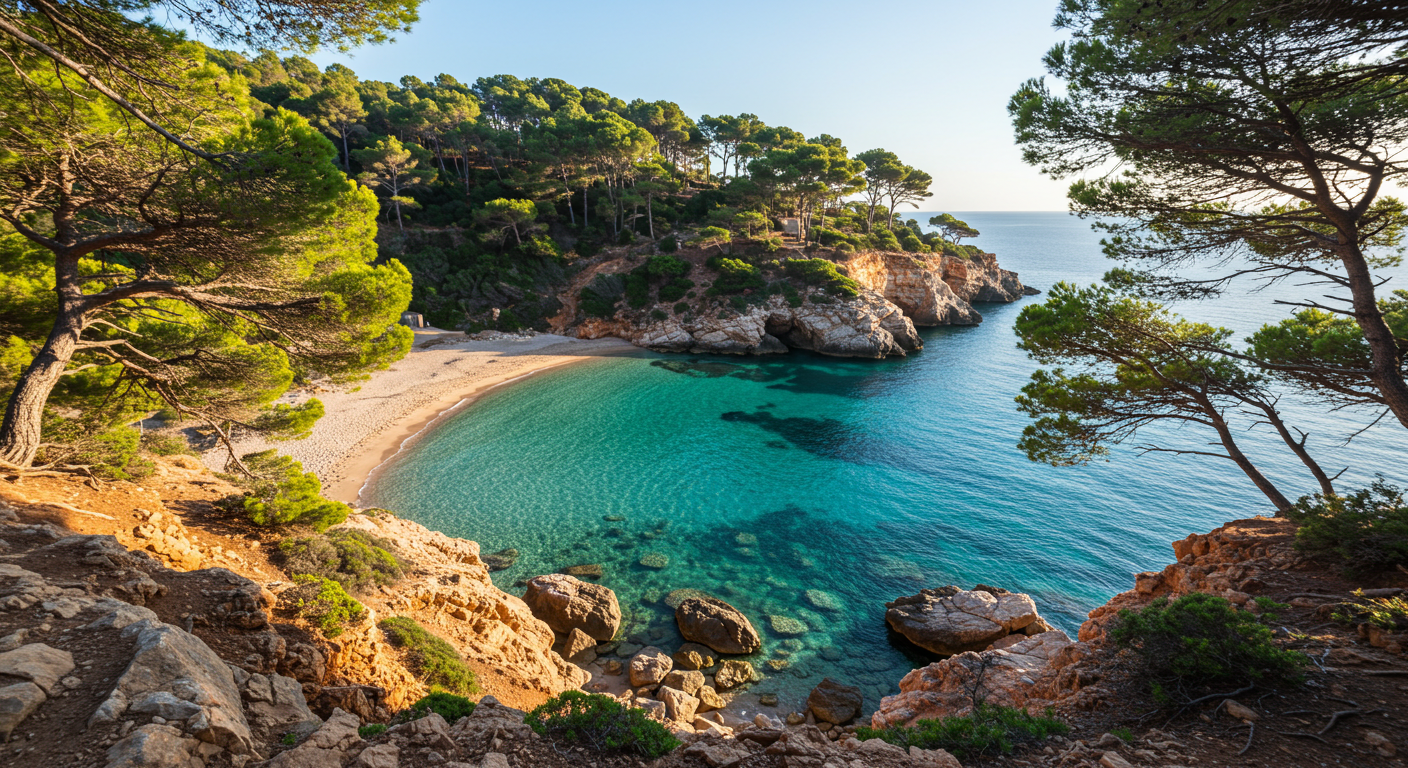
Every summer, millions of visitors land on the Balearic Islands and head straight for the same postcard strips. That's understandable — the water really is that colour, the pine trees really do lean over the limestone, and the light in the late afternoon really does turn everything amber. But the Balearics reward those who look a little harder, plan a little more carefully, and resist the gravitational pull of the nearest sunlounger.
Mallorca, Menorca and Ibiza are three genuinely distinct islands. They share a Mediterranean climate, Catalan linguistic roots, and a certain unhurried confidence, but the experience of spending a week on each one is radically different. This guide covers all three honestly — the beaches and coves that justify the journey, the practical realities of getting around and affording it in 2026, and the quieter corners that most visitors never find.
If you're comparing the Balearics with Spain's other great coastal destinations, our Best Beaches in Spain for Summer 2026: A Curated Coast-by-Coast Guide gives a useful national overview. But this article goes deeper into the archipelago itself.
Mallorca: Beyond the Brochure
The South and Southeast: Limestone Calas and Clear Water
Mallorca's southern and southeastern coastline is where the island's reputation for extraordinary swimming was built, and it holds up. The Coves del Drac near Porto Cristo are technically a cave system, but the lake inside — Llac Martel — is one of the largest underground lakes in the world, and the boat ride across it is genuinely eerie and beautiful. Book tickets in advance (as of 2026, entry is around €16 per adult).
For open-water swimming, Cala Mondragó inside the Mondragó Natural Park is the benchmark. Two adjacent coves — S'Amarador and Mondragó itself — are protected from development, which means the water stays clean, the sand stays fine, and the pines stay standing. Arrive before 10am in July and August, or accept a long walk from the car park. There is no other solution.
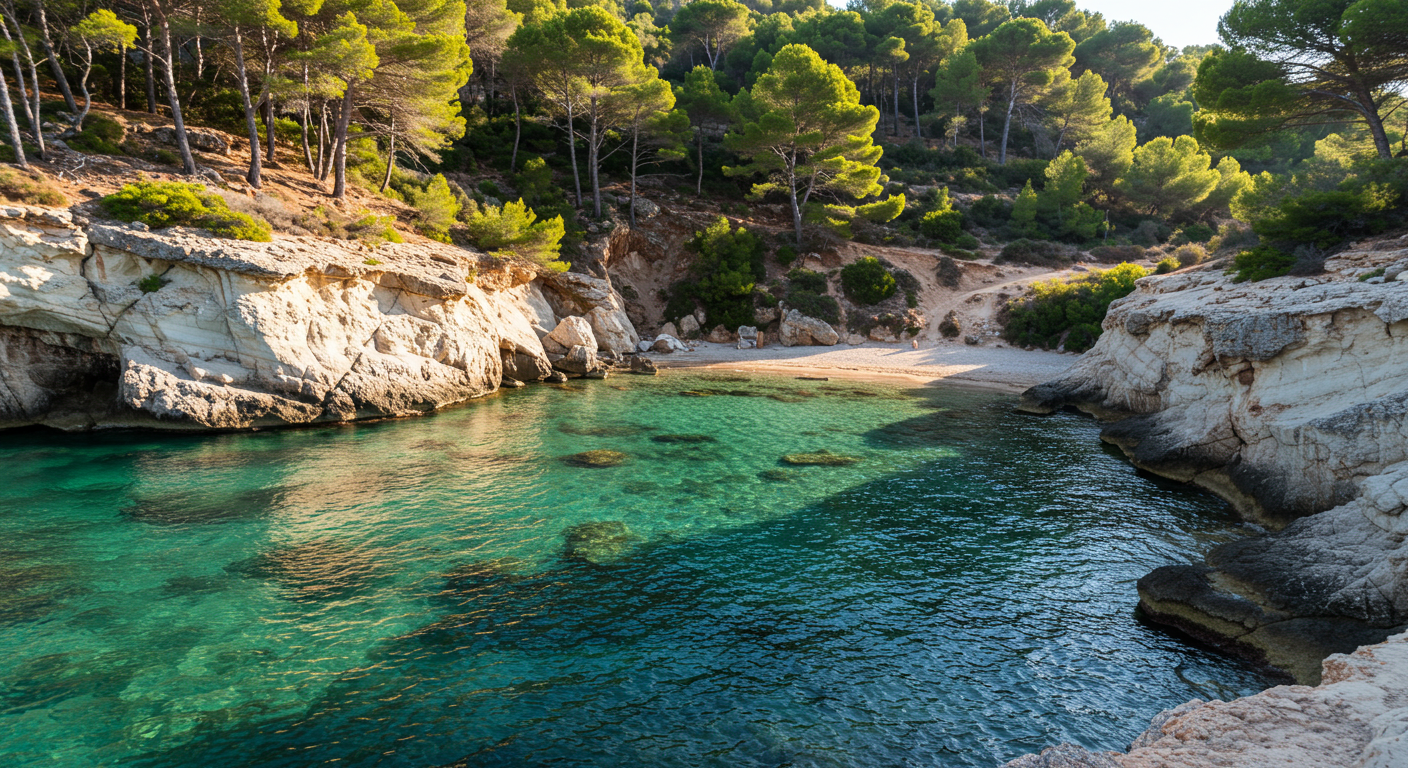
Cala Llombards and Cala Santanyí sit just a few kilometres apart near the island's southern tip. Both are small, sheltered and turquoise. Cala Llombards in particular has a natural rock arch at its eastern edge that looks implausible — like something from a travel magazine that's been lightly retouched. It hasn't been.
The Serra de Tramuntana: Mountains Above the Sea
Mallorca's UNESCO-listed mountain range running along the northwest coast changes the island's character entirely. Villages like Deià, Valldemossa and Sóller sit in folds of olive and citrus groves, and the road between them — the MA-10 — is one of the most dramatic drives in Spain.
The coast here is wilder. Sa Calobra is the most famous cove in the Tramuntana, reached via an extraordinary 14-kilometre road of hairpin bends (or by boat from Port de Sóller — the better option in summer). The beach itself is a narrow gorge of grey rock and green water. It gets very busy by midday, but the walk through the torrent of Pareis to reach it is worth the effort regardless.
For walkers, the GR221 Dry Stone Route crosses the Tramuntana from Port d'Andratx to Pollença. Most people walk sections rather than the full route. The stage between Deià and Sóller takes around three hours and involves enough ascent to justify the cold beer at the end.
Palma: The Capital That Often Gets Overlooked
Palma is a proper city — around 430,000 people, a Gothic cathedral that took four centuries to finish, a 16th-century Arab bathhouse, and a restaurant scene that has matured considerably in the past decade. The Santa Catalina neighbourhood has the best concentration of independent restaurants and bars. The covered Mercat de l'Olivar is where locals actually shop.
Staying in Palma and day-tripping to beaches is a legitimate strategy, particularly if you want urban life alongside sea swimming. The train to Sóller (a vintage narrow-gauge line, as of 2026 around €22 return) is one of the island's genuine pleasures.
Menorca: The Quietest of the Three
Why Menorca Feels Different
Menorca was designated a UNESCO Biosphere Reserve in 1993 and the island has taken that designation seriously. There is no mass hotel development on the north coast. The interior is a patchwork of farmland, dry-stone walls and prehistoric talayotic monuments. The capital, Maó (Mahón in Spanish), sits at the end of one of the deepest natural harbours in the Mediterranean.
The island attracts a different visitor — families, slow travellers, people who have been to Ibiza and Mallorca and want something quieter. As of 2026, Menorca remains notably less crowded than its neighbours in peak season, though 'less crowded' is relative: the best coves still fill up in August.
The North Coast: Wild and Windswept
Menorca's north coast faces the Tramuntana wind and the landscape shows it — the vegetation is low, the cliffs are reddish sandstone, and the coves tend to be smaller and less sheltered than the south. Cala Pregonda is the north coast's standout: a wide, rust-coloured bay backed by dunes and tamarind trees, reachable only on foot (around 45 minutes from the nearest car park near Binimel·là). The colour of the sand — a warm terracotta — against the blue water is unusual enough to stop you in your tracks.
Cala Tortuga and Cala Barril near Es Grau are smaller and less visited, reached via a coastal path through the S'Albufera des Grau natural park. The lagoon at Es Grau itself is worth a morning.
The South Coast: Turquoise Classics
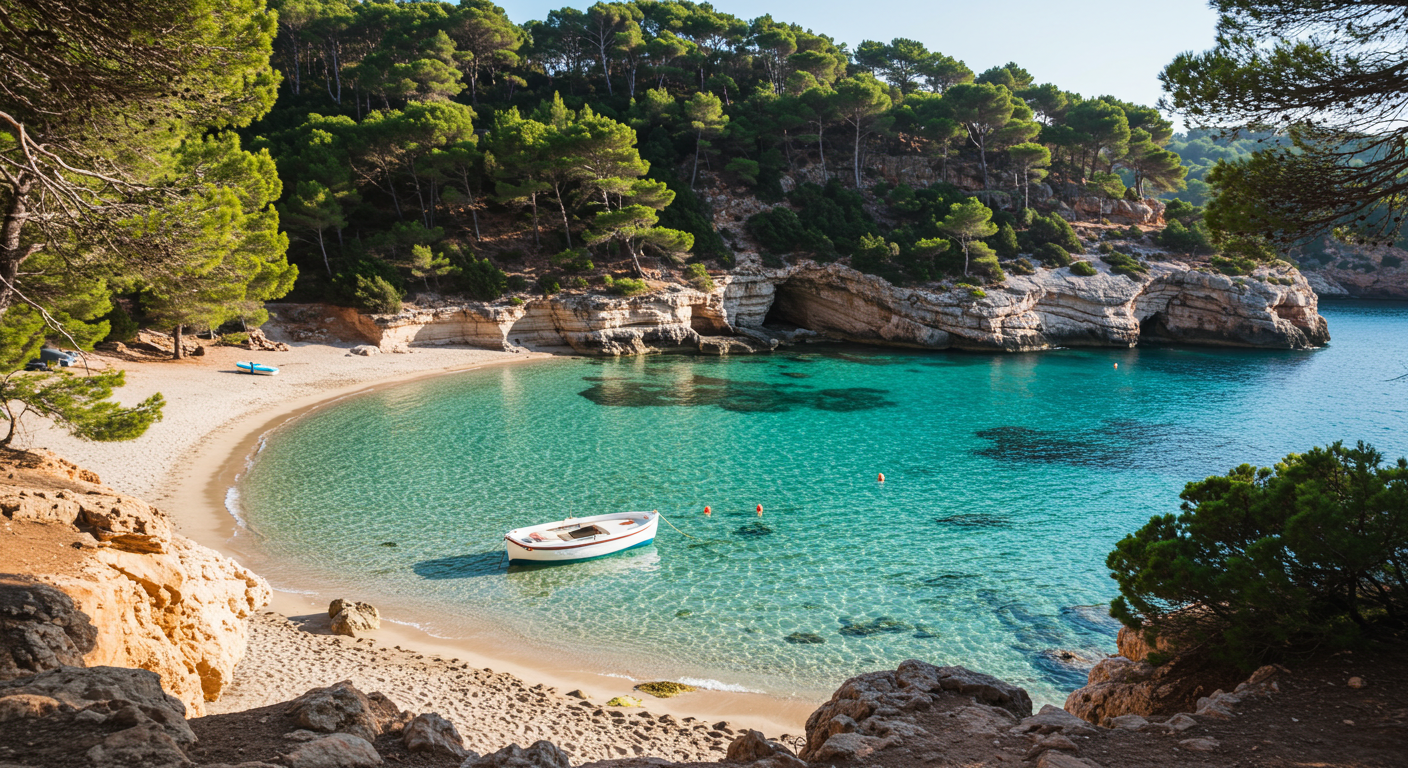
The south coast has the calmer water and the whiter sand, and this is where most visitors concentrate. Cala Macarella and its smaller neighbour Cala Macarelleta are the photographs you've seen — limestone cliffs, pine trees, water in five shades of blue. They're beautiful and they're busy. Go early, or go in June or September.
Cala en Turqueta is nearby and slightly less visited. The walk in from the car park takes about 20 minutes through fragrant scrubland. Son Bou is the island's longest beach — nearly three kilometres — and has the infrastructure (car parks, beach bars, lifeguards) that makes it practical for families.
Eating and Drinking in Menorca
Menorca has its own food culture, and it's worth engaging with. Mahón cheese (Maó-Menorca D.O.P.) ranges from fresh and mild to aged and pungent — the aged version, rubbed with olive oil and paprika, is remarkable. Caldereta de llagosta (spiny lobster stew) is the island's signature dish; expect to pay €40–60 per person at a restaurant serving it properly, as of 2026. The gin distilled in Maó — a legacy of British occupation in the 18th century — is worth trying; Xoriguer is the local brand and the gin-lemon (pomada) is the island's unofficial summer drink.
Ibiza: More Than the Clubs
The North: A Different Island
Ibiza's reputation is built on the south and west — Playa d'en Bossa, Pacha, Amnesia, the strip of clubs and beach bars that has defined the island for forty years. That scene is real and for many people it's the entire point. But the north of Ibiza is genuinely different, and increasingly it's where the more interesting visitors head.
Portinatx in the far north is a small resort with three beaches and a relaxed atmosphere. Cala d'en Serra nearby is harder to reach and quieter — a narrow cove with a small chiringuito (beach bar) and remarkably clear water. Cala Xarraca is shallow and calm, good for snorkelling over the Posidonia seagrass meadows that are protected across much of the island.
The village of Sant Joan de Labritja in the north has a Sunday hippie market (Las Dalias is the most famous, held in Sant Carles de Peralta) that has been running in various forms since the 1980s. It's touristy but not unpleasant, and the stalls selling local produce — honey, almonds, herbs — are genuine.
The Old Town and the West Coast
Dalt Vila, Ibiza's walled old town, is a UNESCO World Heritage Site and worth a morning regardless of what else you're doing. The views from the ramparts over the harbour and across to Formentera are exceptional. The cathedral at the top dates from the 13th century.
The west coast has some of Ibiza's best swimming. Cala Conta (Comte) is frequently cited as having the finest water on the island — a series of small rocky inlets with water so clear and layered in colour that it looks edited. Sunsets here are a social event. Cala Bassa is nearby and more sheltered, with a beach club that manages to be lively without being overwhelming.
Formentera: The Day Trip Worth Taking
Formentera is technically a separate island but functionally Ibiza's quieter annexe. Ferries from Ibiza Town take 30–40 minutes (as of 2026, return tickets are around €25–35 depending on the operator and season). Ses Illetes on Formentera's northern spit is regularly ranked among the best beaches in Europe — a narrow strip of white sand with Caribbean-quality water on both sides. Go on a weekday and arrive early. The island has no airport and limits visitor numbers in various ways; it remains genuinely less developed than anywhere else in the Balearics.
Practical Matters: Getting There, Getting Around and Staying Sane
Flights and Ferries
All three islands have international airports. Palma de Mallorca (PMI) is one of the busiest airports in Spain, with direct flights from across Europe. Ibiza (IBZ) and Menorca (MAH) are smaller but well connected in summer. As of 2026, budget carriers including Vueling, Ryanair and easyJet serve all three from major UK and European cities.
Ferries between the islands are operated primarily by Baleària and Trasmediterránea. The Palma–Ibiza crossing takes around four hours by fast ferry; Palma–Menorca is slightly longer. Inter-island travel by ferry is pleasant and practical if you're combining islands on a longer trip.
Getting Around on the Islands
Mallorca has the best public transport of the three — buses connect most towns, and the train to Sóller is a genuine attraction. That said, a hire car opens up the coves and mountain roads considerably. Expect to pay €35–60 per day for a small car in peak summer as of 2026; book well in advance.
Menorca is compact enough that a car or scooter covers most of what you need. Ibiza's traffic in August is genuinely bad around San Antonio and Playa d'en Bossa — a scooter or bicycle is often faster.
Costs in 2026
The Balearics are not cheap, and they've become less so. A mid-range hotel in Palma runs €150–250 per night in July and August. Menorca is slightly more affordable; Ibiza's party-adjacent areas are expensive across the board. Self-catering apartments and rural fincas (farmhouses) offer better value, particularly for longer stays.
Restaurant meals vary widely. A lunch menu (menú del día) in a local restaurant in Maó or Sóller costs €13–16 as of 2026. Dinner at a beachfront restaurant on Ibiza's west coast costs considerably more.
For those considering a longer stay — remote workers, slow travellers, or those exploring residency options — the Non-Lucrative Visa vs Digital Nomad Visa: Which One Is Right for You? guide covers the visa landscape clearly. And if you're comparing the Balearics' cove-swimming culture with mainland alternatives, the Costa Brava Beaches and Hidden Calas: The Essential Summer Guide to Catalonia's Coast is worth reading alongside this one.
When to Go
June and September are the honest answers. The water is warm enough for comfortable swimming (around 23–25°C in June, still 24–26°C in September), the crowds are manageable, prices drop noticeably from August peaks, and the light is extraordinary. July is busy but workable. August is the month when every cove is full by 10am, every road has a traffic jam, and every restaurant needs a reservation made days in advance.
May is increasingly viable — the Tramuntana wildflowers are at their best, almond blossom is long gone but the landscape is green, and the sea is cool but swimmable for the determined. October sees the islands quiet down rapidly after the first week; some beach bars close by mid-month.
A Note on Responsible Visiting
The Balearic Islands are under real environmental pressure. The Posidonia oceanica seagrass meadows that give the water its extraordinary clarity are fragile and protected; anchoring in them is illegal and the fines are substantial. Several municipalities have introduced tourist taxes (as of 2026, Mallorca's sustainable tourism tax runs €2–4 per person per night depending on accommodation category). These are worth paying without complaint — the money funds coastal protection and waste management.
Some coves now operate reservation systems in peak season, requiring pre-booked parking or timed entry. Check ahead for Cala Macarella, Cala Mondragó and others before you go; the systems change year to year.
The Balearics have been hosting visitors for decades and they know how to do it. The best thing you can do is slow down, eat locally, stay a little longer, and resist the urge to see everything in four days.
For context on how Spain's coastal culture compares across regions, and to plan a broader Spanish summer, our Best Beaches in Spain for Summer 2026: A Curated Coast-by-Coast Guide is a good companion piece.
Frequently asked questions
- Which Balearic island is best for families with young children?
- Menorca is generally considered the best choice for families — it's quieter than Ibiza, less overwhelming than Mallorca in peak season, and has several calm, shallow south-coast beaches like Son Bou and Cala Galdana with lifeguards and beach facilities. The island's protected status also means the water quality is consistently excellent.
- Is it possible to visit all three Balearic islands in one trip?
- Yes, though you need at least 10–14 days to do it without feeling rushed. Inter-island ferries connect Mallorca, Menorca and Ibiza, and Formentera is a short hop from Ibiza. A common route is to fly into Palma, spend 4–5 days in Mallorca, ferry to Menorca for 3–4 days, then fly or ferry to Ibiza for the final stretch.
- Do I need to book coves and beaches in advance in 2026?
- For some of the most popular coves — particularly Cala Macarella in Menorca and Cala Mondragó in Mallorca — parking reservations or timed entry systems operate in July and August. Check the relevant local authority websites before you travel, as the systems are updated annually. Arriving before 9am at any popular cove generally avoids the worst of the crowds.
- How expensive is eating out in the Balearic Islands compared to mainland Spain?
- Noticeably more expensive, particularly in July and August. A menú del día (set lunch) in a local restaurant costs €13–16 as of 2026, compared to €10–13 in many mainland cities. Dinner at a beach restaurant on Ibiza's west coast or in Palma's upmarket districts can easily reach €50–80 per person. Cooking your own food in a self-catering apartment significantly reduces costs.
- What is the sustainable tourism tax in the Balearics and how does it work?
- The Balearic Islands' Ecotaxa (sustainable tourism tax) applies to all tourist accommodation, including hotels, apartments and cruise ship stays. As of 2026, rates range from approximately €2 per person per night in lower-category accommodation to €4 per person per night in five-star hotels, with a 50% reduction outside peak season. Children under 16 are exempt. The tax is collected by your accommodation provider.
- Can I live or work remotely from the Balearic Islands as a non-EU citizen?
- Yes, and the islands have become increasingly popular with remote workers and digital nomads. Spain's Digital Nomad Visa is one route for non-EU citizens who work remotely for foreign clients or employers. The Non-Lucrative Visa is another option for those with sufficient passive income. Our guide to [Non-Lucrative Visa vs Digital Nomad Visa: Which One Is Right for You?](/en/non-lucrative-vs-digital-nomad-visa) covers both in detail.
- What is the best way to get between Ibiza and Formentera?
- Passenger ferries run frequently between Ibiza Town (Eivissa) and La Savina on Formentera throughout the summer. The crossing takes 30–40 minutes depending on the service. As of 2026, return tickets cost approximately €25–35. Book in advance during August, as boats fill up. Taking a car to Formentera is expensive and largely unnecessary — the island is small enough to explore by bicycle or scooter, both of which are available to hire near the ferry terminal.