Madrid to Seville by Train: Tickets, Times and What to Expect
Madrid to Seville by train takes about 2h 30min on the AVE high-speed line. Here's everything on tickets, prices, booking tips and what the journey is actually like.
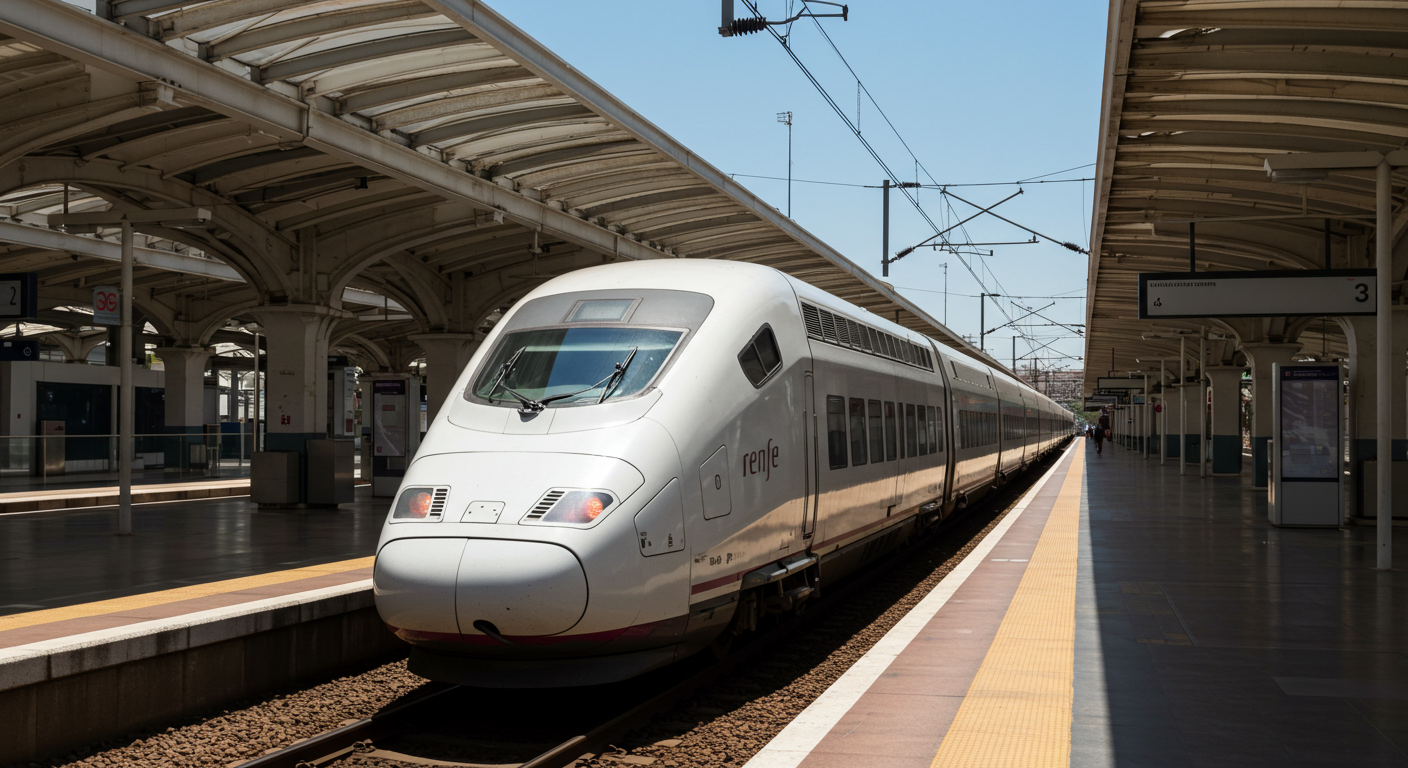
The AVE from Madrid to Seville is one of those journeys that genuinely makes you question why you'd ever fly. Door to door, when you factor in getting to Barajas, the security theatre, the wait, and then the bus from San Pablo airport into the city centre, the train often wins by an hour or more. And it's far less miserable.
The direct answer to the most common question: the Madrid to Seville AVE takes approximately 2 hours 30 minutes. Some services run closer to 2h 20min; a handful of slower trains (usually the cheaper Avant or Alvia services on this corridor) can take 3h 30min or longer. The fastest trains run non-stop; others call at Córdoba, which adds about 15 minutes but is worth knowing if you're planning a stop.
How Long Does the Madrid to Seville Train Actually Take?
The flagship service is Renfe's AVE — Alta Velocidad Española — which runs on dedicated high-speed track between Madrid Puerta de Atocha and Sevilla Santa Justa. On the fastest non-stop departures, you're looking at 2h 20min. Most trains stop briefly at Córdoba, making the total journey 2h 30–45min depending on the specific service.
There are also Avlo services on this route — Renfe's low-cost high-speed brand, launched a few years back. Avlo trains take the same track and hit similar times, but fares are cheaper in exchange for less flexibility (no changes, no refunds, and you must book in advance). Worth it if your plans are fixed.
The slower Alvia services, which don't run exclusively on high-speed track, are worth avoiding on this route unless you're deliberately stopping somewhere en route. They take significantly longer and the price saving is rarely worth it.
Tickets: What You'll Pay and Where to Book
This is where Spain's train system gets genuinely complicated — and where a lot of people overpay.
As of 2026, AVE fares between Madrid and Seville start at around €16–€25 for an Avlo seat if you book several weeks out. Standard AVE Turista class starts at roughly €35–€50 for advance bookings, rising to €80–€100+ for flexible last-minute tickets. Turista Plus (more legroom, complimentary coffee) sits in the €55–€80 range at advance prices. Club (business class, proper meal, wide seats) runs €120–€160.
A few things nobody tells you:
- Book directly on renfe.com or the Renfe app. Third-party sites like Trainline charge a booking fee — usually €3–€5 per ticket — for the exact same seat on the exact same train. It adds up fast if you're booking for a family.
- Fares are dynamic, like flights. The same seat can cost €25 on a Tuesday morning six weeks out and €95 the evening before. Book early for the best prices, especially in July and August.
- The Tarjeta Dorada (gold card for over-60s) gives 25–40% off, but you need a Spanish ID or NIE to apply. If you've already sorted your residency paperwork — see the Getting Your NIE and TIE in Spain guide — it's worth looking into.
- Renfe's +Renfe loyalty programme accumulates points on AVE journeys. Free to join, and the points do eventually add up to free tickets if you're travelling regularly.
Avlo: Is It Worth It?
Honestly, yes, for most people. Avlo trains are the same high-speed rolling stock, the seats are comfortable, and the time difference is negligible. The catch is zero flexibility — miss your train and you've lost the money. Don't book Avlo if there's any chance your plans might shift. For a straightforward day trip or a fixed weekend away, it's a no-brainer.
Madrid Atocha: Getting to the Station
You're departing from Madrid Puerta de Atocha — specifically the AVE terminal, which is inside the same building as the cercanías and regional train platforms but feels like a different world. It's also home to the famous indoor tropical garden in the old station hall, which is worth five minutes of your time.
Atocha is on Metro Line 1 (Atocha Renfe stop). From Sol it's about 10 minutes; from Nuevos Ministerios around 12. A taxi from central Madrid typically costs €10–€15 and takes 15–25 minutes depending on traffic. Allow at least 30 minutes before departure for AVE check-in — you'll go through a security scan similar to an airport (shoes stay on, thankfully) and need to be at the platform before the gate closes, which happens 5 minutes before departure.
One annoying detail: Atocha has two separate entrance areas for high-speed trains. If you walk in the wrong door and end up in the cercanías section, you'll need to backtrack. Follow signs for AVE / Larga Distancia.
Arriving at Sevilla Santa Justa
Santa Justa is a proper city-centre station — a complete contrast to San Pablo airport, which sits on the edge of nowhere. From Santa Justa, the city centre is about a 15-minute walk or a short taxi ride (€6–€8). There's also bus line C1 and C2 from outside the station if you want to avoid the taxi queue.
Seville's old town, the Barrio de Santa Cruz, and most hotels are within easy reach. The Alameda de Hércules, which has become one of the city's most lively neighbourhoods, is a 20-minute walk or two stops on the metro.
If you're planning to spend serious time in Seville — or anywhere in Andalusia — I'd point you toward the slow travel guide to Granada for a sense of how the region rewards slower, more deliberate visits rather than a rushed day trip.
The Córdoba Stop: Should You Break the Journey?
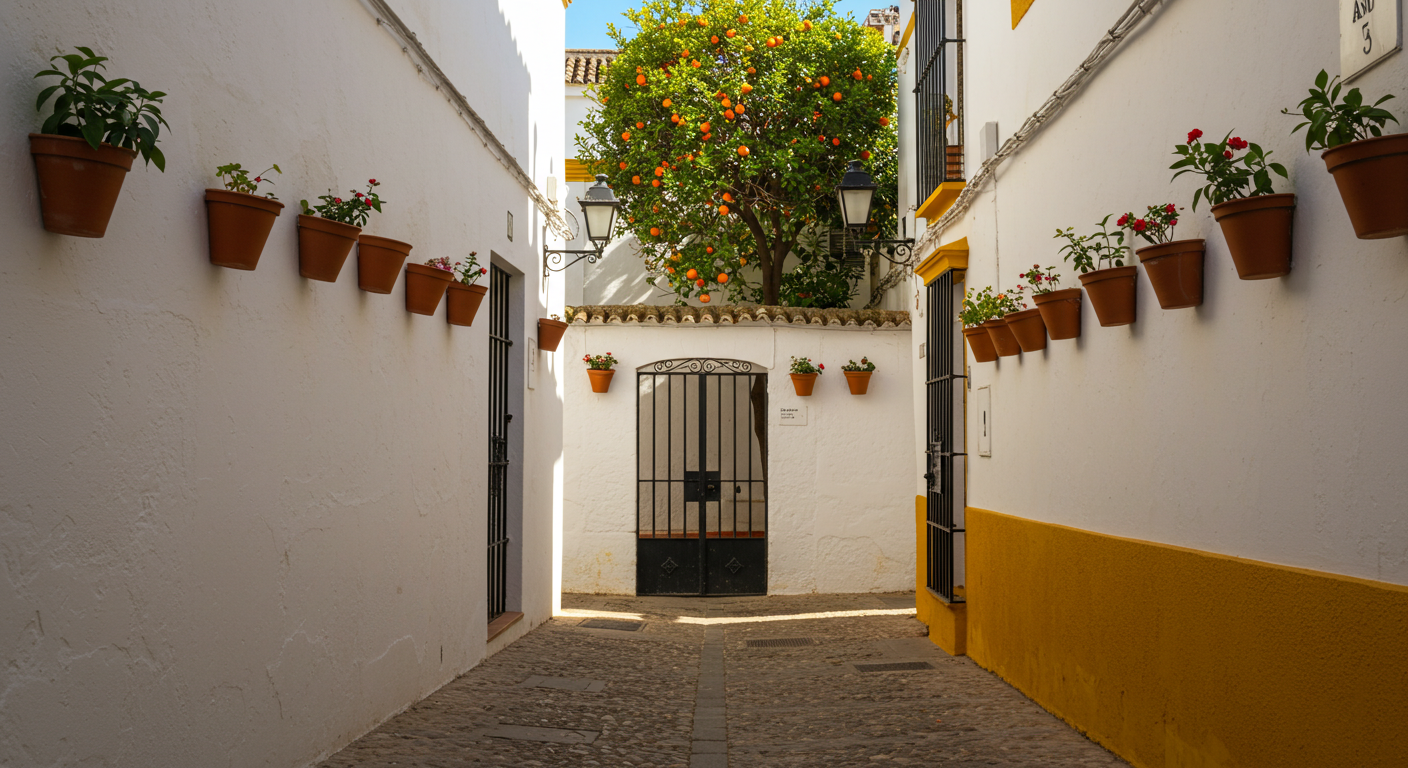
Absolutely, if you have the time. Córdoba is one of the most underrated cities in Spain. The Mezquita-Catedral alone is worth a half-day, and the old Jewish quarter (Judería) is properly extraordinary — narrow whitewashed streets, flower-filled courtyards, and blissfully few of the tourist traps you'd expect. Most visitors rush through on a day trip from Seville; staying a night changes everything.
Trains stop at Córdoba's main station, which is a short taxi or bus ride from the historic centre. A Madrid–Córdoba ticket is often only a few euros cheaper than Madrid–Seville, so it's not a great budget hack, but as a planned stop it makes excellent sense.
Travelling with Luggage, Bikes and Pets
AVE trains have overhead luggage racks and, on most services, a dedicated luggage area near the doors. There's no formal luggage allowance in the way airlines have — you're expected to be reasonable, and in practice nobody is checking. Large suitcases go in the luggage area; wheeled carry-on size bags go overhead without issue.
Bicycles must be booked in advance as a separate bicicleta ticket (around €6 as of 2026), and space is limited. Not all services carry bikes, so check when booking.
Small pets (under 10kg in a carrier) are allowed on AVE trains with a prior reservation and an additional ticket — around €6. Larger dogs are not permitted on most high-speed services. If you're relocating to Spain with animals, the broader logistics are covered in the Moving to Spain with Family and Pets guide.
On the Train: What the Ride Is Like
The AVE is genuinely good. Comfortable seats, smooth ride, power sockets at every seat (USB and standard Spanish/European plug), and reasonable WiFi — not fast enough for a video call, but fine for email and light browsing. The café car sells sandwiches, pastries, coffee and beer at prices that are only mildly offensive (€2.50 for a coffee, €3.50 for a beer, as of 2026). Bring your own food if you want to eat properly.
The landscape between Madrid and Córdoba is the meseta — flat, tawny, almost lunar in high summer. It's not conventionally beautiful, but there's something arresting about it. Then the train drops south and the olive groves begin, stretching in every direction. By the time you're approaching Seville, the Guadalquivir plain opens up and the light changes. It's a good two and a half hours.
A Few Things Worth Knowing Before You Go
Spain's rail network has expanded significantly in recent years and keeps improving, but it's not without quirks. Strikes (huelgas) do happen — Renfe staff have walked out periodically, and while minimum service levels are maintained, they can mean delays or reduced frequencies. Check the Renfe Twitter/X account and local news if you're travelling during any labour dispute period.
Also: the AVE has a punctuality guarantee. If your train arrives more than 15 minutes late, you're entitled to a partial refund — 50% of the ticket price. If it's more than 30 minutes late, you get the full ticket price back. In practice, these trains are remarkably punctual (Renfe claims above 95% on-time performance on this corridor, though that figure should be checked against current data). But the guarantee is real and worth knowing.
If you're considering making this route regularly — commuting between cities, or splitting your time between Madrid and Andalusia as a digital nomad — a Abono season ticket or the multi-journey bonos can reduce costs substantially. Worth asking at a Renfe ticket window rather than trying to navigate the website, which has a talent for being confusing.
The Madrid–Seville AVE remains one of the best-value, most civilised ways to move between two of Spain's great cities. Two and a half hours, city centre to city centre, no middle seat, no liquid restrictions. Get a window seat on the right-hand side heading south for the better views.
Frequently asked questions
- How long does the Madrid to Seville train take?
- The fastest AVE services take approximately 2 hours 20 minutes non-stop. Most trains stop at Córdoba and take around 2 hours 30–45 minutes. Slower Alvia services on this route can take 3h 30min or more.
- How much does the Madrid to Seville AVE ticket cost?
- As of 2026, Avlo (low-cost high-speed) fares start around €16–€25 if booked in advance. Standard AVE Turista class ranges from roughly €35 for early bookings to €100+ for last-minute flexible tickets. Prices are dynamic and rise significantly in summer.
- Is it better to fly or take the train from Madrid to Seville?
- For most travellers, the train is the better option. Door to door — including airport transfers at both ends — the AVE is often faster than flying, and far less stressful. It also deposits you directly in the city centre at both ends.
- Where do trains from Madrid to Seville depart from?
- All AVE and high-speed services depart from Madrid Puerta de Atocha (the AVE/Larga Distancia terminal). Trains arrive at Sevilla Santa Justa, which is a short walk or taxi ride from the city centre.
- Can I take a bike on the Madrid to Seville AVE?
- Yes, but you must book a separate bicycle ticket in advance (around €6 as of 2026) and space is limited. Not all services carry bikes, so check availability when booking on renfe.com.
- Is it worth stopping in Córdoba between Madrid and Seville?
- Very much so. Many AVE services stop at Córdoba, and you can break your journey there and continue on a later train. The Mezquita-Catedral and the Judería alone are worth a night's stay. Just rebook your onward leg in advance.
- What's the difference between AVE and Avlo on this route?
- Both run on the same high-speed track at similar speeds. Avlo is Renfe's low-cost brand: cheaper fares, but no changes or refunds permitted. AVE standard tickets offer more flexibility. For fixed plans, Avlo is excellent value.