Can You Visit the Cíes Islands Without a Permit in 2026?
The Cíes Islands permit system explained for 2026: how to book, what it costs, and what to do in the Rías Baixas if you can't get one.
Can You Visit the Cíes Islands Without a Permit in 2026?
The short answer is no — not in high season, and not really at any point between June and September. Since 2019 the Cíes Islands have operated under a daily visitor cap, and as of 2026 you need a prior reservation linked to a ferry ticket to set foot on the archipelago during peak months. Without that booking confirmation, the ferry company simply won't sell you a ticket. The cap sits at around 2,200 visitors per day across the three main islands, a figure that sounds generous until you realise how quickly it fills on a July Saturday.
What nobody tells you clearly: the reservation system and the ferry are separate steps, and the ferry timetable doesn't always match what the reservation confirmation implies. Book both at the same time, on the same sitting, or you'll waste an afternoon.
The Rías Baixas: More Than Just the Islands
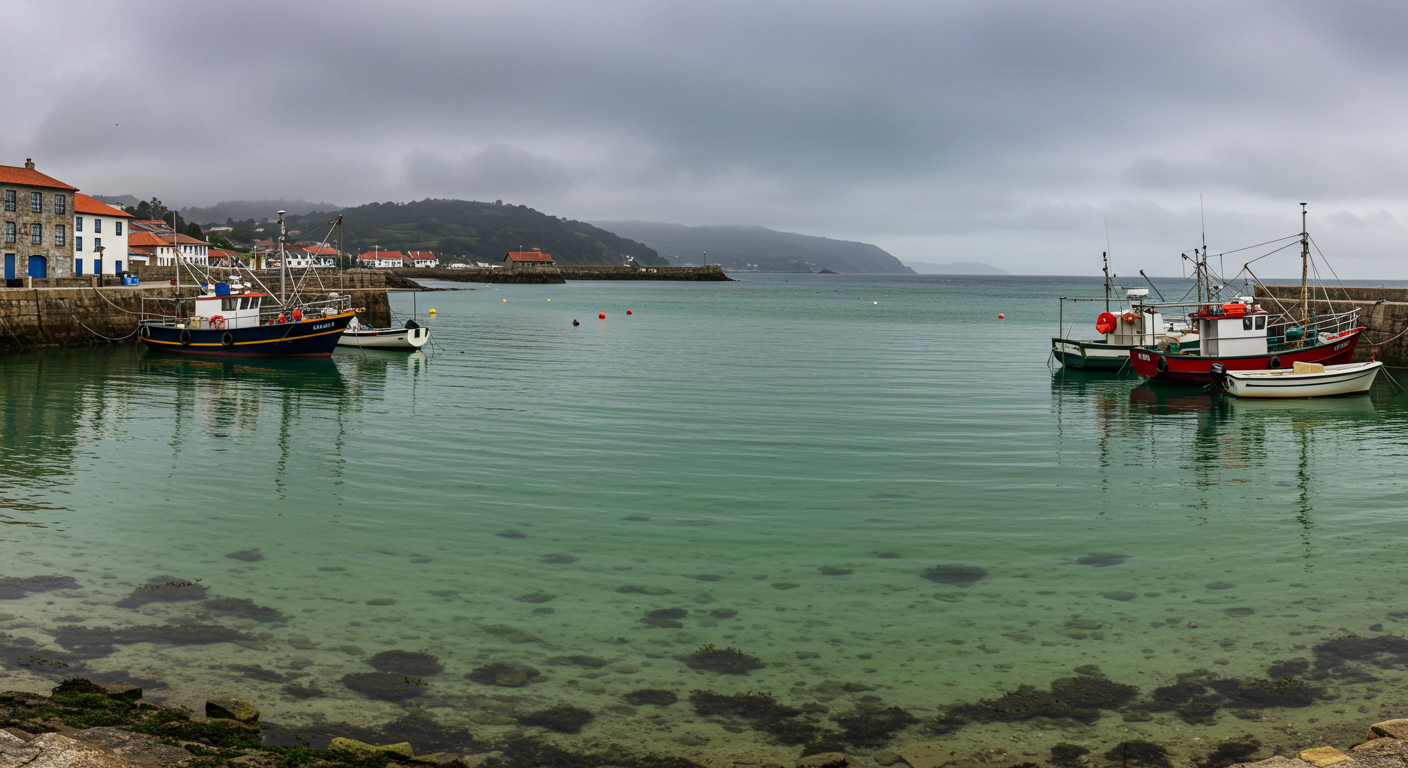
The Cíes get all the press, but the Rías Baixas — the four Atlantic inlets that cut into southern Galicia between Vigo and Muros — are the real story. Think of them as a drowned river valley landscape turned into something between a fjord and a bay, with water calm enough to swim in and cold enough to keep you honest. The light here in July is extraordinary: long evenings, low haze, everything slightly silver.
The four rías — Muros e Noia, Arousa, Pontevedra and Vigo — each have their own character. Ría de Vigo is the most visited, partly because the city of Vigo sits at its mouth and partly because it's the gateway to the Cíes. Ría de Arousa is the biggest and the one most embedded in the local economy — this is where a significant chunk of Spain's shellfish comes from, mussels especially, grown on the floating wooden platforms called bateas that you'll see scattered across the water like a strange geometric garden.
How the Cíes Islands Permit System Actually Works
The permit isn't a separate document you apply for at a government office. It's built into the ferry reservation. Here's the actual process as it stands in 2026:
- Go to the Parque Nacional Illas Atlánticas booking portal (the official one, not a reseller). Reservations for the summer season typically open in late March or early April — set a reminder, because popular dates sell out within hours.
- Choose your date and the number of people. You'll pay a small environmental fee per person (around €3–5; check the current rate when you book).
- Take your reservation reference and buy the ferry ticket separately through Naviera Mar de Ons or whoever is operating that season. The crossing from Vigo takes roughly 45 minutes; from Baiona, a little less.
- At the dock, you'll need to show both the reservation confirmation and the ferry ticket. No reservation, no boarding — the crew check.
Off-season is different. From October through May, visitor numbers drop dramatically and the permit requirement is either lifted or very loosely enforced. If you can manage a visit in late September or early October, the weather is still mild, the water is swimmable, and you might have Playa de Rodas — consistently ranked among Europe's finest beaches — almost to yourself.
What If You Can't Get a Permit?
If the summer dates you want are sold out, a few options are worth knowing. First, check again at 8am a day or two before your target date — cancellations do happen, and the system releases returned slots. Second, consider arriving in Vigo a day earlier than planned and monitoring the portal from there; it's easier to pivot when you're already on the ground.
If the islands genuinely aren't happening, the Ría de Pontevedra has beaches that most visitors completely overlook. The stretch around Sanxenxo and Portonovo is popular with Spanish families but rarely swamped with foreign tourists. Further up the coast, the Illa de Arousa (connected to the mainland by a bridge) has quiet coves on its far side that you can reach by bike. Honest opinion: on a good day with the right light, Praia de Foxos on Arousa is as good as anything on the Cíes, and you don't need to book anything.
Getting Around the Rías Baixas Without a Car
This is where things get complicated, and I'd rather not sugarcoat it. Public transport in rural Galicia is patchy. Vigo and Pontevedra are connected by frequent trains (the journey takes about 30 minutes and costs under €5), and from Pontevedra you can reach the coast by local bus — but the frequency drops sharply outside summer, and the last bus back from some beaches runs at 7pm, which in July feels cruel.
If you're basing yourself in Vigo or Pontevedra and planning day trips, you can manage without a car for the Cíes and for some of the town beaches. But if you want to explore the more remote parts of the ría shores — the pine-backed coves north of Cambados, the estuary paths around Illa de Arousa — you really need wheels. Renting a car in Vigo for a few days is straightforward and not expensive; a small car in shoulder season runs around €30–45 per day from the main companies at the train station.
Eating and Drinking on the Coast
Galician food is the main reason to come here, and the Rías Baixas is where it's at its most serious. Percebes — goose barnacles — are harvested locally and eaten simply boiled with sea salt. A portion in a decent restaurant in Vigo will cost €25–40 depending on the day's catch; anything cheaper is probably imported, which defeats the point. Pulpo á feira (octopus with paprika and olive oil) is everywhere, but the best I've had on this coast was in a small market in O Grove on a Sunday morning, eaten standing up off a wooden plate.
Albariño wine is the other thing. The grape is native to this corner of Galicia and the wines it produces — dry, slightly saline, with good acidity — are exactly right for shellfish. The Rías Baixas DO (denominación de origen) covers the whole area; Cambados is the main town associated with it and hosts a wine festival in early August that's worth building a trip around if you like that sort of thing. A bottle of decent Albariño in a local restaurant runs €12–20; the same wine in a supermarket is €6–10.
Where to Stay
Vigo is the obvious base — good transport links, a proper city with a functioning old quarter around the Casco Vello, and direct ferries to the Cíes. The city has a slightly rough-edged reputation that I think is unfair; the seafood market at Mercado da Pedra is one of the better ones in Spain. Hotels and apartments are reasonably priced compared to the Mediterranean coast: a decent mid-range hotel in the centre runs €80–120 per night in July (as of 2026), though book early.
Pontevedra is smaller, prettier in a historic-centre sense, and almost entirely pedestrianised in the old part. If you're not rushing and want a more relaxed pace, it's the better choice. The downside is that the Cíes ferry leaves from Vigo, so you're adding a train journey each way on island days.
For something slower altogether, renting an apartment in one of the small towns around the ría — Combarro, Sanxenxo, Cambados — puts you closer to the water and the local life. If you're considering a longer stay and thinking about what it takes to formalise a residency in Galicia, the practicalities of renting in Spain without a Spanish payslip are worth reading before you commit to anything, since landlords in smaller Galician towns can be traditional about what they ask for.
If You're Thinking of Staying Longer
Galicia quietly attracts a certain type of remote worker — people who want green instead of sunshine, who don't mind drizzle, and who find the Atlantic light more interesting than the Mediterranean. The cost of living is lower than in Vigo's southern coastal rivals; a one-bedroom apartment in Pontevedra's old town rents for €600–800 per month in 2026, which is genuinely cheap for what you get.
The administrative side of staying longer in Spain is the same wherever you land. If you're arriving from outside the EU, the Spanish Digital Nomad Visa is worth looking at — Galicia is one of the regions where the income requirements feel more achievable against local costs. Once you're here and working through the bureaucracy, getting an NIE sorted is the first real hurdle; the wait times vary a lot by province, and Vigo and Pontevedra have their own patterns worth checking in the NIE appointment wait time guide.
The Camino de Santiago Connection
One thing that surprises visitors: several Camino routes end not in Santiago de Compostela but on the coast. The Camino Portugués Coastal route comes up through the rías, passing through Baiona and Vigo before heading inland. The Camino Finisterre continues from Santiago west to the coast at Fisterra, which is technically in the Rías Altas rather than Baixas, but close enough that many walkers extend their trip south. The walking here is genuinely lovely — eucalyptus forest, granite villages, the smell of the sea appearing before you can see it.
The Rías Baixas rewards slow movement. A week here — a couple of nights in Pontevedra, a day on the Cíes if you've planned ahead, an afternoon in Cambados with a glass of Albariño in hand — is more satisfying than most holidays that cost twice as much.
Book the Cíes ferry early. Eat the percebes. Don't skip the octopus at the Sunday market in O Grove.
Frequently asked questions
- Do you need a permit to visit the Cíes Islands in 2026?
- Yes, during high season (roughly June to September) you need a prior reservation linked to your ferry ticket. The reservation is made through the Parque Nacional Illas Atlánticas portal and includes a small environmental fee per person. Without this booking, the ferry company will not sell you a ticket. Outside peak season the restrictions are much lighter.
- How far in advance do Cíes Islands permits sell out?
- For popular summer weekends, permits can sell out within hours of the booking window opening in late March or early April. Weekdays in June and September are easier. Cancellations do get released, so checking again a day or two before your target date can pay off.
- What is the best beach in the Rías Baixas if you can't get to the Cíes?
- Praia de Foxos on the Illa de Arousa is a strong alternative — calm, backed by pines, and accessible without any permit. The beaches around Sanxenxo and Portonovo are also good and easily reached from Pontevedra by local bus in summer.
- What wine is the Rías Baixas famous for?
- Albariño, a white grape variety native to this corner of Galicia. The wines are dry, slightly saline and high in acidity — a natural match for the local shellfish. Cambados is the main town associated with production and hosts an annual wine festival in early August.
- Is Vigo or Pontevedra better as a base for the Rías Baixas?
- Vigo is better if you're planning a Cíes day trip, since the ferry departs from there. Pontevedra is smaller, almost entirely pedestrianised in its old centre, and arguably more pleasant for a slower stay. Both are connected by frequent trains, so you can base yourself in either and reach the other in 30 minutes.
- Can you visit the Cíes Islands in October?
- Yes, and it's worth considering. The permit requirement is either lifted or very loosely applied from October onwards, the water is still swimmable in early October, and visitor numbers drop sharply. Ferry services run less frequently in low season, so check the timetable carefully before you go.
- How do you get to the Rías Baixas from the rest of Spain?
- Vigo has a small international airport with connections to Madrid and several European cities. By train, Vigo is around 2.5 hours from A Coruña and the high-speed AVE connects to Madrid in roughly 2.5–3 hours. From Porto in Portugal, it's about 1.5 hours by road or a longer, slower train journey via the regional service.