Best Spanish Island for Families with Young Kids: Mallorca vs Menorca vs Canaries
Mallorca, Menorca or the Canaries — which is the best Spanish island for families with young kids? Honest, detailed comparison for 2026.
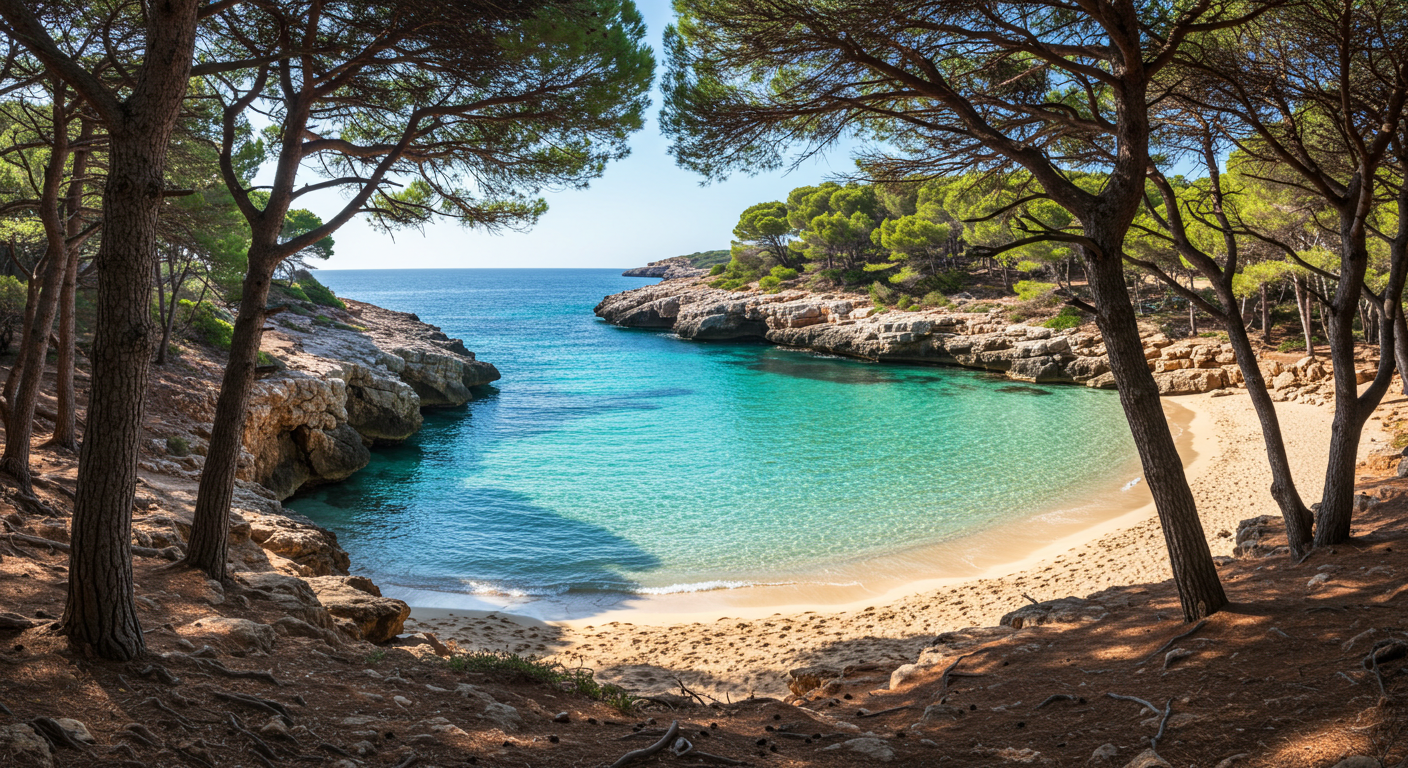
Three families I know went to different Spanish islands last summer with toddlers and primary-school-age children. One came back raving, one came back exhausted, and one is already rebooked. The difference wasn't luck — it was choosing the right island for the specific age and temperament of their kids.
So: what is the best Spanish island for families with young kids? The short answer is that Menorca wins for calm, shallow beaches and a relaxed pace if your children are under eight; southern Tenerife or Lanzarote wins if you need year-round warm weather and reliable sunshine; and Mallorca is the most practical all-rounder with the best infrastructure but requires sharper resort selection to avoid the rowdier parts. The right choice depends almost entirely on when you're going, how old your children are, and how much you care about the beach quality versus convenience.
Now the detail.
What Actually Matters When You're Travelling with Young Children
Forget the aerial drone shots. When you have a four-year-old and a seven-year-old in tow, what you actually need is: shallow, calm water they can wade into without getting knocked over; shade near the beach; a short transfer from the airport; accommodation where a nap doesn't require military silence; and somewhere to buy Calpol, nappies, and a replacement swimming ring at 9pm when yours has just deflated. On all of those measures, the three island groups perform very differently.
Mallorca: The Practical Choice
Mallorca is the largest and most visited of the Balearics, and that scale is both its strength and its problem. The infrastructure is genuinely excellent — Palma airport is one of the best-connected in Spain, with direct flights from dozens of UK and European airports, often for sensible prices even in July. The island has more paediatric pharmacies, English-speaking doctors, and well-stocked supermarkets per square kilometre than the other options here. If something goes wrong with a small child — a fever, an ear infection, a broken arm — Mallorca is where you want to be.
The beaches, though, require careful picking. Playa de Muro in the north is outstanding for young children: wide, sandy, very gradually shelving, with calm water most of the time and decent facilities. Cala Mondrago in the south-east is smaller but gorgeous and usually gentle. What you want to avoid is the strip between Magaluf and El Arenal, which is loud, boozy, and depressing regardless of how old your children are. The north-west — Sóller, Deià — is beautiful but the water can be choppy and the beaches are often pebbly or very small.
Price-wise, Mallorca is not cheap in July and August. A decent apartment with a private pool near a family-friendly beach will cost you €200–€350 per night in peak season, sometimes more. Book in May or go in June or September, when prices drop by 30–40% and the beaches are far less packed. The sea is still warm enough in late September — if you're curious about water temperatures across Spain in autumn, Can You Swim in the Sea in Spain in October? has the full picture.
One honest caveat: Mallorca in August can feel less like a holiday and more like a survival exercise. The roads are congested, the popular beaches are rammed, and the restaurants in resort areas are often mediocre and expensive. Go in June or early September and it's a genuinely different experience.
Menorca: The Best Balearic for Small Children
Why the Beaches Are in a Different League
Menorca has something neither Mallorca nor Ibiza can match: a coastline that is almost entirely protected by the Biosphere Reserve designation, which means development is tightly controlled and the beaches are mostly wild, uncrowded, and clean. Crucially for families, a high proportion of Menorca's south-coast beaches — Cala Turqueta, Son Bou, Cala en Bosc — have water that is extraordinarily calm and shallow. The Mediterranean here is almost lagoon-like on a still day. I've stood waist-deep 30 metres from the shore while a two-year-old pottered around my ankles. You simply don't get that on the Atlantic coast.
The island is small — you can drive end to end in about 45 minutes — which means you're never far from the airport, never far from a town, never stuck in a lengthy transfer with a grumpy child. Mahón (Maó) airport is compact and easy, though flight connections are fewer than Mallorca's, and flights can be pricier, particularly from regional UK airports.
The pace of the island is genuinely slower. The main towns — Ciutadella in the west, Mahón in the east — are lovely for an evening stroll with kids: manageable in scale, not overwhelming, with ice cream parlours that stay open late in summer and harbour restaurants where children are genuinely welcomed rather than merely tolerated. Menorca does not have a Magaluf. It doesn't have a single resort strip that exists purely for adult excess. That is not a small thing.
The Downsides
Menorca is seasonal in a way the Canaries are not. Most of the beach bars, many of the restaurants, and some of the smaller hotels close from November to April. If you're going in the school holidays, you're going in July or August, which means prices are high (though still generally lower than equivalent Mallorca properties). Budget €150–€250 per night for a decent family villa or apartment with outdoor space. The island also gets the tramuntana wind, which can make some north-coast beaches genuinely rough — always check which coast your accommodation is near.
The Canary Islands: Year-Round Sun and a Different Kind of Holiday
The Canaries are not the Balearics, and it's worth being clear about that upfront. They sit off the coast of West Africa, not in the Mediterranean, and the Atlantic Ocean behaves differently. The water is cooler (around 20–22°C in summer, dropping to 17–18°C in winter), the waves can be stronger, and the landscape — particularly on Tenerife and Lanzarote — is volcanic and dramatic rather than pine-forested and cove-dotted.
What the Canaries offer that nothing else in Spain can match is reliable sunshine in winter and spring. If you're travelling in February half-term or Easter, and you want warmth, the Canaries are your only real option in Spain. Average daytime temperatures in Tenerife South in February sit around 22–23°C. The Balearics in February are 14°C and often grey.
Tenerife for Families
Tenerife is the biggest and most varied of the Canaries. For families with young children, the south of the island — Las Américas, Los Cristianos, Costa Adeje — is the relevant zone. It's unambiguously a resort coast: big hotels, water parks, organised entertainment. Siam Park near Costa Adeje is genuinely one of the best water parks in Europe and is extraordinary if your children are old enough to appreciate it (roughly five and above). The beach at El Médano in the south-east is wide and sandy but can be windy — it's a kite-surfing spot for a reason. Playa de las Teresitas in the north, near Santa Cruz, is calmer and very beautiful, though it's a longer drive from the main resort area.
The south of Tenerife is purpose-built for tourism in a way that can feel soulless if you're after authentic Spain. The upside is that everything works: there are family restaurants everywhere, supermarkets are well-stocked, and the transfer from Tenerife South airport to Costa Adeje is under 20 minutes.
Lanzarote: Surprisingly Good for Families
Lanzarote is often overlooked in favour of Tenerife but deserves more attention. Playa Blanca in the south and Puerto del Carmen on the east coast both have calm, sandy beaches with gentle water — better for small children than much of Tenerife's Atlantic-facing shore. The island is compact, the airport transfer is short, and the Jameos del Agua and Cueva de los Jameos are genuinely fascinating for children of almost any age (volcanic caves with blind albino crabs — try stopping a seven-year-old talking about that for a week).
Lanzarote also tends to run slightly cheaper than Tenerife in accommodation, though the gap has narrowed. A self-catering apartment in Puerto del Carmen with a pool runs around €100–€180 per night in peak season as of 2026, though always verify current rates.
Gran Canaria
Briefly: Maspalomas and Playa del Inglés in the south are family-friendly in the same resort-package way as Tenerife South. The dunes at Maspalomas are spectacular and the beach is enormous. The water can be rougher than the sheltered Balearic coves, so for very small children (under three), you need to pick your spot carefully.
The Direct Comparison
Rather than a bullet-pointed table, let me just say it plainly:
For ages 0–4: Menorca, specifically the south-coast coves, is the safest and most relaxed choice. The water is the calmest, the pace is the gentlest, the environment is the least overwhelming. If you can only go in summer, this is where I'd send you.
For ages 4–10 in summer: Mallorca gives you the most flexibility — better flight connections, more to do on rainy days, more variety. Just pick your resort carefully and book early.
For any age, October to April: The Canaries, full stop. Nothing else is viable if you want actual warmth and reliable beach weather. Tenerife South and Lanzarote are both solid; I'd slightly edge Lanzarote for the landscape and the slightly lower prices.
For a first family beach holiday abroad: Menorca. It's manageable, beautiful, and largely idiot-proof in the best possible way.
Practical Bits Nobody Mentions
Car hire: you need it on all three island groups. Do not attempt Menorca or the Canaries without a car; even in Mallorca, unless you're staying in a resort and never leaving it, a car makes the difference between a good holiday and a great one. Book well in advance for July and August — hire cars genuinely sell out on all these islands, and last-minute prices are punishing. If you're bringing your own car seat from home, double-check the car hire company's policy before arrival. Note that if you're relocating rather than visiting, How Long Can You Drive in Spain on a Foreign Licence? covers the rules.
Healthcare: Spain's public healthcare system is good, and EU citizens with an EHIC/GHIC card have access to public emergency care. For non-EU visitors, travel insurance with medical cover is non-negotiable when travelling with children. If you're thinking about longer-term life in Spain, The Convenio Especial: How to Pay Into Spanish Healthcare Voluntarily explains how to access the public system without an employer.
Food: all three destinations are fine for children. Spain is a genuinely child-friendly dining culture — late dinners, sharing plates, and a general tolerance for small people running around that puts northern Europe to shame. The Canaries have more international fast-food options if that's your emergency fallback; Menorca's restaurant scene is more local and seasonal.
Flights from the UK: Mallorca has the most options by far, with easyJet, Jet2, Ryanair, and British Airways all flying direct from multiple airports. Menorca has fewer routes and can be pricier. The Canaries are well-served year-round, which is the point.
If you're weighing up longer stays in Spain more broadly — perhaps a slow-travel month or a relocation — the Valencia vs Málaga for Beach Living comparison covers mainland coastal life with a similarly practical lens.
The honest bottom line: there is no universally "best" Spanish island for families. There is only the best one for your children's ages, your travel dates, and your budget. But if you forced me to choose one for a week in July with a four-year-old and a six-year-old? Menorca, south coast, without hesitation.
Frequently asked questions
- Is Menorca or Mallorca better for toddlers?
- Menorca is generally better for toddlers. Its south-coast beaches have exceptionally calm, shallow water — more lagoon-like than typical Mediterranean beaches — and the island's slower pace is less overwhelming for small children. Mallorca has better infrastructure (more shops, doctors, flight connections) but requires careful resort selection to avoid busy or choppy areas.
- Which Canary Island has the calmest sea for young children?
- Lanzarote (particularly Playa Blanca and Puerto del Carmen) and the south coast of Gran Canaria (Maspalomas) generally offer calmer water than Tenerife's Atlantic-facing beaches. The Canaries are Atlantic islands, so conditions are less predictably flat than the Balearics — always check the specific beach orientation before you go.
- Can you visit the Balearic Islands in October with young children?
- Yes, but with caveats. Sea temperatures in Menorca and Mallorca are still around 22–23°C in early October, so swimming is perfectly viable. However, some beach bars and seasonal restaurants will be closing, and weather can be unsettled from mid-October onwards. The Canaries are a more reliable bet if you're travelling after mid-October.
- Do I need a hire car in Menorca with kids?
- Almost certainly yes. Public transport in Menorca is limited, and the best family beaches — Cala Turqueta, Cala en Bosc, Son Bou — are not reachable without a car. Book well in advance for July and August; hire cars sell out and last-minute prices are high. Book a child seat at the same time.
- Is Tenerife good for a family holiday with young children in winter?
- It's one of the best options in Spain for winter sun with children. The south of Tenerife (Costa Adeje, Los Cristianos) averages around 22°C in February, the resorts are fully open year-round, and there are plenty of family-oriented activities. The water is cooler than in summer (around 19–20°C) but still swimmable for many children.
- How far in advance should I book a family villa in Mallorca for August?
- At least six months ahead, ideally more. Good family-friendly villas and apartments with private pools in Mallorca's best areas for children (Playa de Muro, Cala Mondrago) go fast, and prices rise steeply as August approaches. Booking in January for August is not excessive.
- What is the easiest Spanish island to reach from the UK with young children?
- Mallorca, by some distance. It has the most direct routes from UK regional airports (Manchester, Birmingham, Edinburgh, Bristol, and more), the most frequency, and generally the most competitive prices. Menorca has fewer routes and can involve a connection. The Canaries have good year-round service from most UK airports, but flight times are around 4–4.5 hours versus 2.5 hours for Mallorca.