Slow Travel in Málaga: Museums, Beaches & Picasso in 3–5 Days
How many days do you need in Málaga for slow travel? Three days minimum, five if you want beaches, museums and Picasso without rushing. Here's how to do it properly.
Three days is the minimum. Five is better. A week and you'll start wondering why you ever left.
Málaga is probably the most underestimated city on the Spanish mainland — and that's saying something, given how thoroughly most visitors treat it as a transfer point for the airport and the coast road to Marbella. They're missing the point entirely. The city has spent the last fifteen years quietly reinventing itself, and the version that exists now — with its cathedral quarter, its extraordinary concentration of museums, its neighbourhood fish bars and its long sandy beach a ten-minute walk from the old town — rewards the kind of slow, unscheduled attention that most itineraries never allow.
So: how many days do you actually need in Málaga for slow travel? The honest answer is three nights at an absolute minimum, five if you want to include a day at the beach without sacrificing the museums, and seven if you're considering whether you might want to live here. Each extra day reveals a different layer. The first day is all surface — the Picasso Museum, the Alcazaba, the Atarazanas market. By day three you're eating breakfast at a bar on Calle Carretería and nobody is taking your photograph.
What 'Slow Travel' Actually Means in Málaga
It doesn't mean a loose itinerary. It means choosing a neighbourhood, walking it properly, and eating where the locals eat rather than where TripAdvisor says to. Málaga is compact enough that you can cover most of the old town on foot, but layered enough that it repays repetition. Go back to the same café. Take the same shortcut through the Pasaje de Chinitas twice. The city reveals itself through small returns.
The best base is the historic centre — anywhere in the triangle between the cathedral, the Mercado de Atarazanas and the Alameda Principal. Avoid the hotels right on the beach promenade unless you specifically want that; you'll spend half your time walking back into the action. The Soho district (just south of the Alameda) has become genuinely liveable over the past decade, with street art, independent restaurants and slightly lower prices than the cathedral quarter.
The Picasso Museum: Don't Rush It
The Museo Picasso Málaga on Calle San Agustín is the obvious anchor of any visit, and it deserves more time than most people give it. Two hours minimum. The permanent collection covers more than 200 works across every period, and the building itself — the 16th-century Buenavista Palace — has Phoenician and Roman remains in the basement that are half the interest. Book tickets online in advance (around €12 as of 2026 for the permanent collection, check the museum website for current prices); the queues for walk-ins can be brutal in summer.
Two blocks away, the Fundación Picasso Museo Casa Natal sits on the Plaza de la Merced, in the apartment where he was actually born. It's smaller, cheaper (around €3) and often overlooked. Worth an hour. The square itself is good for an early evening beer — the terrace bars are mostly decent, the atmosphere relaxed.
The thing that surprises people is that Málaga now has more museums per square kilometre than almost any comparable Spanish city. The Centro de Arte Contemporáneo (CAC) is free and genuinely excellent. The Carmen Thyssen, tucked into a 16th-century palace near the cathedral, has a strong collection of 19th-century Andalusian painting that nobody tells you about. The Museo de Málaga in the Aduana building covers both fine art and archaeology. You could spend three full days just doing museums and not repeat yourself.
The Alcazaba and Gibralfaro: Do One, Maybe Both
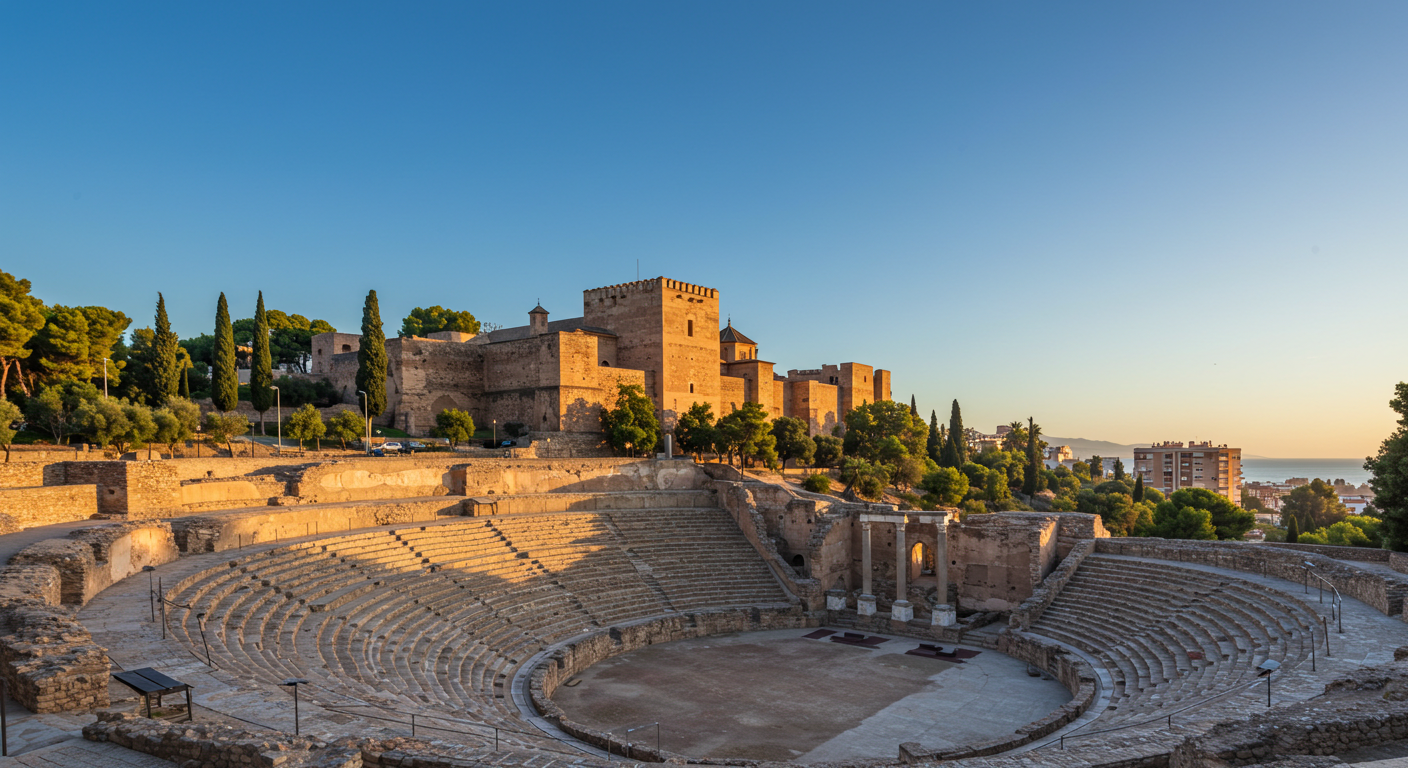
The Alcazaba — the Moorish fortress above the Roman theatre — is one of the best-preserved in Andalusia and well worth the €3.50 entry. The views over the port are good; the gardens inside are lovely in spring. If you're already up there, the path continues up to Castillo de Gibralfaro, which is essentially a higher viewpoint with less to see inside. The walk between them is steep and takes about 20 minutes. On a hot day in July or August, do it early morning or skip Gibralfaro entirely — the combined ticket is around €5.50, but the extra climb in 35°C heat is rarely worth it.
The Roman theatre at the base of the Alcazaba is free to view and has a small interpretive centre. Genuinely impressive and perpetually undervisited.
Eating in Málaga: The Non-Negotiables
Málaga has its own food culture that's distinct from the rest of Andalusia, and it's worth understanding before you start eating. The key things:
Espetos — sardines skewered on a cane and grilled over a wood fire on the beach — are the signature dish, and the best ones are on the chiringuitos of El Palo, a beach neighbourhood about 4km east of the centre. The ones on the main Malagueta beach closest to the port are fine but more touristy. Take a bus (the 11 runs along the coast road) or a taxi (around €8 from the centre) and eat at one of the simpler spots in El Palo. Order a half-ración, a cold Cruzcampo and nothing else.
For breakfast, Málaga has a specific thing: pitufo (a small soft roll) with olive oil and crushed tomato, or with manteca colorá (pork lard with paprika, which sounds alarming and tastes extraordinary). Any neighbourhood bar will do this. Budget €2–3.
The Mercado de Atarazanas is the main covered market and genuinely worth a visit before 2pm on any day except Sunday. The seafood stalls in the central hall are the draw. There are bars around the edges where you can have a glass of Málaga sweet wine (vino dulce) with some jamón for a couple of euros.
For a proper sit-down meal, the area around Calle Granada and Calle Císter has a mix of good-value menú del día options at lunch (€12–15 for three courses with wine, as of 2026). In the evenings, Calle Carretería and the streets around it have become the local bar strip — less polished than the cathedral quarter, considerably more fun.
One to skip: the seafood restaurants right on the Malagueta beach promenade. Overpriced for what they are. The food is the same quality you'll get for half the price 500 metres inland.
The Beach: Timing Is Everything
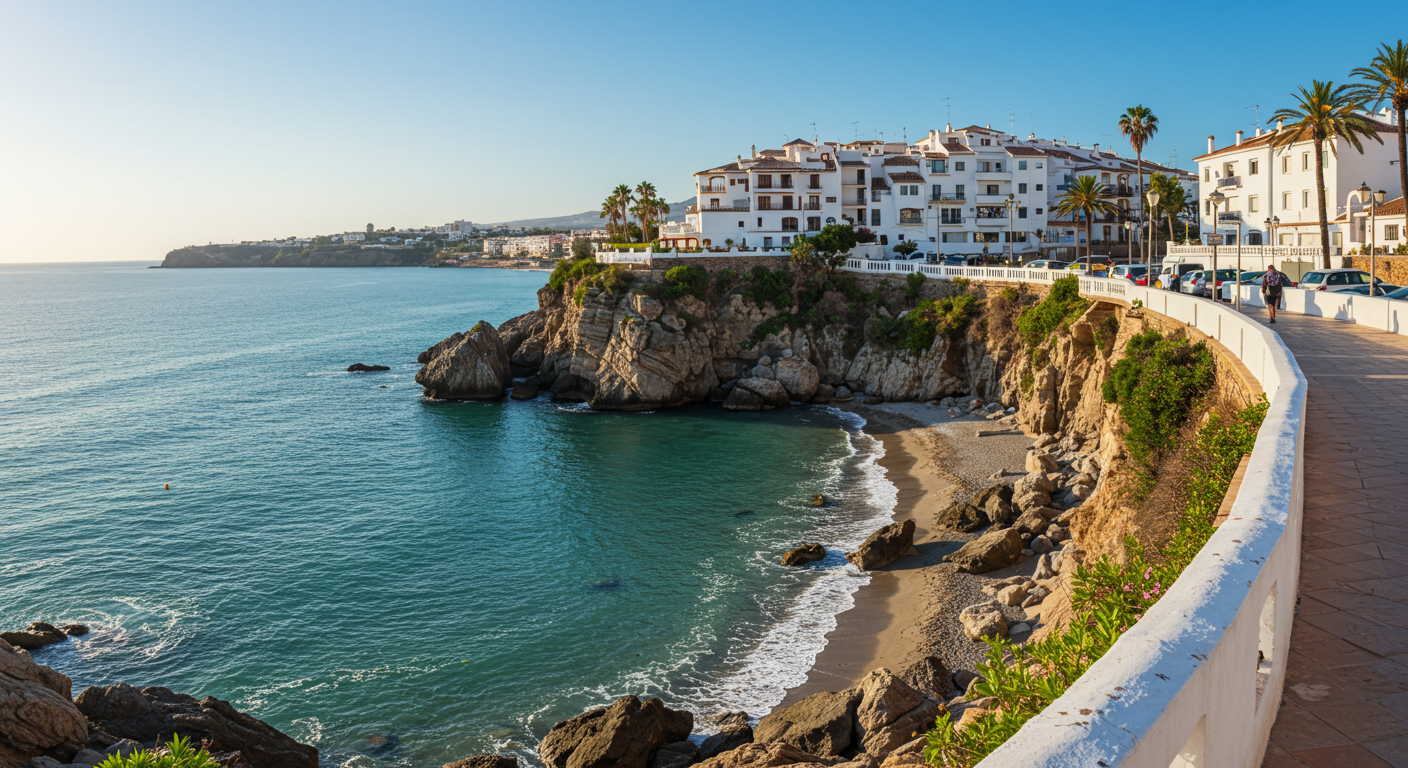
The Playa de la Malagueta is right there, ten minutes from the cathedral. It's a proper city beach — long, wide, with dark sand, and busy from June through September. In July and August, get there before 10am or after 6pm if you want a spot. In May, June and September it's genuinely pleasant at any hour.
For a quieter experience, the beaches to the east (El Palo, Pedregalejo) are more residential and less crowded. To the west, Playa de la Misericordia is larger and attracts more locals. None of these require a car — the coastal bus routes connect them all.
If you're visiting in October or November and wondering whether it's worth going in, the sea temperature around Málaga typically stays above 20°C through October and drops to around 18°C in November — swimmable for most people, though the beach will be quiet. The city itself is lovely in autumn: warm, uncrowded, and the light is extraordinary.
The Soho District and the Bits Nobody Mentions
The area south of the Alameda, which locals call Soho, has changed dramatically since the early 2010s. The street art project (MAUS — Málaga Arte Urbano Soho) turned a fairly down-at-heel neighbourhood into something genuinely interesting. It's worth walking through rather than just photographing: there are independent coffee shops, a good theatre, and a cluster of restaurants on Calle Tomás Heredia that are less obvious than the cathedral-quarter options.
The port redevelopment (Muelle Uno) is slick and pleasant for an evening walk, though the restaurants there are mostly chains and hotel groups. The views back towards the city and the Alcazaba at dusk are worth the walk even if you don't eat there.
For a quieter afternoon, the Jardines de Pedro Luis Alonso — tiny formal gardens next to the Ayuntamiento — are almost always empty and good for reading. The Parque de Málaga along the Alameda is the main park, with peacocks, and genuinely lovely on a weekday morning.
If You're Thinking About Moving Here
Málaga has become one of the most popular destinations for remote workers and relocators in southern Spain, and it's not hard to see why: the infrastructure is there (good airport, fast internet, co-working spaces), the cost of living is lower than Madrid or Barcelona, and the quality of life is high. Rental prices have risen sharply since 2020 — a decent one-bedroom in the centre will cost €900–1,200/month as of 2026, which is no longer cheap by Andalusian standards — but it's still considerably less than the major northern cities.
If you're seriously considering it, the practical steps pile up quickly. You'll need to get your NIE sorted, and the wait times at Málaga's foreigners' office can be long — worth reading up on how to get a cita previa when appointments seem impossible. If you're planning to work remotely for a non-Spanish employer, the Spanish Digital Nomad Visa is worth understanding before you commit. And if you're going to be here longer than 90 days, getting empadronado — registered at your address — unlocks access to everything from healthcare to library cards.
For freelancers and self-employed people, registering as autónomo is a separate process with its own paperwork logic. And before any of that, you'll probably want a Spanish bank account — opening one as a non-resident is more straightforward than it used to be, but there are still a few traps.
Málaga isn't a secret anymore. But it's still a city that rewards the people who actually stay.
Frequently asked questions
- How many days do you need in Málaga for a slow travel trip?
- Three nights is the minimum to cover the main museums, the beach and the old town without feeling rushed. Five days is the sweet spot for slow travel — enough time to revisit places, explore neighbourhoods like El Palo and Soho, and take a half-day out to the beach without sacrificing anything else. A week works well if you're testing the city as a potential base.
- Is the Picasso Museum in Málaga worth visiting?
- Yes, and it's worth spending two hours rather than rushing through. The permanent collection covers more than 200 works and the building itself has Phoenician and Roman archaeological remains in the basement. Book tickets online in advance to avoid queues — around €12 for the permanent collection as of 2026. The smaller Casa Natal on Plaza de la Merced is a worthwhile add-on at around €3.
- What is the best beach in Málaga for locals rather than tourists?
- The beaches of El Palo and Pedregalejo, roughly 4km east of the centre, are more residential and considerably less crowded than the Malagueta beach. They're also where you'll find the best espetos (grilled sardines on canes) at the traditional chiringuitos. The 11 bus runs along the coast road from the centre.
- Is Málaga good for digital nomads and remote workers in 2026?
- Málaga has become one of the most established remote-work destinations in southern Spain, with co-working spaces, reliable infrastructure and a reasonably large international community. Rental prices have risen — expect €900–1,200/month for a one-bedroom in the centre as of 2026 — but it's still cheaper than Madrid or Barcelona. The Spanish Digital Nomad Visa is an option for non-EU nationals working for foreign employers.
- Can you swim in Málaga in October and November?
- Yes, realistically. Sea temperatures around Málaga typically stay above 20°C through October and drop to around 18°C in November — swimmable for most people. The beach will be quiet, the city is uncrowded and the weather is usually warm and sunny. It's arguably the best time to visit if you don't need a packed summer beach experience.
- What is the best neighbourhood to stay in Málaga?
- The historic centre — roughly between the cathedral, the Atarazanas market and the Alameda — puts you within walking distance of everything. The Soho district just south of the Alameda is slightly cheaper, more local in feel and has good independent restaurants. Avoid hotels right on the Malagueta beach promenade if you want to be in the middle of things; it's a pleasant enough area but adds walking time to most of what makes the city interesting.
- How do I get from Málaga airport to the city centre?
- The Cercanías train (line C1) runs from the airport terminals to Málaga Centro-Alameda station in about 12 minutes and costs around €1.80 as of 2026 — by far the cheapest and most reliable option. Taxis are available but cost €20–25 for the same journey depending on traffic. There is no direct metro from the airport.