Best Beach Towns on the Costa del Sol Near Málaga: Summer 2026
The best beach towns on the Costa del Sol near Málaga for summer 2026 — from Nerja's calas to Tarifa's wind. Honest picks, prices, and what to skip.
Best Beach Towns on the Costa del Sol Near Málaga for Summer 2026
The Costa del Sol gets a bad press in certain circles — Benidorm comparisons, package-holiday stigma, the ghost of Torremolinos circa 1985. Some of that reputation is earned. But the coastline that stretches east and west of Málaga city is genuinely long (about 150 kilometres), genuinely varied, and still capable of surprising you if you know which towns to target and which to drive straight through.
The short answer to which beach towns near Málaga are worth your time: Nerja to the east and Tarifa to the far west are the two poles of excellence. Between them, Frigiliana (technically inland but paired with Nerja's beaches), La Herradura, and the underrated Estepona old town earn their places. Marbella's Puerto Banús is fun for an hour and then exhausting. Torremolinos is exactly what you fear, though its beach is enormous and its chiringuitos serve a decent espeto.
Below is a town-by-town breakdown — distances are from Málaga city centre, driving time in normal summer traffic (which is never as fast as Google promises).
Nerja: Still the Best of the East
Nerja sits about 55 kilometres east of Málaga, roughly an hour by car on the A-7. It's also reachable by bus from Málaga's bus station — the ALSA service runs regularly and costs around €4–5 each way as of 2026. There's no train.
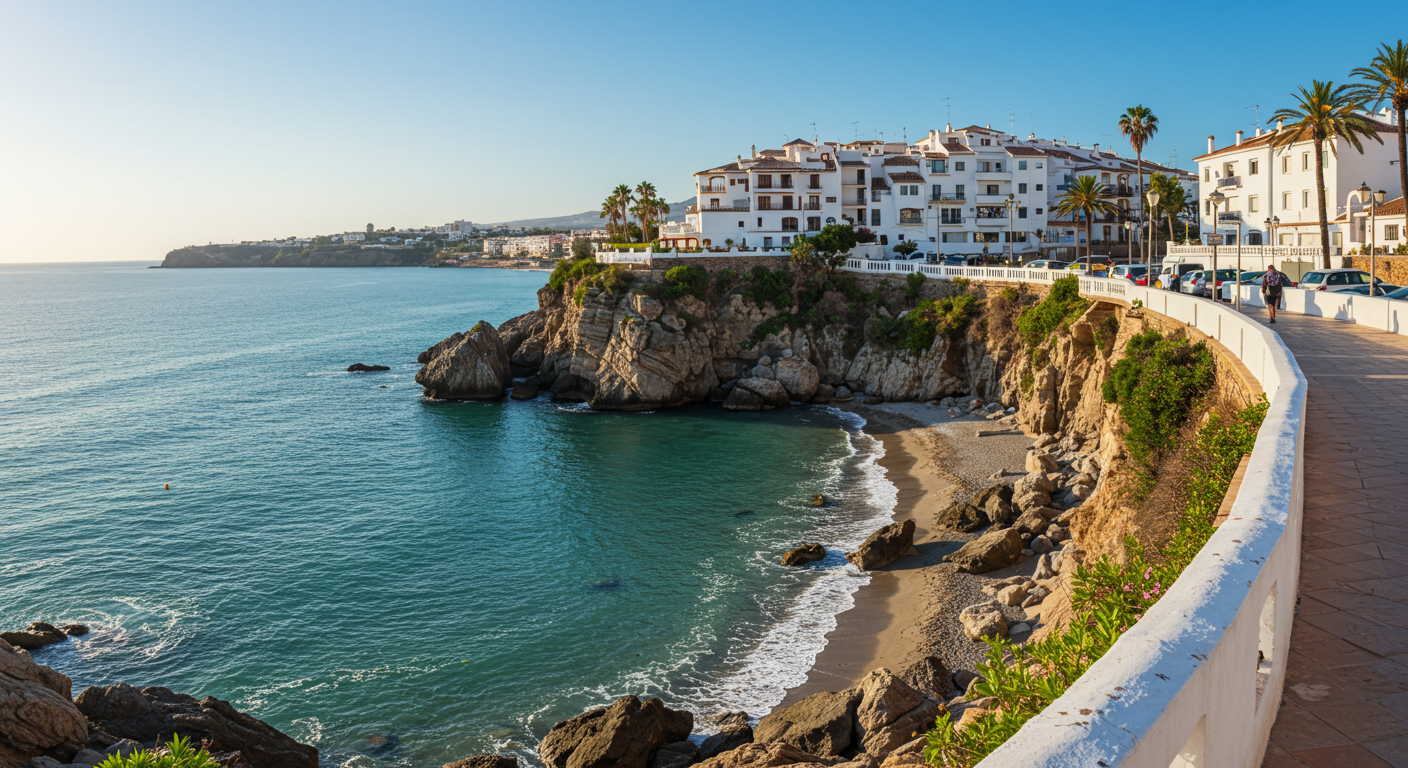
The town's headline act is the Balcón de Europa, a clifftop promenade with a view that's been pulling tourists since the 1950s. It's genuinely lovely and completely free. The beaches directly below — Calahonda, Carabeillo — are small and get busy by 10am in July and August. Go at 8am or after 6pm.
The better beaches are a short walk or drive further: Playa Burriana is the main one, about 800 metres of dark sand backed by good chiringuitos. Ayo's, the legendary paella restaurant at the eastern end, has been going for decades and the rice is still worth the wait. Get there before noon or queue for a table.
For real seclusion, the calas east of Nerja — Maro, El Cañuelo — require either a walk down steep paths or a kayak. El Cañuelo is inside the Acantilados de Maro-Cerro Gordo natural park and has no services whatsoever. Bring water.
Nerja itself has become expensive by Andalusian standards. A decent apartment for a week in August will run €900–€1,400 depending on size and how far in advance you book. Book in March if you can. The town still has a working Spanish centre — proper tapas bars on Calle Pintada, a good Wednesday market — alongside the tourist layer, which is more British-expat than lager-lout.
Frigiliana: The Village That Pairs with Nerja's Beaches
Seven kilometres inland from Nerja, Frigiliana is a Moorish white village that gets photographed constantly and still manages not to feel completely hollow. The streets are steep, the flowerpots are real, and there's a good local winery (Bodegas Bentomiz is worth the detour, though it's technically outside the village — call ahead).
Nobody actually swims here; you come for the afternoon, eat lunch, walk the upper barrio, then head back down to the beach. It works well as a half-day attached to a Nerja stay.
La Herradura: Quieter, Greener, Overlooked
West of Nerja but east of Almuñécar (which is technically Granada province, not Málaga), La Herradura is a small bay town that most Costa del Sol guides ignore because it's slightly off the main drag. That's precisely why it's worth knowing about.
The bay is almost perfectly curved, sheltered from the prevailing winds, and the water is unusually clear for this stretch. Snorkelling is good near the western rocks. There are a handful of good fish restaurants on the seafront — nothing fancy, but fresh and reasonably priced (a ración of coquinas for around €10–12). The town itself is quiet to the point of dullness if you're after nightlife, which is exactly right if you're not.
West of Málaga: The Overcrowded Middle
The stretch from Torremolinos through Benalmádena, Fuengirola, and into Marbella is where the coast's reputation takes its hits. These are not bad places exactly, but they're built for volume. The beaches are wide and well-maintained, the infrastructure is solid, and if you're travelling with children who just want reliable sand and calm water, Fuengirola actually delivers. But the seafront is relentlessly developed, the chiringuitos are mostly mediocre, and you'll spend a lot of time in traffic in July and August.
Marbella's old town — the casco histórico behind the Alameda — is genuinely attractive and worth a morning. The orange-tree square is one of the nicest plazas in Andalusia. But the Golden Mile and Puerto Banús are a different universe: oligarch boats, €25 cocktails, a kind of performative wealth that becomes tedious about forty minutes in. Skip it unless you're specifically there for that.
Estepona: The Best Town Most People Drive Past
Estepona, about 80 kilometres west of Málaga, has been doing quiet urban regeneration for the past decade and the results are real. The old town has been cleaned up, the murals programme has turned random walls into something worth seeking out, and the fish market is still a working fish market rather than a lifestyle experience.
The beach — Playa de la Rada — is long, wide, and rarely as packed as Marbella's equivalents. The paseo is pleasant without being spectacular. There are good tapas bars on Calle Terraza and the surrounding streets; try the berberecho (cockles) if they're on the board.
For families considering a longer stay or relocation to this coast, Estepona has decent infrastructure — international schools, a growing expat community — without the price tag of Marbella. If you're weighing up where to base yourself and need to sort out paperwork like getting empadronamiento without a standard rental contract or renting without a Spanish payslip, the Estepona council offices are generally less overwhelmed than Málaga city's.
Tarifa: A Completely Different Animal
Tarifa is 110 kilometres west of Málaga — technically on the Costa de la Luz, not the Costa del Sol, and the difference is physical. The wind here is constant and often strong; this is the kitesurfing and windsurfing capital of Europe. The beaches are enormous, wild, backed by dunes, and the water is Atlantic, not Mediterranean — cooler, rougher, more dramatic.
If you want a quiet sunbed-and-cocktail beach holiday, Tarifa is wrong for you. If you want long empty walks on Playa de los Lances, good fish at the port, and the surreal experience of seeing Africa clearly from the beach café, it's extraordinary. The town itself is small, labyrinthine, and genuinely cool in the non-marketing sense — independent restaurants, a young international crowd, no package tourism to speak of.
The drive from Málaga takes about 1 hour 45 minutes via the A-7. It's a long day trip; better as a two-night stay.
Practical Notes for Summer 2026
When to go: July and August are the hottest (35°C+ is common inland, slightly less on the coast) and the busiest. June and September are significantly more pleasant — warm enough to swim comfortably, less crowded, cheaper accommodation. Early October is still viable for swimming on this coast, particularly in sheltered bays.
Getting around: A car is genuinely useful for reaching the smaller calas and villages. The A-7 coastal road is free but slow in summer. The AP-7 toll motorway is faster and worth the €5–8 for longer stretches. Málaga's bus network reaches most towns but frequencies drop outside peak season.
Costs in 2026: Expect to pay €15–25 per person for a decent lunch with wine at a chiringuito. Sunbed hire (where it exists — many public beaches don't have it) runs €8–12 per sunbed per day. Parking in Nerja and Marbella in August is a genuine problem; budget time and money for it.
If you're relocating, not just visiting: The Costa del Sol has a large established expat infrastructure, particularly around Marbella and Estepona. Setting up here involves the same bureaucratic steps as anywhere in Spain — opening a Spanish bank account as a non-resident being one of the first practical hurdles. Remote workers considering a longer stay should look at the Spanish Digital Nomad Visa and whether the minimum salary threshold makes sense for their situation. And if you're self-employed, the question of whether you need a gestor to register as autónomo comes up quickly — in Málaga province the answer is almost always yes, at least for the first registration.
The Costa del Sol rewards the people who do a little homework. Go in June, book early, pick Nerja or Estepona over the Benalmádena strip, and eat where the locals eat — which is usually one street back from the seafront and about half the price.
Frequently asked questions
- Which beach town on the Costa del Sol is best for a first visit near Málaga?
- Nerja is the strongest all-round choice for a first visit — it has good beaches, a walkable old town, reliable restaurants, and is easy to reach by bus from Málaga without a car. Book accommodation early; it fills up fast in July and August.
- How far are the best Costa del Sol beach towns from Málaga city?
- Nerja is about 55km east (around an hour by car). Estepona is about 80km west (around 1 hour 15 minutes). Tarifa is 110km west (around 1 hour 45 minutes). All distances are approximate and summer traffic on the A-7 adds time.
- Is it worth visiting the Costa del Sol in June rather than August?
- Yes — significantly so. June temperatures are still 25–30°C on the coast, the sea is warm enough to swim, accommodation is cheaper and easier to book, and the beaches are far less crowded. September is equally good. July and August are the busiest and hottest months.
- Are there any quiet, less touristy beaches near Málaga?
- Yes. The calas around Maro (east of Nerja) and El Cañuelo inside the Acantilados natural park are genuinely quiet, though they require a walk down steep paths and have no facilities. La Herradura bay (technically Granada province but close) is also much calmer than the main Costa del Sol resorts.
- Can you get from Málaga to Nerja by public transport?
- Yes. ALSA buses run regularly from Málaga's main bus station (Estación de Autobuses) to Nerja. The journey takes around 1 hour 15 minutes and costs approximately €4–5 each way as of 2026. There is no train service to Nerja.
- Is Marbella worth visiting on a Costa del Sol trip?
- The old town (casco histórico) is genuinely worth a morning — the Plaza de los Naranjos is one of the nicest squares in Andalusia. But Puerto Banús and the Golden Mile are expensive and quickly exhausting unless you're specifically there for the high-end scene. Don't make Marbella your base unless the budget is generous.
- What's the water like for swimming on the Costa del Sol in summer?
- The Mediterranean water along the Costa del Sol is calm, relatively warm (around 22–25°C in July and August), and generally clear. It's good for families and casual swimmers. Tarifa, on the Atlantic side, is cooler and windier — better suited to water sports than relaxed swimming.