A Slow Guide to Seville: When to Visit for the Best Weather
The best time to visit Seville for good weather is October–November or March–April. This slow guide covers Santa Cruz, Triana, orange trees and honest seasonal advice.
When to Actually Go — and When to Stay Away
The best time to visit Seville for good weather is either late March through mid-May, or October through early November. Those two windows give you warm days (22–28°C), manageable crowds, and the city behaving like itself rather than performing for a coach-tour audience. July and August are brutal — not just warm, genuinely punishing, with temperatures regularly hitting 40°C and occasionally pushing 44°C. The streets empty of locals by noon. The tourists who stay are a particular kind of stubborn.
If you can only go in summer, arrive at 8am, retreat to your accommodation by 1pm, emerge again around 7pm. You'll still have a good time. But you'll spend half of it horizontal in front of a fan.
The short version: October is the sweet spot. The light is extraordinary — low, golden, the kind that makes every azulejo tile look like it was lit for a film — and the city is back to its own rhythms after the August exodus.
Santa Cruz: What the Guidebooks Get Right, and What They Miss
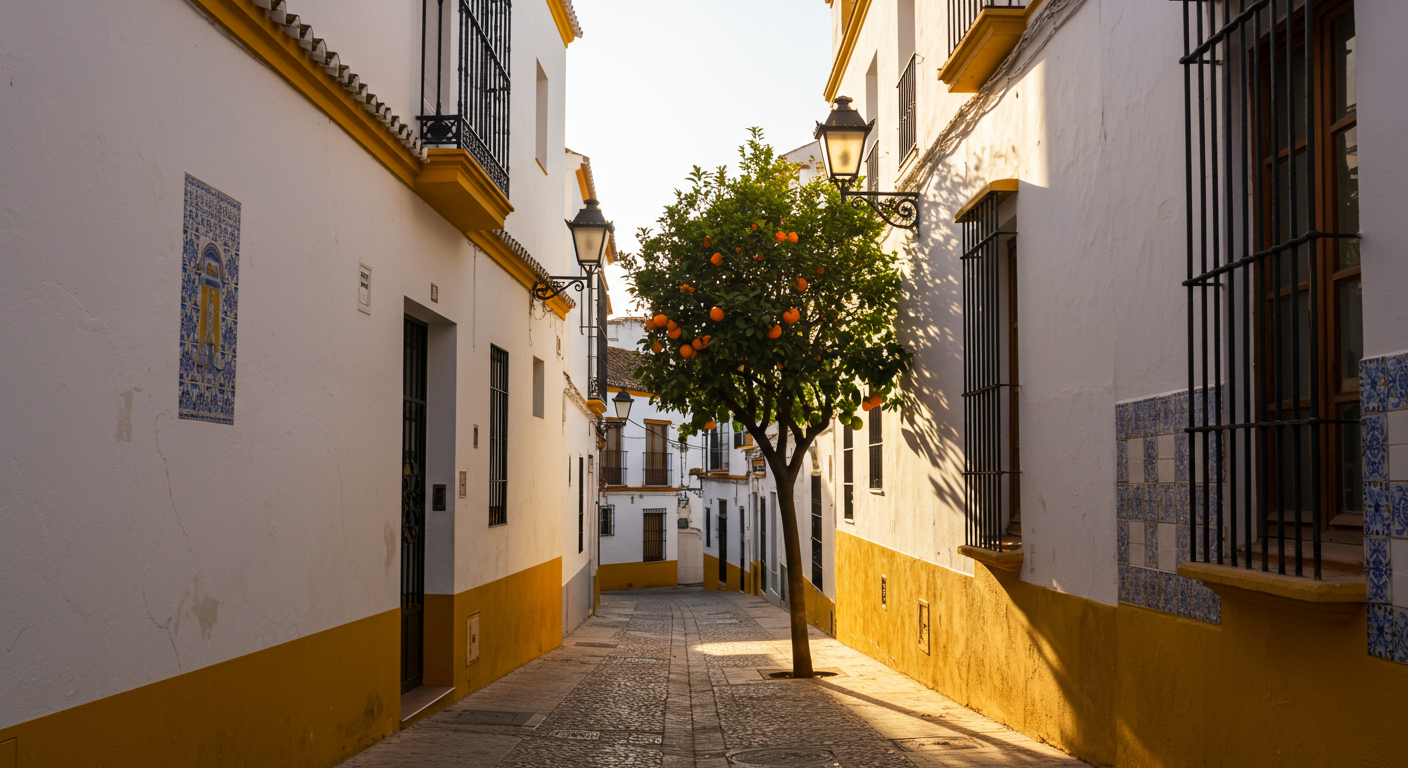
Santa Cruz is the old Jewish quarter, a tangle of whitewashed lanes, iron-grilled windows and small plazas that dead-end unexpectedly into each other. Yes, it's touristy. No, that doesn't make it worthless.
The mistake is treating it like a theme park — snapping the obligatory photo on Calle Agua and leaving. The reward is in lingering. Sit at a table on Plaza de Doña Elvira at 6pm in October, order a manzanilla (the dry, salty sherry from Sanlúcar, not the herbal tea — know the difference before you order), and watch the light drop behind the rooftops. That's what you came for.
Skip the flamenco shows advertised on laminated signs near the cathedral. Most are €40-plus for forty-five minutes of competent but lifeless performance aimed at people who've never seen flamenco before. If you want the real thing, the Casa de la Memoria on Calle Cuna does intimate, properly curated shows — book ahead, as it holds maybe sixty people. Or ask your accommodation host about the local peñas, the private flamenco clubs that occasionally open their evenings to visitors.
The Cathedral and the Giralda tower are genuinely worth the queue and the €12 or so entry fee (check current prices before you go — they adjust). The Giralda was originally a minaret, converted after the Reconquista, and the ramp inside is wide enough that the muezzin rode up on horseback. That detail is worth knowing when you're climbing it.
The Orange Trees: A Brief Note on Not Eating Them
Seville has around 50,000 orange trees lining its streets. They are, without exception, bitter Seville oranges — the same ones that end up in British marmalade. Every January you'll see tourists biting into one off the tree and immediately regretting it. The city actually harvests them and exports to the UK for marmalade production, which is a pleasing circularity.
In spring — usually late February into March — the blossom (azahar) turns the whole city fragrant in a way that's almost overwhelming on a warm evening. If you're planning a visit and can catch that window, it's worth building your dates around it.
Triana: The Neighbourhood That Still Feels Like Seville
Cross the Triana Bridge — officially the Puente de Isabel II, though nobody calls it that — and the tourist density drops noticeably. Triana is the potters' quarter, the old Romani neighbourhood, the place where Seville's flamenco traditions are arguably most deeply rooted. It's also where you'll find some of the best tapas bars in the city, away from the cathedral-adjacent tourist markup.
Calle San Jacinto is the main artery. Bar El Yugo, Bar Las Golondrinas — these are the kinds of places where the tapas still come free with your drink at certain bars, or where a plate of carne mechada (slow-braised pulled beef) costs €3.50 rather than €9. That said, Triana has gentrified considerably in recent years, and the rents have pushed some of the old-school spots out. Don't be surprised if a place you read about has closed or changed hands.
The Mercado de Triana, housed in the old castle of the Inquisition right at the foot of the bridge, is good in the mornings — fresh fish, fruit, cheese — though like most Spanish covered markets it quietens dramatically after 2pm and closes entirely on Sundays. Go on a weekday morning, pick up some jamón and manchego, and have a very slow breakfast.
For ceramics, the tile workshops along Calle Alfarería are worth a wander. Some are genuinely producing hand-painted azulejos using traditional methods; others are selling mass-produced imports with a "made in Triana" sticker. The real ones are more expensive and worth it. If the price seems suspiciously low, it probably is.
The Barrios People Skip
Most visitors stay in Santa Cruz or the Centro and never make it further. Which means they miss a few things worth knowing about.
La Macarena — north of the centre — is where Seville's working-class identity feels most intact. The Basílica de la Macarena houses the famous weeping Virgin (La Esperanza Macarena), whose procession during Semana Santa is the emotional centrepiece of the whole week. The neighbourhood around it has good, cheap tapas bars and almost no tourist infrastructure, which is partly why it's good.
El Arenal is the riverfront neighbourhood between the centre and Triana, and it's more pleasant than its reputation suggests. The Maestranza bullring is here — Spain's most beautiful, if you're interested in bullfighting; a handsome building worth seeing regardless of your views on the spectacle inside.
Nervión is where Seville actually shops — El Corte Inglés, chain restaurants, normal urban life. Not a tourist destination, but useful to know about if you're staying more than a few days and need to restock on anything practical.
Semana Santa and Feria: Go, But Know What You're Getting Into
Semana Santa (Holy Week, the week before Easter) is one of the most extraordinary things I've seen in Spain. The brotherhoods process through the streets carrying enormous floats of religious imagery, sometimes for twelve hours at a stretch, accompanied by brass bands playing saetas — haunting, improvised devotional songs — and the whole city comes to a standstill. It's not a show; it's a genuine expression of Andalusian religious culture, and the emotion in the crowd is real.
That said: accommodation prices triple or more, the streets are impenetrable on certain nights, and if you're not prepared for the logistics it can be overwhelming. Book accommodation six to twelve months ahead if you want anything central at a reasonable price. Arriving without a plan is not recommended.
Feria de Abril (the April Fair), two weeks after Easter, is the other essential. A vast fairground on the edge of the city fills with casetas — private tents belonging to families, brotherhoods, political parties — and the city dresses up in flamenco attire and dances sevillanas from noon until dawn for a week. The catch: most casetas are private, and unless you know someone, you'll be limited to the public ones along the outside edge. Still worth going. The atmosphere spills into the streets regardless.
If you're thinking of relocating to Seville rather than just visiting, both of these events will give you a very clear sense of whether this city is for you. It's either in your blood immediately or it isn't.
Getting Around Without Going Mad
Seville is walkable in a way that very few Spanish cities are. The historic centre is compact, flat (no hills to speak of), and most of what you want to see is within a 25-minute walk of itself. The tram (Line 1) connects the main sights along a single east-west axis but honestly, you probably won't need it.
The cycle lane network is genuinely excellent — one of the best in Spain. SEVICI, the public bike scheme, has stations all over the centre. A weekly pass costs around €13.30 (as of 2026, but check the current rate). For longer trips, the metro exists but has limited central coverage; it's more useful for getting to the airport or the outer districts.
Avoid hiring a car for the city itself. The historic centre is largely restricted, parking is a nightmare, and the narrow streets of Santa Cruz were not designed with vehicles in mind (they were barely designed with people in mind — some lanes are genuinely shoulder-width).
Eating and Drinking: The Actual Recommendations
Seville's food culture is tapa-led, convivial, and generally excellent. A few specifics:
For breakfast, find a bar that does tostada con tomate — toasted bread rubbed with ripe tomato and drizzled with olive oil, served with jamón if you want it. It costs €2–3 and is one of the great morning meals. The fancy hotel breakfast is a waste of time and money by comparison.
Manteca colorá (pork fat seasoned with paprika and spices) spread on bread is a Seville bar staple that gets overlooked in favour of more photogenic options. Order it. It's deeply good.
For a proper sit-down lunch, the menú del día (set lunch menu, usually three courses with wine) runs €12–16 in most neighbourhood restaurants as of 2026. Avoid the tourist-facing places around the cathedral where the same menu is €22 and half-hearted. Walk two or three streets away from the main sights and the quality and price both improve immediately.
Sherry is the correct drink here. Fino or manzanilla with tapas. Amontillado if you want something nuttier and more complex. Oloroso with meat dishes. Don't order red wine by default just because you're in Spain — you're in Andalusia, and Andalusia does fortified wine better than anywhere.
A Note for Those Thinking of Staying Longer
Seville is increasingly popular with remote workers and people testing out Spanish life before committing. The cost of living is lower than Madrid or Barcelona — a decent one-bedroom flat in Triana or Macarena might run €900–1,100/month as of 2026, though the rental market has tightened. If you're navigating the residency side of things, the bureaucracy here is Andalusian in pace — which is to say, slower than you'd like. Getting your paperwork in order before you arrive matters. If you're sorting out things like banking as a non-resident, opening a Spanish bank account is worth doing early. And if you're planning to work remotely here legally, the digital nomad visa income requirements are worth reading carefully before you assume it's straightforward.
Renting as a foreigner without a Spanish payslip is its own particular adventure — this piece on renting in Spain without a payslip covers the realities honestly. And if you're going autónomo (self-employed), whether you actually need a gestor to register is a question worth answering before you end up in a bureaucratic loop.
Seville rewards patience. It's a city that gives more the longer you stay — the third week is better than the first, and the second year is better than the second week. October, manzanilla, Triana at dusk. That's the pitch.
Frequently asked questions
- What is the best time to visit Seville for good weather?
- October to early November and late March to mid-May are the sweet spots. You get warm, comfortable temperatures (22–28°C), manageable crowds, and the city at its most liveable. July and August regularly hit 40°C or above and are genuinely difficult, especially between 12pm and 7pm.
- Is Seville worth visiting outside of Semana Santa and Feria?
- Absolutely. Those festivals are extraordinary, but the city is excellent year-round — arguably more enjoyable in October or November when you can actually move through the streets and eat at a bar without waiting. Semana Santa and Feria require serious advance planning and significantly higher accommodation costs.
- Is Triana safe to visit?
- Yes, entirely. It's a normal residential and commercial neighbourhood. Like any urban area, basic street awareness applies, but Triana has no particular safety issues and is one of the more pleasant places to spend an evening in Seville.
- How many days do you need in Seville?
- Three full days covers the main sights without rushing. Four or five days lets you actually slow down — take a morning in Triana, a day trip to Carmona or Jerez, an evening at a proper flamenco show. A week is not excessive if you're considering whether to live there.
- Can you eat the oranges off the trees in Seville?
- Technically yes, but you won't enjoy it. Seville's street oranges are bitter Seville oranges, grown for marmalade production, not eating fresh. The blossom in February–March smells wonderful; the fruit itself is deeply unpleasant raw.
- What neighbourhood should I stay in for a first visit to Seville?
- Santa Cruz is central and atmospheric, though noisy at night. El Arenal and the edges of the Centro give you walkability without being directly in the tourist core. Triana is lovely but requires crossing the river for most sights. For a first visit, somewhere in the Centro or Santa Cruz edges is the most practical choice.
- Is Seville a good city for digital nomads or remote workers?
- It's increasingly popular for that reason — lower costs than Madrid or Barcelona, good weather most of the year, a strong café culture, and a growing expat community. The bureaucracy is slow and the rental market has tightened, but the quality of life is high. The digital nomad visa is one legal route worth investigating if you're non-EU.