Best Time to Visit Spain in Spring: Patios, Processions & Crowds
The best time to visit Spain in spring is April to mid-May: mild weather, Semana Santa processions, Córdoba's patios and manageable crowds. Here's the honest guide.
April through mid-May is the best time to visit Spain in spring, and it's not even close. The light is extraordinary, temperatures sit between 18°C and 26°C across most of the country, the almond and orange blossom is either still hanging in the air or giving way to jasmine, and the big festivals — Semana Santa, the Córdoba Patio Festival, the Feria de Abril — fall in a glorious six-week window that concentrates more of Spain's character than any other time of year. If you have flexibility, this is when to come.
That said, "spring" in Spain covers a lot of ground. March in Galicia can still be properly cold and wet. Late May in Seville is already edging towards the heat that makes the city genuinely punishing by June. And the week of Semana Santa itself — whichever week Easter falls — brings the single biggest domestic travel surge of the year. Knowing exactly when to arrive, and where, makes the difference between a trip that feels effortless and one that feels like you're fighting the whole country for a seat on the AVE.
What the Weather Actually Does in Spring
Spain is not one climate. It's about five, and they all behave differently in spring.
Andalucía — Seville, Córdoba, Granada, Málaga — is at its absolute best from late March through early May. Seville in April averages around 23°C by day, dropping to a pleasant 12°C at night. You can eat outside every evening without a jacket argument. By late May, daytime highs are pushing 30°C and the city starts to feel like a preview of what's coming. Go in April.
Madrid in spring is wonderful but unpredictable. March can throw cold snaps at you without warning — I've worn a coat on the terrace of a bar in Malasaña in late March and been sunburned on the same terrace two weeks later. April and early May are reliably good: warm afternoons, cool evenings, and the city's parks (Retiro, Casa de Campo) are genuinely beautiful. The Feria del Libro doesn't happen until late May or June, but the city hums pleasantly without the summer tourist volume.
Valencia gets its big moment in mid-March with Las Fallas — more on that below — and then settles into a lovely, mild spring with sea temperatures still too cold for swimming (around 15°C in March, nudging 18°C by May). The huerta is green, the markets are stacked with spring vegetables, and the city is at its most liveable.
Barcelona in spring is good without being exceptional. April is fine — warm enough, rarely rainy for long — but the city is already busy. The Sant Jordi festival on 23rd April (books and roses everywhere, the streets genuinely transformed) is one of the most charming days in the Spanish calendar and worth timing a visit around.
The Canary Islands barely have a spring in the conventional sense — they're mild year-round, with spring temperatures of 22–25°C and reliably low humidity. If you want guaranteed warmth with no festival crowds, March in Tenerife or Gran Canaria is excellent. But you'll miss the mainland spectacle.
Semana Santa: What It Actually Looks Like on the Ground
If you've never seen Semana Santa in a Spanish city, it's hard to convey how strange and powerful it is. These are not parades in the cheerful sense. They are slow, nocturnal processions of hooded penitents (nazarenos) carrying enormous floats (pasos) depicting scenes from the Passion. The air smells of incense and melted wax. Crowds stand in silence or break into a saeta — a spontaneous, mournful flamenco cry from a balcony. It stops you in your tracks.
Seville is the benchmark. Its Semana Santa is the largest and most theatrical in the country, with processions from dozens of brotherhoods (hermandades) running from Palm Sunday through Easter Sunday, many lasting into the early hours. The most famous routes pass through the city centre and along the Carrera Oficial — the official route past the town hall and cathedral. Getting a seat on the grandstands costs money (prices vary but expect €30–€100+ for good seats; book months ahead). Standing on Calle Sierpes or watching from a doorway on Calle Tetuán is free and often more atmospheric.
Practical reality: Seville during Semana Santa is absolutely packed. Hotel prices triple or quadruple. Book accommodation four to six months in advance, minimum. Trains from Madrid sell out weeks ahead — check Renfe early. If you're already living in Spain and thinking about using this as a moment to sort out residency paperwork, note that most government offices run reduced services around Easter week.
Granada's Semana Santa is smaller but arguably more intense — the narrow streets of the Albaicín and the views of the Alhambra behind the processions make for something genuinely unforgettable. Málaga's is famously emotional; Valladolid's is considered the most solemn and artistically significant in Castile.
If Seville feels too overwhelming, Úbeda or Baeza in Jaén province — both UNESCO-listed Renaissance towns — do Semana Santa on a human scale. You can actually move around, the processions pass within metres of you, and the accommodation is a fraction of the price.
The Córdoba Patio Festival: Timing Is Everything
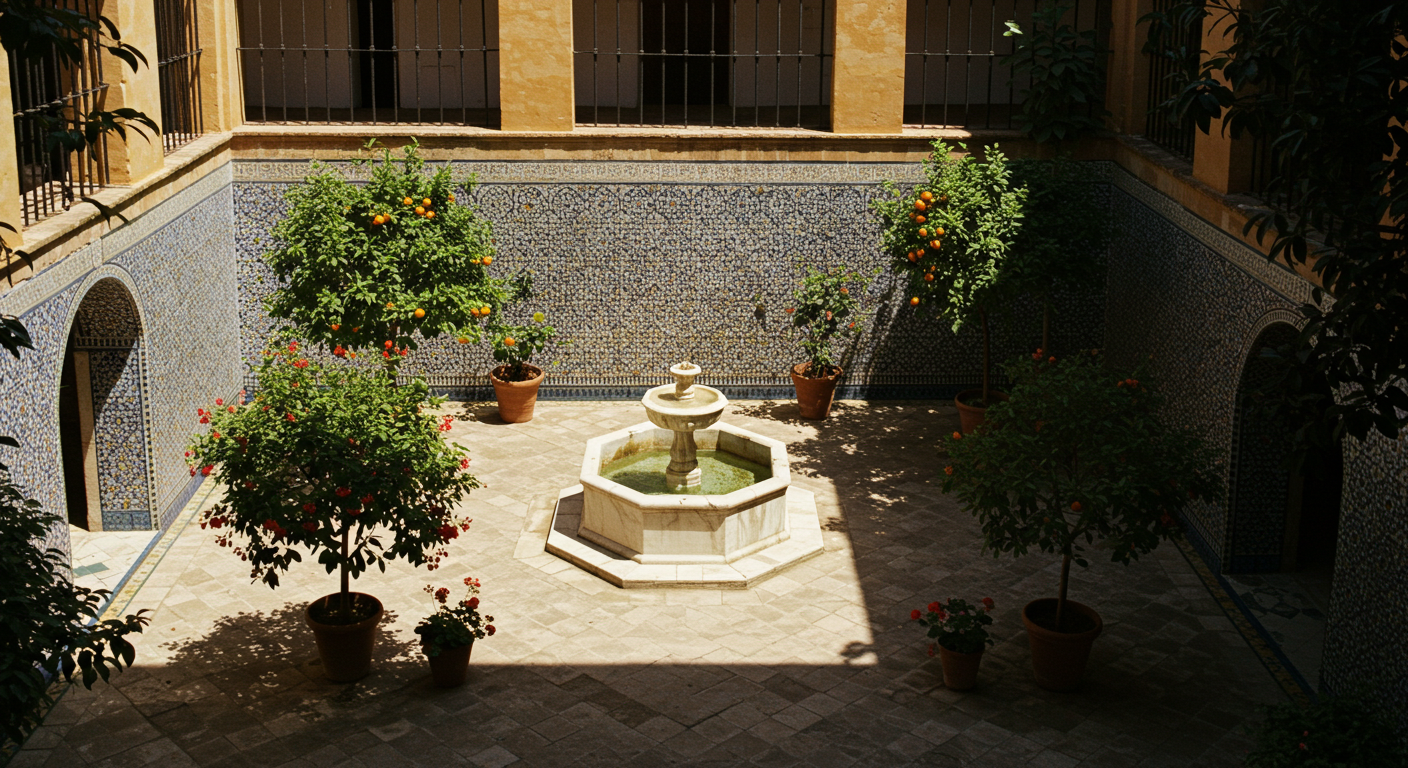
The Festival de los Patios de Córdoba runs for roughly two weeks in early May — usually the first two weeks of the month, though the exact dates shift slightly each year. It's when private residents throw open the doors to their courtyard gardens, which they've spent months cultivating into explosions of geraniums, jasmine, roses and ferns. Entry is free.
This is one of those things that sounds modest and turns out to be one of the most quietly extraordinary experiences Spain offers. You walk through a door in an ordinary street in the old Jewish quarter (the Judería) or the San Basilio neighbourhood, and there's a courtyard the size of a living room absolutely drowning in colour, with a cat asleep on the tiles and an elderly woman watering the top tier of flowers from a ladder. It's intimate in a way that big festivals rarely are.
The patios are spread across the old city. Get a map from the tourist office on Plaza de las Tendillas, arrive early in the morning (the best light is before 11am), and avoid the weekend afternoons when tour groups descend. The neighbourhood of San Basilio, south of the Alcázar, has the highest concentration and is the most photogenic. Allow a full day.
Córdoba is also an easy day trip from Seville (45 minutes on the AVE, roughly €15–€30 each way depending on when you book) or from Madrid (under two hours). But staying overnight lets you see the Mezquita in the early morning before the coach parties arrive, which is worth the extra cost.
Feria de Abril: The Party After the Processions
Two weeks after Easter, Seville holds its Feria de Abril — one of the most exhilarating and, frankly, most exclusive-feeling festivals in Spain. The fairground (the Real de la Feria) in the Los Remedios district fills with hundreds of casetas, which are private marquees belonging to families, businesses and political parties. Most are invitation-only.
This catches visitors off-guard. You can walk the fairground, watch the horse carriages and the women in flamenco dress, drink manzanilla from the public bars, and soak up the atmosphere — but you cannot simply walk into a caseta without knowing someone. A few casetas are open to the public (the city council's is usually one; some peñas open their doors). If you want the full experience, you need a local contact.
That said, even on the outside it's spectacular. The alumbrado — the lighting of the fairground's gate at midnight on the Monday — is a genuine event. The streets around the fairground are full of people in traditional dress all week. The food stalls are decent (try the pescaíto frito). And the atmosphere at 2am, with flamenco leaking out of every caseta, is something you won't forget.
Las Fallas: The One in March
If you're considering March, Valencia's Las Fallas (15–19 March) is the reason. The city constructs enormous satirical sculptures — some reaching five storeys — in every neighbourhood, then burns them all on the final night (La Nit de la Cremà) in a pyrotechnic finale that leaves the air tasting of smoke for days. The noise levels during the daily mascletà (a lunchtime firecracker display in the Plaza del Ayuntamiento) are genuinely alarming — earplugs are not embarrassing, they're sensible.
Las Fallas is less internationally famous than Semana Santa but, in some ways, more fun — there's more street food, more music, more of a carnival looseness to it. Book accommodation well in advance (the city fills completely) and expect prices to be significantly higher than normal.
Crowds, Costs and the Case for Shoulder Spring
The sweet spot that most people miss is the first half of May, after Semana Santa and before the summer crowds arrive in force. Seville and Granada are quieter. Prices at hotels drop back to something reasonable. The weather is perfect. The Córdoba patios are open. And if you time it right, you can still catch the tail end of the wildflower season in the Sierra Nevada or the Alpujarras — the high passes are carpeted with flowers that are largely gone by June.
Early March is also underrated for the south. The orange trees in Seville are still heavy with fruit (inedible, but visually extraordinary). Temperatures are mild rather than warm — jacket weather in the evenings — but the city is genuinely calm. If you're relocating rather than visiting, March is an excellent time to get practical things done: offices are functioning normally, the city isn't overrun, and you can actually get an appointment for the things that matter. Speaking of which — if you're arriving with plans to formalise residency, getting your paperwork ducks in a row before the Easter rush makes sense; the Cita Previa Extranjería appointment system gets notably more congested around public holidays.
If You're Relocating, Not Just Visiting
Spring is also a popular moment for people making the move permanent, and the practicalities don't pause for festival season. If you're arriving with a digital nomad visa or planning to register as a resident, a few things are worth knowing about spring timing specifically.
Semana Santa and the days around it are effectively a dead zone for bureaucracy. The Extranjería offices, the Seguridad Social, the Hacienda delegations — all run skeleton staff or close entirely for several days either side of Easter. Plan your first appointments for the week before Palm Sunday or the week after Easter Sunday.
Renting during spring is competitive, especially in Seville, Granada and Valencia, where the festival period brings short-term renters who push up demand. If you're looking for a longer-term place, starting your search in early March — before the festival season kicks off — gives you a better chance of finding something without the pressure. Renting in Spain without a Spanish payslip is already complicated enough without also competing with Semana Santa tourists.
Opening a bank account, sorting your empadronamiento, registering as autónomo if that's your path — all of this is easier to do in April (post-Easter) than during the chaos of the festival weeks. The process of opening a Spanish bank account as a non-resident is manageable but requires in-person visits to branches, which are harder to get to when half the city is watching a procession.
Spring in Spain rewards the organised. Do your homework, book early, and you'll find a country at its most generous — warm without being brutal, festive without being exhausting, and more beautiful than it has any right to be.
Frequently asked questions
- What is the single best week to visit Spain in spring?
- The first two weeks of May are hard to beat. The Córdoba Patio Festival is running, Semana Santa crowds have dispersed, temperatures across Andalucía and central Spain are ideal (20–26°C), and hotel prices are significantly lower than during Easter week. If you want to catch Semana Santa itself, aim for the week before Easter Sunday — Palm Sunday through Wednesday are the most atmospheric days in Seville.
- Is Semana Santa in Seville worth the crowds and cost?
- Yes, but go in knowing what you're getting into. Hotel prices can be three to four times normal rates, trains sell out weeks in advance, and the city centre is extremely congested. That said, the nocturnal processions are unlike anything else in Europe — genuinely moving, strange and spectacular. If the cost is prohibitive, Úbeda, Baeza or Jerez de la Frontera offer excellent Semana Santa on a much smaller scale.
- Can you visit the Córdoba patios without a guided tour?
- Absolutely — and it's better that way. Entry to the patios is free. Pick up a map from the tourist office or download the official app, and walk the Judería and San Basilio neighbourhoods at your own pace. Go early in the morning (before 11am) on a weekday to avoid tour groups. The festival runs for roughly two weeks in early May; check the Ayuntamiento de Córdoba website for exact dates each year.
- How far in advance should I book accommodation for Seville in spring?
- For Semana Santa: at least four to six months ahead, ideally more. For Feria de Abril (two weeks after Easter): similarly, book early — prices spike again. For the rest of April and May outside those windows, six to eight weeks ahead is usually sufficient, though central Seville fills quickly at any time of year.
- Is spring a good time to move to Spain, not just visit?
- Spring is popular for relocation, but the festival calendar creates real gaps in bureaucratic availability. Semana Santa and the days around it effectively shut down government offices. Plan your Extranjería appointments, bank visits and empadronamiento registration for either early March or the week after Easter. May is generally the most efficient month for getting administrative things done.
- What's the weather like in Barcelona and Madrid in spring compared to Seville?
- Both are noticeably cooler than Seville in spring. Madrid in April averages around 17–19°C by day, with unpredictable cold spells in March. Barcelona is similar but slightly more moderate due to the sea. Seville and Córdoba run 4–6°C warmer through April. If you want reliable warmth, the south is the answer; if you want a big city with pleasant rather than hot spring weather, Madrid and Barcelona are both excellent.
- Is it worth visiting the Canary Islands in spring instead of the mainland?
- Depends what you're after. The Canaries in spring (March–May) offer guaranteed warmth, low humidity and uncrowded beaches — sea temperatures are around 20–22°C, genuinely swimmable. But you'll miss the festivals entirely: no Semana Santa processions, no patios, no Feria. They're a great choice if you want relaxation over cultural immersion, or if you're coming from somewhere cold and just need reliable sun.