Best Neighbourhoods to Stay in Seville: Old Palaces & Character Hotels
Where to stay in Seville: the best neighbourhoods for first-timers and returners, plus characterful hotels in converted palaces and historic mansions. 2026 guide.
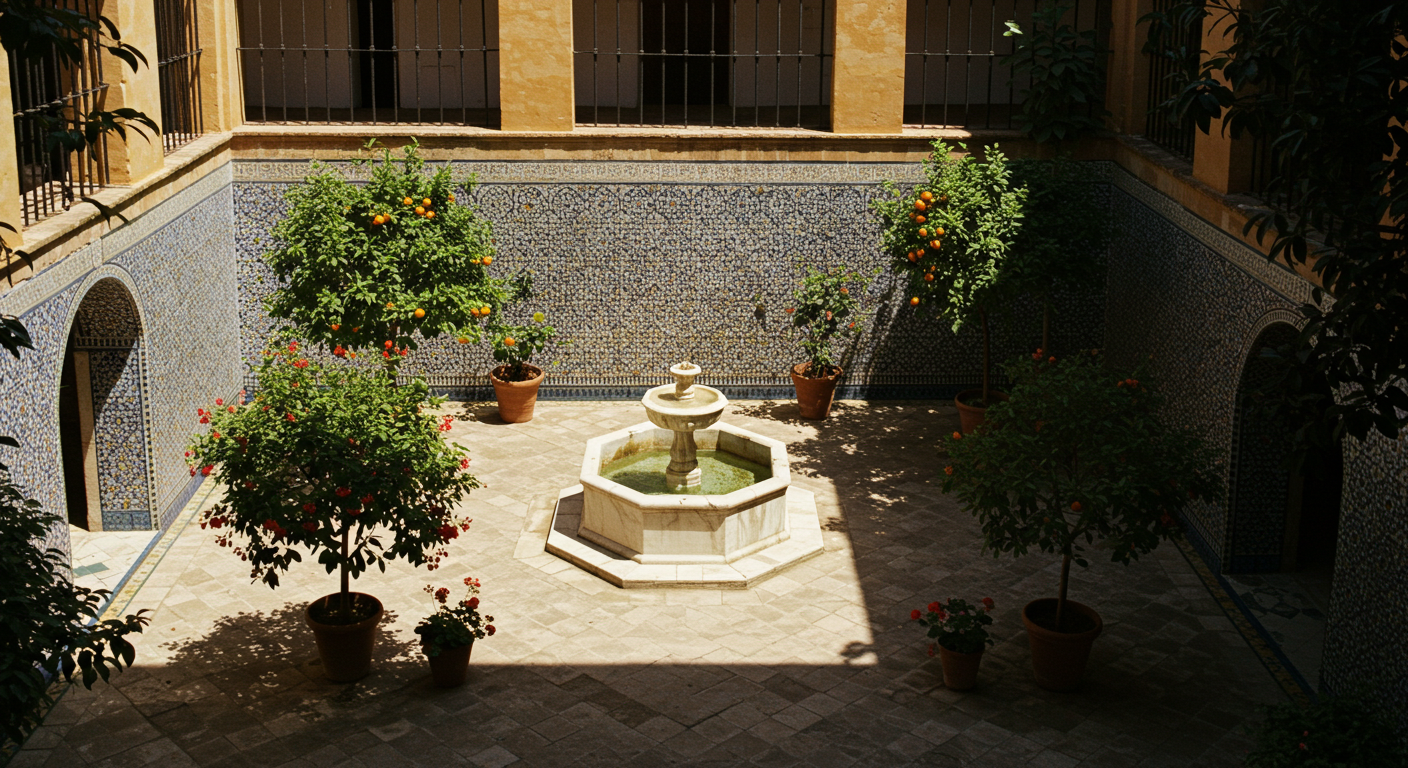
Seville gets very hot, very crowded, and very expensive if you pick the wrong week and the wrong postcode. The good news is that the city is compact enough that almost every central neighbourhood puts you within walking distance of the cathedral, the Alcázar, and a decent bar doing half-portions of salmorejo. The question isn't really whether to stay central — you should — it's which central neighbourhood suits how you actually travel.
For most visitors asking about the best neighbourhoods to stay in Seville, especially those hunting characterful old hotels, the short answer is this: Santa Cruz is the obvious choice but has real drawbacks; El Arenal is calmer and better value; Triana is the local's pick across the river; and San Lorenzo / La Macarena is where the slow-travel crowd has quietly migrated. If you want a hotel in a converted palace or historic mansion — and Seville has more of these than almost any other Spanish city — your options are scattered across all four areas, but the finest ones cluster in Santa Cruz and the streets just north of it.
Santa Cruz: The Centre of Gravity (and Its Problems)
Santa Cruz is the old Jewish quarter, a tangle of whitewashed alleys around the cathedral's eastern flank. It looks exactly like every Seville postcard you've ever seen, which is precisely the issue. In April during Feria, or in the weeks around Semana Santa, the streets are essentially impassable by 11am. Restaurants on Calle Mateos Gago charge tourist prices without tourist quality. The souvenir shops are relentless.
And yet. Stay here in November, or in early March before the Easter crowds arrive, and it's genuinely lovely — quiet courtyards, orange trees, the smell of jasmine over whitewashed walls in the evening. The neighbourhood earns its reputation; it just doesn't deserve it in high season.
Palace Hotels in Santa Cruz Worth the Price
Hotel Casa 1800 on Calle Rodrigo Caro is the one I keep recommending. It's a restored 18th-century mansion with a rooftop terrace that looks directly over the Giralda tower, a small pool (essential in summer), and genuinely attentive staff. Doubles run around €200–280 per night in shoulder season, more in April. Worth it if you're here for a special occasion or only a few nights.
EME Catedral Hotel is bigger, flashier, and has a rooftop bar that pulls a crowd. The rooms are good but the common areas can feel like a boutique hotel trying too hard. Skip the rooftop drinks — overpriced and the views are only marginally better than from the street below. The rooms themselves, particularly the ones facing the cathedral, are genuinely special.
Hotel Palacio de Villapanés sits just outside the strict Santa Cruz boundary, on Calle Santiago, which puts it in slightly calmer territory. A restored 18th-century aristocratic palace, with a central courtyard that's one of the more beautiful spaces in the city. Doubles from around €170 in low season. This is the one I'd choose for the architecture-to-price ratio.
El Arenal: Underrated, Quieter, Better Value
El Arenal runs along the river between the Torre del Oro and the bullring. It's a proper neighbourhood — people live here, there's a covered market (Mercado del Arenal on Calle Pastor y Landero), and the restaurants on the side streets are aimed at Sevillanos rather than tourists. The main drag, Calle Arfe, gets noisy on weekends but the streets behind it are calm.
You're a ten-minute walk from the cathedral. You're closer to Triana bridge than from Santa Cruz, which matters if you plan to spend evenings across the river. Hotel prices tend to be 20–30% lower than equivalent places in Santa Cruz for no obvious reason other than postcode.
Hotel Vincci La Rábida occupies an 18th-century palace on Calle Castelar. It's a mid-range chain hotel — Vincci is a solid Spanish group, reliable without being memorable — but the building itself is the attraction. Courtyard, original tilework, thick walls that keep it cool in summer. Doubles from around €120–160 in shoulder season.
If you're moving to Seville rather than just visiting, El Arenal is also one of the easier areas to find a flat — though you'll still need to navigate the usual paperwork. Renting in Spain without a Spanish payslip is a real obstacle for new arrivals, and Seville's rental market has tightened considerably since 2023.
Triana: The Neighbourhood Sevillanos Actually Love
Cross the Trianeros Bridge (Puente de Isabel II, to use its formal name) and the tourist density drops immediately. Triana is Seville's flamenco heartland, a working-class neighbourhood of ceramic workshops, tapas bars, and a covered market right on the riverbank that does excellent fresh fish. The market café, Mercado de Triana, opens early and serves coffee and tostadas to people who actually live nearby. This is not a tourist performance.
The walk into the historic centre takes about 15–20 minutes on foot, which is the main trade-off. There's no metro in Seville (the single metro line skips the centre almost entirely — one of the city's more baffling planning decisions), so you're walking or taking a taxi. Taxis are cheap; a ride from Triana to the cathedral costs €5–7.
Hotel options in Triana are more limited and less grand, but Hotel Zenit Sevilla on Calle Pagés del Corro offers clean, modern rooms at sensible prices (€90–130 in shoulder season) and a rooftop pool. Not a palace, but a good base.
For a longer stay — a week or more — Triana makes more sense than Santa Cruz. The noise levels are lower, the food is better and cheaper, and you'll feel less like you're living inside a theme park.
San Lorenzo and La Macarena: Where the Slow Travellers Go
North of the centre, above the old walls, La Macarena is where Seville's alternative scene lives — independent bookshops, natural wine bars, the Basílica de la Macarena (home to the most revered Virgin in Seville's Semana Santa processions). San Lorenzo, just south of it, is quieter still, full of neighbourhood tapas bars and a more residential feel.
This is where I'd stay for anything longer than a long weekend. The Alameda de Hércules — a long tree-lined promenade — anchors the social life here, with outdoor terraces that fill up on warm evenings with a noticeably younger, more local crowd. The tapas bars on Calle Peris Mencheta and around Plaza del Pumarejo are some of the best-value eating in the city.
Hotel Mercer Sevilla opened a few years ago in a restored Renaissance palace on Calle Caballerizas, just off the Alameda. It's the best hotel in this part of the city by some distance — a 16th-century building with an original Renaissance courtyard, small pool, and a restaurant that takes its food seriously. Doubles from around €200 in shoulder season, but often bookable for less in January and February. This is a genuinely special place to stay, and it's not in the guidebooks as often as it deserves.
The Palace Hotel Question: What to Actually Expect
Seville has a disproportionate number of hotels in converted palaces, noble houses, and religious buildings, because the city has a disproportionate number of those buildings in the first place. A few honest caveats before you book:
- Thick walls mean cool rooms in summer, but also no natural light in some interior rooms. Always ask for a room facing the courtyard or street, not an interior-facing room with a window onto a corridor.
- Courtyards are beautiful but can be loud. Sound carries in these old buildings. A courtyard bar that looks romantic at 7pm looks very different at midnight when you're trying to sleep.
- "Restored" is doing a lot of work in some descriptions. Check recent reviews specifically for maintenance issues — old buildings need constant upkeep and some owners don't invest in it.
- Breakfast is often optional and often excellent in the better palace hotels. Worth paying for, particularly at places like Casa 1800 where it's a proper spread in the courtyard.
When to Come (and When to Avoid)
April is Seville's most dramatic month — Semana Santa in the first half, Feria de Abril in the second — and also its most expensive and most crowded. Hotels book out months in advance and prices triple. It's worth experiencing once, but go in knowing what you're getting into.
May and October are the sweet spots. Warm enough to sit outside, cool enough to walk comfortably, and the city is actually navigable. November through February is genuinely pleasant — mild, quiet, cheap — and the light in the afternoons is extraordinary. I've spent a week in Seville in January and barely seen another tourist north of the cathedral.
July and August: the city is 40°C and many Sevillanos leave. If you go, book a hotel with a pool and don't plan to do anything between noon and 5pm. The city does have a certain eerie grandeur in August — empty streets, blazing light — but it's not for everyone.
Practical Notes for Longer Stays
If you're considering Seville as a base for more than a few weeks — as a digital nomad, or while testing out Andalusia before committing to a longer move — the city is increasingly set up for it. Co-working spaces have multiplied since 2022. The Spanish digital nomad visa is one route for non-EU nationals, worth reading carefully before assuming it applies to your situation. And if you're thinking about staying long-term, you'll eventually need to deal with the bureaucratic side: getting your NIE, opening a bank account, registering with the local council. Opening a Spanish bank account as a non-resident is less painful than it used to be, but it still requires the right documents.
Seville's central neighbourhoods are also among the more straightforward places in Spain to get empadronado (registered at your address), which matters for almost everything administrative that follows. The process is easier if you have a rental contract, but there are options if you don't.
The city rewards staying put. A week in one neighbourhood, eating at the same bar twice, learning which bakery opens earliest — that's when Seville stops being a postcard and starts being a place.
Frequently asked questions
- Which neighbourhood in Seville is best for first-time visitors?
- Santa Cruz is the most central and iconic, but El Arenal offers similar access to the main sights with lower prices and fewer crowds. For a first visit outside of peak season (April, summer), either works well. In high season, El Arenal is the calmer choice.
- Are Seville's palace hotels worth the extra cost?
- For a short stay — two or three nights — yes, particularly places like Hotel Casa 1800 or Hotel Palacio de Villapanés, where the architecture genuinely adds to the experience. For longer stays, the premium becomes harder to justify and a good apartment in Triana or La Macarena often makes more sense.
- Is Triana far from Seville's main sights?
- About 15–20 minutes on foot from the cathedral. There's no metro connection, so you'll walk or take a taxi (€5–7). For most visitors this is a perfectly manageable trade-off for the quieter, more local atmosphere.
- What is the best time of year to visit Seville?
- May and October are the practical sweet spots — warm, manageable crowds, reasonable hotel prices. April is spectacular (Semana Santa and Feria) but extremely expensive and crowded. November through February is quiet, mild, and cheap. July and August are very hot (regularly above 40°C).
- Can you stay in Seville without a car?
- Absolutely. The historic centre is compact and best explored on foot. Taxis are cheap, and there's a reasonable bus network. The single metro line is largely irrelevant for central sightseeing. A car in central Seville is more problem than it's worth — parking is expensive and the old streets are narrow.
- Is Seville a good base for longer stays or digital nomads?
- Yes, increasingly so. Co-working spaces have expanded, the cost of living is lower than Madrid or Barcelona, and the city has good flight connections. Non-EU nationals should look into the Spanish digital nomad visa before planning an extended stay — income thresholds and paperwork requirements apply.
- Which Seville neighbourhood has the best tapas bars?
- La Macarena and the Alameda de Hércules area consistently outperform the tourist-facing bars of Santa Cruz on both quality and price. Triana is also excellent, particularly around the covered market and Calle Betis along the riverbank. Avoid anything with a laminated photo menu in Santa Cruz.