Seville Tapas Bars Worth Queuing For: What to Order
The best tapas bars in Seville, what to order at each one, and which dishes to skip. A local's guide to eating well in Spain's tapas capital, 2026.
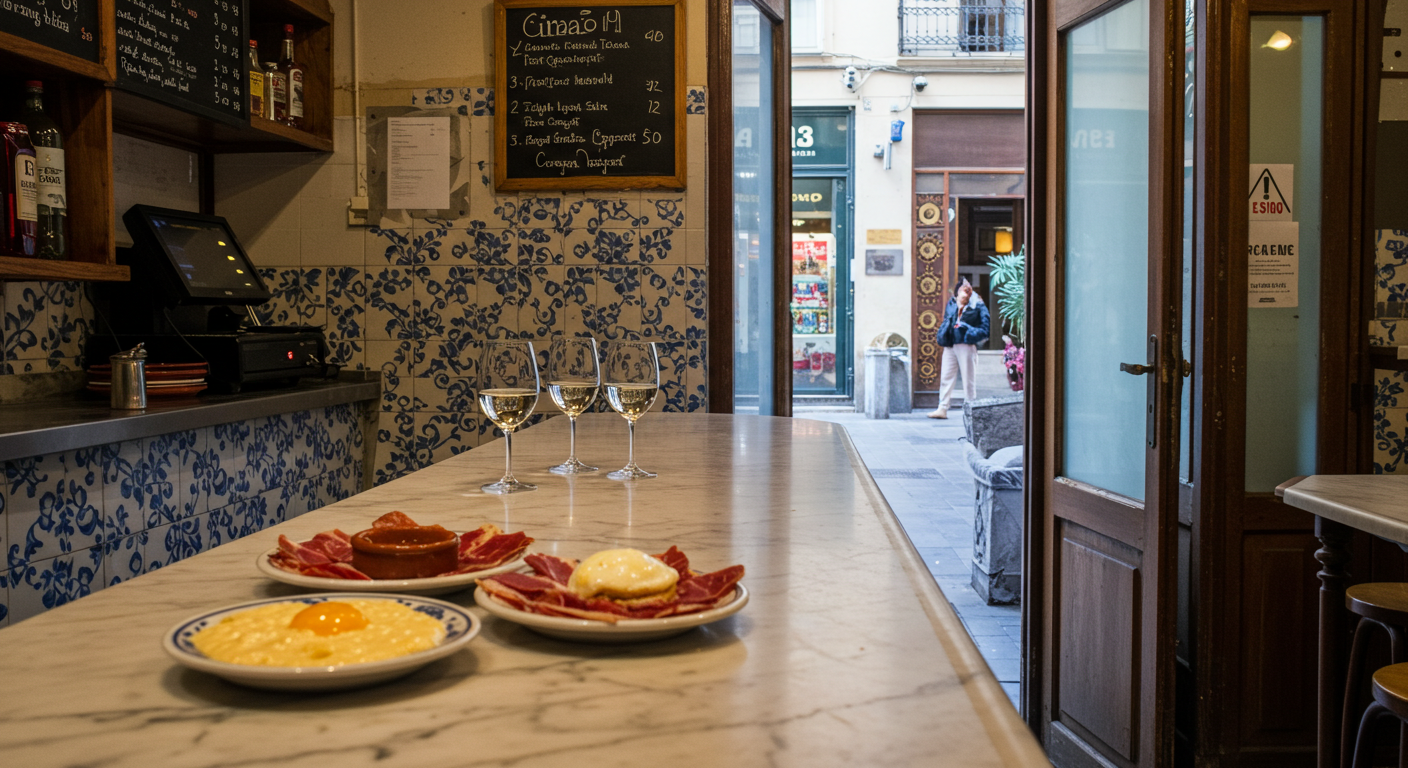
Seville is the only major Spanish city where tapas are still, technically, free with your drink in many bars. That single fact changes the entire dynamic of how you eat here. You don't plan a dinner; you graze, you move, you argue about where to go next. A round of drinks for two, with four small plates of food, can come to €12. In 2026 that still holds in the right places — though the tourist-facing bars around the Cathedral have largely abandoned the tradition.
The best tapas bars in Seville and what to order at each one: the short answer is El Rinconcillo for history and berenjenas con miel, El Comercio for free tapas done properly, and Bar Alfalfa for a rowdy corner that hasn't sold out. Avoid anything on Calle Mateos Gago that puts photos on the menu — it's a reliable indicator of mediocrity. Now for the full picture.
The Lay of the Land: Which Neighbourhoods to Target
Seville's tapas scene is concentrated in a handful of barrios, and knowing which to prioritise saves a lot of aimless wandering.
Triana is across the river and still feels like a separate village. The locals here are fiercely loyal to their own bars and deeply suspicious of tourists who wander in from the Alameda. That suspicion is your friend — it keeps prices honest. Calle Pureza and Calle San Jacinto are the spines of Triana's tapas circuit.
El Centro / Alfalfa is the old city's beating heart for after-work drinks. The Plaza del Salvador fills up so completely by 7pm on a Friday that you're essentially drinking in the street whether you like it or not. The bars spilling out of that square — particularly along Calle Pérez Galdós — are mostly excellent.
La Macarena is where younger Sevillanos have been drinking for the past decade. Less polished, cheaper, and with a rougher edge that suits the neighbourhood's history. Calle Feria on a Thursday (market day, traditionally) is especially good.
Santa Cruz — the old Jewish quarter — is almost entirely for tourists now. There are one or two exceptions, but you should walk through it rather than eat in it.
The Bars Worth the Queue
El Rinconcillo, Calle Gerona 40
Opened in 1670, supposedly the oldest bar in Seville, and it plays up to that history without being insufferable about it. The chalk-and-slate system for keeping your tab — written directly on the bar top — is still in use. Come for the berenjenas con miel (fried aubergine with cane honey): they arrive in a paper cone, hot, lightly battered, drizzled with dark, slightly bitter molasses-style honey. It's one of those combinations that sounds wrong and tastes completely right. The espinacas con garbanzos (spinach with chickpeas) is another Sevillano classic done well here — earthy, cumin-forward, good bread to mop it up.
There will be a queue at the door on weekend evenings. It moves. Go at 1pm on a weekday if you want to walk straight in. Don't order the tourist-bait jamón platter — it's fine but it's not why you're here.
Bar El Comercio, Calle Lineros 12
This is the place that proves the free-tapa tradition is alive. Order a caña (small beer, usually around €1.80–2.20 as of 2026) and they bring you something — it changes daily, but might be a slice of tortilla, a small montadito, a scoop of salmorejo. The room is dark wood and faded tiles. Nobody is performing anything for Instagram. The pringá montadito — shredded slow-cooked meat from the cocido stew, piled onto a small roll — is the thing to ask for if it's on. Rich, unctuous, the kind of thing you want at noon with a cold beer.
Bar Alfalfa, Plaza del Alfalfa
The corner bar that gives the plaza its name has been a fixture long enough that regulars treat it as an extension of their living room. It gets heaving. Order at the bar, find a ledge, accept that someone will bump into you. The caracoles (snails in spiced broth) appear seasonally — spring and early summer — and are worth the slight faff of eating them. The broth alone is worth a piece of bread. Gambas al ajillo (prawns in garlic oil) are a safe bet year-round.
Casa Morales, Calle García de Vinuesa 11
A wine bar first, tapas bar second. The room has enormous old sherry barrels built into the walls, which function as both decor and storage. The sherry selection is taken seriously here — order a fino or a manzanilla rather than wine; you're in the right region for it. The food is secondary but solid: queso de cabra a la plancha (griddled goat's cheese) with a drizzle of honey and walnuts is the kind of thing that sounds like a gastropub cliché but works here because the cheese is actually good. This is also one of the calmer spots on this list — good for a first drink before the evening gets going.
Bar Las Teresas, Calle Santa Teresa 2
Technically in Santa Cruz, which I told you to avoid — but this is the exception. It's been here since 1870, the hams hanging from the ceiling are real and being eaten rather than decorative, and the jamón ibérico is sliced to order and genuinely worth the price (expect to pay €8–10 for a small plate, as of 2026). Don't order the sangria. Order manzanilla.
La Azotea, Multiple Locations
Not a traditional tapas bar — this is the modern Sevillano version, a small chain with locations in Calle Jesús del Gran Poder and Calle Zaragoza, among others. The food is creative without being annoying about it. The tartar de atún (tuna tartare) and the huevos rotos con trufa (broken eggs with truffle) are the dishes people come back for. Slightly higher prices than the traditional bars — a tapa here is more like a ración — but the quality justifies it. Booking ahead is possible and worth doing for dinner.
The Dishes: What to Order Across the City
Some dishes are so Sevillano that ordering them anywhere decent will serve you well.
Salmorejo is the cold tomato soup that Córdoba and Seville argue over. Thicker than gazpacho, blended until silky, topped with hard-boiled egg and jamón. It should be properly chilled and slightly tangy. If it tastes of nothing, the tomatoes were bad.
Carrillada — slow-braised pork or beef cheek in red wine — appears on menus across the city and is almost always good. It's the kind of dish that improves with the second glass of wine.
Montaditos de pringá deserve a second mention. Pringá is the catch-all term for the meats cooked down in a cocido (the Spanish stew), shredded and piled onto bread. Every family has their version. The bar version is usually pork, morcilla (blood sausage), and lard. It sounds alarming and tastes wonderful.
Croquetas are everywhere in Spain, but Seville does a particularly good jamón version — properly béchamel-heavy inside, crisp outside. If they're not hot, send them back. Cold croquetas are an insult.
Berenjenas con miel — fried aubergine with cane honey — appears on almost every menu and varies wildly in quality. The batter should be light and the honey should be the dark, slightly bitter Andalusian cane variety (miel de caña), not the pale floral honey you'd put on toast. If it's pale honey, it's wrong.
Practical Notes: Hours, Habits, and the Things Nobody Warns You About
Sevillanos eat late, but tapas hours are actually more flexible than you'd think. The first circuit — lunch tapas — runs roughly 1:30pm to 4pm. The second circuit — evening — kicks off around 8pm and goes until midnight or later. The dead zone between 4pm and 8pm is when bars are quiet or closed. Don't fight it; have a siesta.
Free tapas with drinks are still common but not universal. If a bar charges separately for food, it's not a scam — it's just a different model. The free-tapa bars tend to be the older, more traditional places rather than the newer ones.
Cash is still preferred in many of the older bars, though most now accept cards. Carry €20 in small notes to be safe.
The noise level in a good Sevillano bar is significant. Conversations happen at volume. If it's quiet, something is off.
If you're in Seville sorting out residency paperwork — getting your NIE, opening a bank account, that sort of thing — you'll likely be spending a few days in the city regardless. The bureaucratic side of arriving in Spain has its own learning curve; you can read about renting in Spain without a Spanish payslip and opening a Spanish bank account as a non-resident once you've eaten. Priorities.
A Note on Touristification
Seville's old city has changed significantly in the past decade. Short-term rentals have pushed out long-term residents from Santa Cruz and parts of El Centro, and some bars have recalibrated their offer entirely towards visitors who won't be back. The menus with photographs. The sangria pitchers. The "traditional Andalusian experience" signs in English.
The antidote is to walk slightly further than feels comfortable. The bars that have stayed honest are rarely on the main tourist drag — they're one or two streets back, without English menus, with prices written on a chalkboard that hasn't been updated since last Tuesday. Those are the ones worth finding.
Seville rewards repeat visits more than almost any Spanish city. The first time you navigate it; the second time you start to understand it; the third time you have a favourite bar and a stool you consider yours.
Frequently asked questions
- Are tapas really free with drinks in Seville?
- In many traditional bars, yes — you order a drink and a small tapa arrives automatically at no extra charge. This is more common in Seville than in almost any other Spanish city. However, it's not universal; newer or more tourist-facing bars charge separately for food. Bars like El Comercio and several spots in Triana still do it the old way as of 2026.
- What is the most traditional Sevillano tapas dish?
- Salmorejo (thick cold tomato soup with egg and jamón) and berenjenas con miel (fried aubergine with dark cane honey) are the two most distinctly Sevillano dishes. Espinacas con garbanzos — spinach with chickpeas, cumin-spiced — is another classic that you rarely find done as well outside Andalusia.
- When is the best time to go tapas-hopping in Seville?
- There are two main windows: lunchtime, roughly 1:30pm to 4pm, and the evening circuit from about 8pm onwards. The lunch session is often less crowded and good for getting a seat. Friday and Saturday evenings are the most atmospheric but also the most packed — arrive early or expect to stand.
- Which neighbourhoods in Seville are best for tapas?
- Triana (across the river, especially Calle Pureza and Calle San Jacinto), the Alfalfa area around Plaza del Salvador, and La Macarena along Calle Feria are the strongest options for authentic, locally-used bars. Santa Cruz is largely tourist territory — skip it, with the exception of Bar Las Teresas.
- How much should I expect to spend on tapas in Seville?
- In a traditional bar with free tapas, a round of drinks for two — two cañas or glasses of wine — might cost €4–6, with food included. In a mid-range bar where food is charged separately, budget around €15–25 per person for a proper tapas session with drinks. As of 2026, Seville remains significantly cheaper than Madrid or Barcelona for eating out.
- Is it worth booking ahead at Seville tapas bars?
- For traditional tapas bars, no — they don't take bookings and the culture is to turn up, find space, and move on. The exception is La Azotea, which is more of a modern restaurant-bar hybrid and does accept reservations. Booking is worth it there for dinner, especially on weekends.
- What drink should I order with tapas in Seville?
- A caña (small draught beer) is the default and works with almost everything. For something more regional, order a fino or manzanilla sherry — both are dry, chilled, and pair brilliantly with jamón, fried fish, and almost anything salty. Avoid sangria in tapas bars; it's not a local drink and marks you out immediately as someone who hasn't been here before.