Semana Santa in Seville: How to Experience It Without the Chaos
How to watch Semana Santa processions in Seville without getting crushed, lost or overcharged. Timing, routes, seating and where locals actually stand.
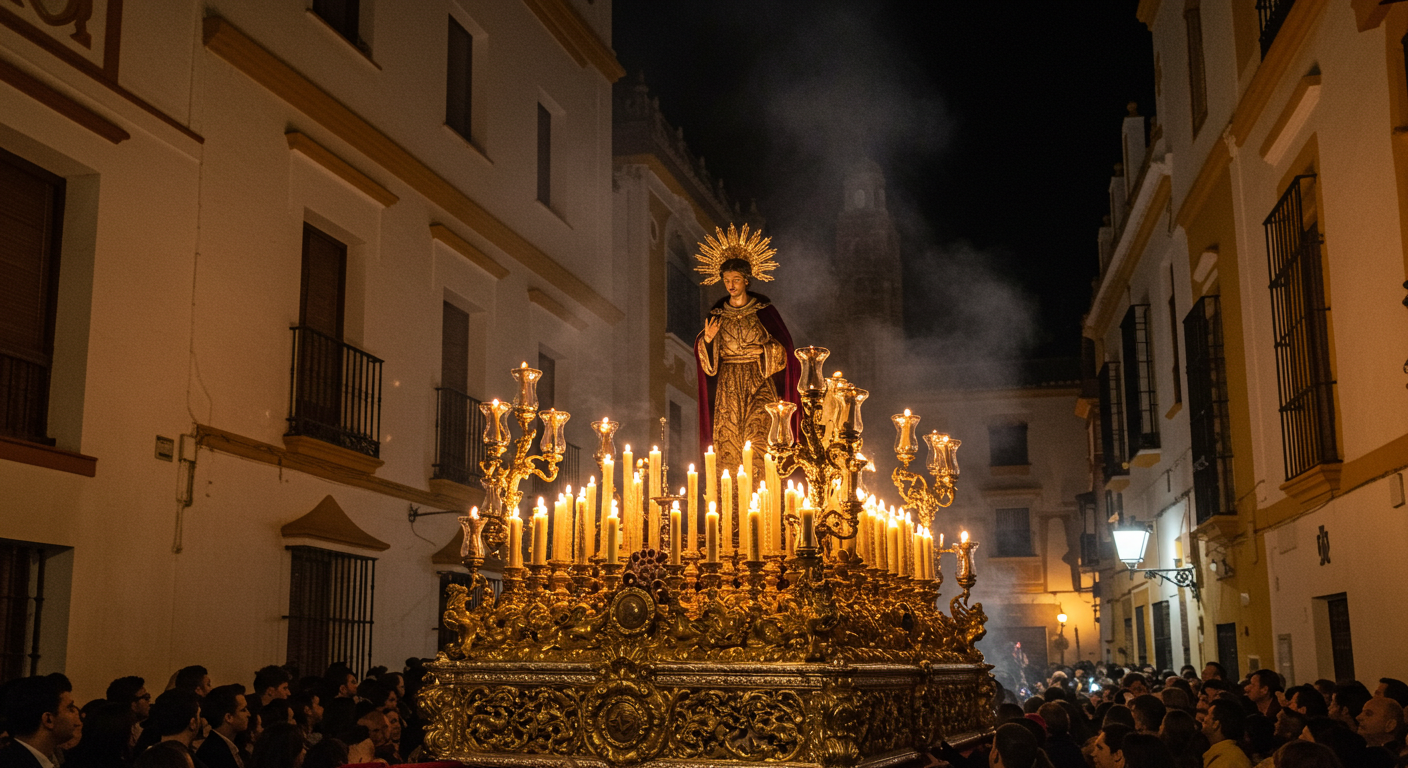
Seville's Semana Santa draws around a million visitors into a city of 700,000. That figure alone tells you everything about why it can go wrong — and why, if you get the logistics right, it remains one of the most genuinely moving things you will ever witness in Europe.
How to Watch Semana Santa Processions in Seville: The Short Answer
The best free spots are along the carrera oficial — the official route through the city centre — particularly on Calle Sierpes, Plaza de San Francisco, and the stretch approaching the cathedral along Avenida de la Constitución. Arrive at least 90 minutes before a major brotherhood (hermandad) is scheduled to pass. If you want a guaranteed seat, paid palcos (grandstand seats) on the official route cost roughly €25–€80 per day as of 2026 and sell out months in advance. The single most important thing to know: the published schedule is aspirational. Processions run late. Bring patience, water, and something to eat.
What Semana Santa Actually Is
This is Holy Week — the week before Easter — and in Seville it is not a tourist show. It is a centuries-old religious event run by the city's cofradías, lay brotherhoods that have been organising these processions since the 15th and 16th centuries. Each brotherhood carries two enormous floats (pasos): one depicting a scene from the Passion of Christ, one bearing a statue of the Virgin. The men and women who carry these floats on their shoulders — up to 50 people hidden beneath the platform, each bearing perhaps 50–60kg — are called costaleros. They train for months. They cannot see. They move in total darkness, guided only by the taps of a capataz on the woodwork above them.
The penitents walking alongside in the pointed hoods (capirotes) are not a sinister image borrowed from elsewhere — it is the other way around historically. These are nazarenos, members of the brotherhood doing public penance. Many are locals you'd pass in a supermarket on a Tuesday.
Knowing this changes how you watch it.
When It Happens and Which Days Matter Most
Semana Santa runs from Palm Sunday to Easter Sunday. In 2026, that means 29 March to 5 April. The week is divided into named days, each with its own character.
Palm Sunday (Domingo de Ramos) is when the Borriquita brotherhood kicks things off — the one where children dress in white and carry palm fronds. It is chaotic and joyful and a good introduction, but not the most intense day.
Wednesday and Thursday are when the atmosphere becomes something else entirely. The most revered brotherhoods, including La Macarena and El Gran Poder, process on these days. La Macarena's Virgin — her face wet with glass-bead tears, gold crown blazing in the candlelight — leaves her basilica in the Macarena neighbourhood late on Wednesday night and does not return until Thursday morning. Locals stand outside all night. Some weep. It is not performance.
Madrugá — the early hours of Good Friday — is the peak. Six major brotherhoods process through the night simultaneously. The streets smell of incense and melted wax. Saetas (improvised flamenco laments) are sung from balconies at the Virgins as they pass. This is the night you will remember for the rest of your life, and it is also the night the city is at absolute maximum capacity.
Good Friday itself is largely solemn and quiet by comparison. Easter Sunday processions are shorter and feel almost celebratory.
The Official Route and the Free Spots
Every brotherhood follows the carrera oficial, a fixed route through the historic centre that passes through Calle Campana, Calle Sierpes, Plaza de San Francisco, and along Avenida de la Constitución to the cathedral, then back. This route is lined with paid grandstands (palcos and sillas) for much of its length.
For free standing, your best options:
- Outside the official route, in the neighbourhoods. This is the genuine insider move. Watch the brotherhood leave its church — La Macarena from Basílica de la Macarena, El Gran Poder from Basílica de Jesús del Gran Poder in San Lorenzo. These exits are dramatic, emotional, and far less crowded than the city centre. The brotherhood's own members and families line these streets. You feel the weight of it differently here.
- Calle Sierpes, mid-route. This pedestrian street is narrow enough that you get close, but it fills up fast. Be there 90 minutes early for a front spot.
- Along the return route. Most visitors cluster near the cathedral approach. The brotherhoods return via slightly different streets, often less packed, sometimes after midnight.
- Triana bridge and the Triana neighbourhood. The brotherhoods from Triana cross the Puente de Isabel II over the Guadalquivir. Standing on or near the bridge as a paso moves across the water, candles reflected below, is quietly extraordinary.
Paid Seating: Is It Worth It?
Honestly, for Madrugá night, yes — if you can get a ticket. You are guaranteed a view, you can sit down, and you will see multiple brotherhoods pass from the same spot. The downside is you lose the ability to follow a specific brotherhood through the streets, which is a different (and arguably better) experience.
The Seville city council sells some seats through its official channels; the rest go through the brotherhoods themselves or resellers. Check the Ayuntamiento de Sevilla's official Semana Santa site in October/November for the following year's tickets. By January, most are gone.
Logistics Nobody Mentions
The processions routinely stop — sometimes for 20 or 30 minutes — when the costaleros need to rest. This is not a malfunction. It is part of the rhythm. A paso will halt, sway slightly, and the men beneath it will collapse onto small wooden supports called trabajaderas. Then it moves again.
The official schedule lists when each brotherhood is due to pass each point on the route. The app Semana Santa de Sevilla (available on iOS and Android) is genuinely useful for this — it shows real-time delays and current positions. Download it before you arrive.
The city centre becomes effectively impassable for cars from around 3pm on major days. If you are staying outside the historic centre, plan your journey in. Public transport is disrupted. Taxis cannot cross many streets. Walk, or take the metro to a station outside the closed zone and walk in.
Book accommodation in the Macarena neighbourhood, Triana, or along the edges of the historic centre rather than dead in the middle — you will sleep better and have easier access to multiple procession routes.
Eating and Drinking During Semana Santa
Bars and restaurants around the route are packed, slow, and often running a limited menu. The move is to eat before you go out (dinner at 9pm, then head out for 11pm), or to find a bar on a side street two blocks off the main route. Pescaíto frito (fried fish), montaditos, and torrijas (a kind of eggy, syrup-soaked bread, specific to Easter in Andalusia) are the things to eat this week.
Avoid the tourist-trap bars on Avenida de la Constitución — overpriced and miserable. Walk one block in either direction and you will find somewhere half the price and twice as good.
If you are planning a longer stay in Seville or southern Spain around this time, the question of where to base yourself matters. Costs in the city during Semana Santa spike dramatically — apartments that rent for €80/night in February reach €200–€300 in Holy Week. If you are thinking about renting longer-term in Spain, it is worth reading about renting in Spain without a Spanish payslip, since many landlords in high-demand cities require financial guarantees that catch foreigners off guard.
What to Wear and Bring
Nights in late March in Seville are cold. 8–12°C is normal after midnight. Every year, tourists from northern Europe arrive in spring clothes and spend Madrugá shivering. Bring a proper coat. Comfortable shoes are non-negotiable — you will walk 10–15km on a busy night without noticing.
Earplugs are underrated. The brass bands (bandas) that accompany some brotherhoods play the same marchas on repeat at considerable volume, and if you are standing near one for 40 minutes, your ears will know about it.
If You Are Moving to Seville or Already Living There
Semana Santa is the week you understand why Sevillanos are so attached to this city. Even people who are not religious — and there are many — tend to watch, to feel something, to stay up until dawn. It is a civic event as much as a religious one.
If you are in the process of relocating to Spain and sorting paperwork, note that many government offices run reduced hours during Semana Santa and the days around it. If you are waiting on a NIE appointment or TIE, do not expect anything to move that week. Plan accordingly.
For those newer to living in Spain and still getting their administrative footing — sorting empadronamiento, bank accounts, and the rest — Semana Santa is a good week to simply be in the city rather than trying to get bureaucracy done. Use it well.
Frequently asked questions
- When exactly do the Semana Santa processions happen in Seville in 2026?
- Semana Santa 2026 runs from Palm Sunday (29 March) to Easter Sunday (5 April). The most significant nights are Wednesday 1 April and the Madrugá — the early hours of Good Friday, 3 April — when six major brotherhoods process simultaneously through the night.
- Do I need to buy tickets to watch the Semana Santa processions in Seville?
- No. The streets are free and public. Paid grandstand seats (palcos and sillas) exist along the official route and cost roughly €25–€80 per day as of 2026, but you can watch from the pavement for nothing. The best free spots are near the brotherhoods' home churches and along the return routes.
- How late do the Semana Santa processions run?
- Very late. On Madrugá (the night between Maundy Thursday and Good Friday), the last brotherhoods do not return to their churches until 6 or 7am. Most major processions run well past midnight. The published schedule is a guide, not a guarantee — delays of 30–60 minutes per checkpoint are normal.
- Is Semana Santa in Seville suitable for children?
- Yes, with caveats. Palm Sunday (Domingo de Ramos) is the most family-friendly day — lively, colourful, earlier hours. Madrugá is genuinely not suitable for young children due to the late hours, cold temperatures, and sheer crowd density. Daytime processions on Wednesday and Thursday work well for families if you arrive early and have an exit plan.
- What is the difference between Semana Santa in Seville and in other Spanish cities?
- Seville is widely considered the most elaborate and emotionally intense. The floats are larger, the brotherhoods older and more numerous (there are 60+ in Seville), and the civic involvement deeper. Málaga, Granada, Valladolid and Zamora all have significant celebrations, each with their own character. Seville's is not simply bigger — it is structurally different, with the Madrugá and the particular culture around the costaleros making it unique.
- Where should I stay in Seville for Semana Santa?
- The Macarena neighbourhood (north of the centre) gives you easy access to La Macarena basilica and quieter streets. Triana, across the river, is atmospheric and slightly removed from the worst crowds. Avoid booking right on the official route — you will hear drumming until 4am and struggle to get in or out. Book at least six months ahead; accommodation fills up fast and prices in 2026 are roughly double the normal rate.
- Can I follow a specific brotherhood along the whole route?
- Yes, and it is the best way to experience it. Pick a brotherhood, find out when it leaves its church (the app Semana Santa de Sevilla helps with this), and follow it on foot. You will see it in the quiet back streets before the crowds, watch it enter the official route, and can peel off when you are tired. Following La Macarena or El Gran Poder from start to finish is a 5–6 hour commitment — worthwhile if you have the stamina.