Las Fallas Valencia: When to Go and What to Expect
What happens at Las Fallas Valencia, when to go, and how to experience it without wasting a day. Real tips from someone who's been multiple times.
Five nights of almost no sleep, a city that smells of gunpowder from breakfast until well past midnight, and the single most spectacular act of deliberate destruction you'll ever watch. That's Las Fallas. If you've been wondering what actually happens at Las Fallas Valencia — not the Wikipedia version, but the real sequence of events — here's what you need to know.
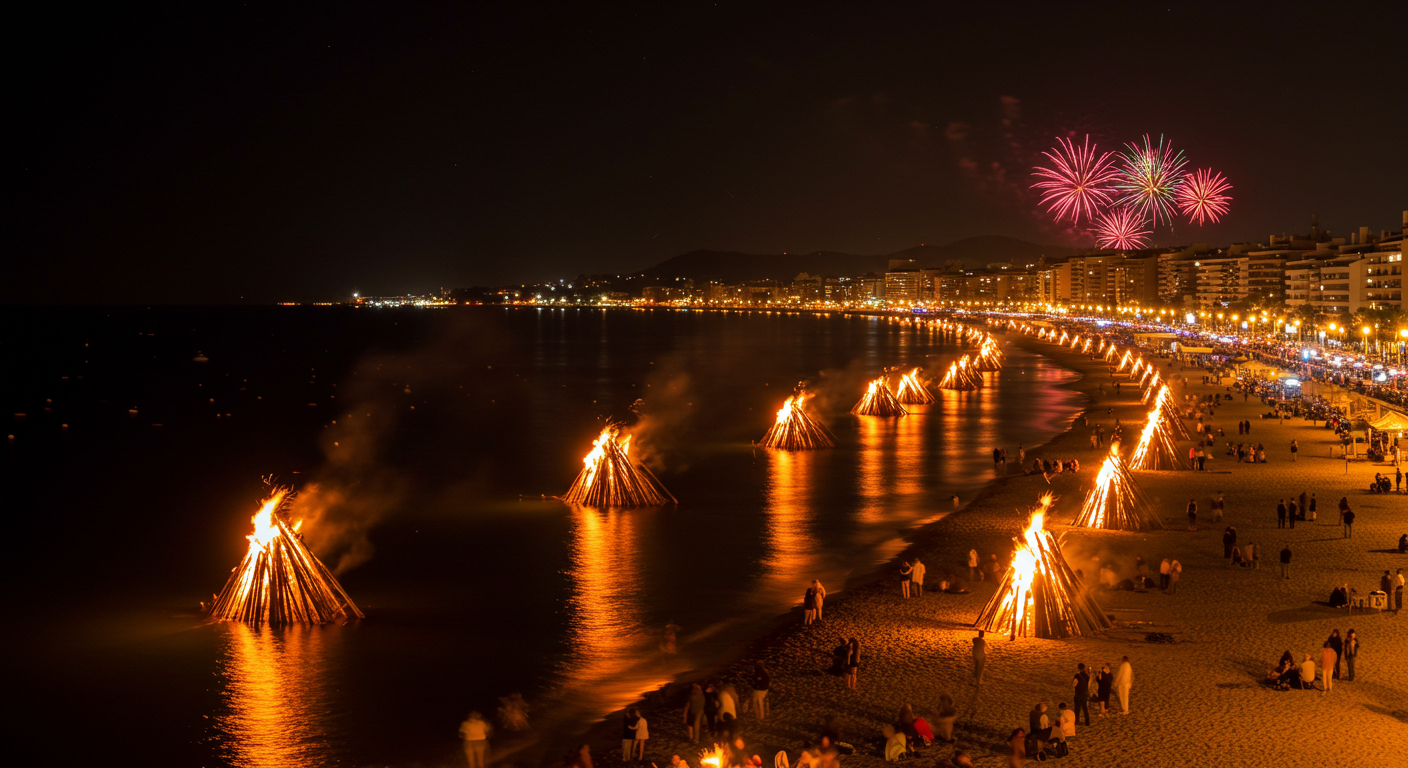
In short: Las Fallas is Valencia's annual festival running from 1–19 March, centred on the construction and then ceremonial burning of enormous satirical sculptures called falles (or fallas in Castilian). The climax is the Nit del Foc on 19 March, when nearly all the sculptures are set alight in a single night. But the festival is far more than that one night, and arriving only for the final weekend means missing most of it.
The Basic Structure: What Happens and When
The official festival dates are 1–19 March, though the city starts feeling different from late February when the fallas go up around the streets. By the first week of March, hundreds of sculptures — some as tall as a five-storey building — are standing in squares and at intersections across Valencia, each one built and paid for by a local neighbourhood association (comissió fallera). They range from tiny, neighbourhood-funded pieces to the central ones in Plaça de l'Ajuntament and Plaça de la Reina, which can cost upwards of €500,000 and take a full year to design and build.
The daily rhythm during the festival is structured around the mascletà, a daytime firecracker display fired in Plaça de l'Ajuntament every day at 2pm from 1–19 March. This isn't fireworks — it's pure percussion, a five-minute assault of concussive bangs that you feel in your chest more than you hear with your ears. The crowd stands in silence for it. It's genuinely unlike anything else. Get there by 1:30pm minimum; by 1:45 the square is rammed.
Evenings from around 9–10pm bring the castillos — proper fireworks displays over the Turia riverbed gardens. These run most nights from around 1 March onwards, though the most impressive ones are in the final week. Check the official programme (fallasdevalencia.com updates it each year) because exact dates shift slightly.
The Ofrenda: 17–18 March
The Ofrenda de Flores — the flower offering — happens on 17 and 18 March, and it's one of those things that sounds dull on paper and turns out to be genuinely moving. Thousands of falleros and falleres (members of the neighbourhood associations) walk in procession through the city centre in traditional Valencian dress, each carrying a bundle of flowers to lay at the feet of a giant wooden frame of the Virgin Mary in Plaça de la Virgen. By the end of the two days, the Virgin's cloak is entirely made of flowers — carnations, mostly — a mosaic perhaps fifteen metres high. The processions run from roughly 3pm until midnight both days. You can stand along Carrer de la Pau or around the cathedral to watch them pass.
Nit del Foc: The Night of Fire, 18–19 March
The 18 March brings the biggest fireworks display of the festival — the Nit del Foc — fired from the old riverbed. Arrive early (the display usually starts around 1am, technically 19 March) and stake out a spot on the Passeig de la Pechina side or anywhere along the Turia gardens. The whole city is awake. Bars run until dawn. Don't bother trying to sleep.
La Cremà: The Burning, 19 March
This is the moment. On the night of 19 March — the feast of Saint Joseph, Valencia's patron — the fallas are set alight. The smaller neighbourhood sculptures burn first, from around 10pm. The big central ones in Plaça de l'Ajuntament and Plaça del Pilar go last, at midnight. Firefighters stand by with hoses, not to stop the burning but to protect the surrounding buildings. The heat from the large sculptures is extraordinary; you feel it from thirty metres away. The crowd cheers as each section catches. By 1am, something that took a year to build and millions of euros to produce is a pile of ash.
One sculpture from each category is always saved — voted the best by popular ballot — and sent to the Museu Faller (Plaça de Monteolivete, open most of the year). It's worth a visit before the festival to see what previous winners look like up close.
When to Go: The Honest Answer
If you can only come for one stretch, arrive on 15 March and leave on the morning of 20 March. That gives you the final mascletàs, the Ofrenda, the Nit del Foc fireworks, and la cremà — the full emotional arc. The 15th and 16th also tend to have strong evening mascletà competition events in various districts if you want to explore beyond the centre.
If you have more flexibility, the first week of March is genuinely lovely — the sculptures are up, the city is lively but not crushed, hotels cost significantly less, and you can actually examine the fallas up close without fighting through crowds. The final three days (17–19 March) are when Valencia runs at maximum intensity and maximum capacity. Accommodation prices in those days can be three to four times the normal rate; book months ahead or you will be paying very serious money for something mediocre.
Skip arriving on 19 March only. You'll spend the day in traffic and crowds trying to find your hotel, and you'll be exhausted for the burning itself.
Practicalities: Getting Around, Eating, and Surviving
The metro runs extended hours during Fallas (check MetroValència's annual Fallas schedule, usually published in February). But honestly, the city centre is compact enough that you'll walk most of it. Carrer de Colom, Plaça de la Reina, and the Ruzafa neighbourhood are all within twenty minutes on foot of each other.
Ruzafa is where to eat and drink. It's Valencia's most interesting neighbourhood for food: a dense grid of streets south of the train station with good pintxos bars, decent Valencian wine lists, and restaurants that don't require booking three weeks ahead (outside Fallas week itself, when everywhere is hectic). During the festival, don't expect to sit down for a leisurely dinner at 9pm — eat at 7pm or be prepared to queue. The city runs on adrenaline and horchata during this week, not on normal schedules.
The paella question: yes, Valencia is where you eat proper paella valenciana (with chicken and rabbit, not seafood — that's a different dish). But avoid the restaurants directly around Plaça de la Reina during Fallas week; they're running at capacity and cutting corners. Better to book somewhere in the Benimaclet neighbourhood or along the beachfront at Malvarrosa for a proper sit-down paella on a calmer afternoon.
Earplugs. Genuinely. The petardos (firecrackers) that children and adults throw in the streets start early and go late. It's festive and fun until about day three, when you'd sell a kidney for eight hours of quiet.
The Fallas Themselves: What to Actually Look At
There are around 800 fallas erected across the city and its surrounding municipalities. You can't see them all, and you shouldn't try. The two central ones in Plaça de l'Ajuntament (Section Especial category, the biggest budget) are the obvious starting point. Then walk to Plaça del Pilar, Plaça de Mossèn Sorell, and the ones along Carrer de Quart. The falla infantil — the smaller, child-themed sculpture that accompanies each main one — is often more inventive and less bombastic than its adult counterpart.
The satirical content ranges from local politics to global events to very specific Valencian in-jokes you'll need a local to explain. Some are genuinely funny. Some are extraordinary feats of craftsmanship. A few are baffling. All of them will be ash by midnight on the 19th, which is part of the point.
If You're Considering Moving to Valencia
Fallas is the festival that most often tips people over the edge from "thinking about Valencia" to "actually moving here." If you're in that camp, there's a fair amount of admin to get your head around once you arrive — registering on the padrón, sorting your NIE, working out healthcare before your residency paperwork comes through. The healthcare situation before your TIE arrives is one of the things people most often get wrong, and Valencia's health system (Conselleria de Sanitat) has its own quirks. Worth reading before you land.
If you're a freelancer or remote worker considering the move, the Spanish Digital Nomad Visa minimum salary question is also worth a look — Valencia is one of the more popular landing spots for people on that visa, partly because the cost of living is lower than Madrid or Barcelona, and partly because, well, Fallas.
The festival doesn't represent Valencia every day — the city is normally much quieter and more liveable than this week suggests. But it does represent something true about the place: the Valencians built something magnificent, they showed it to the world, and then they burned it down. There's a philosophical stubbornness to that which runs through the whole city.
Frequently asked questions
- What exactly happens at Las Fallas in Valencia?
- Las Fallas is a festival running 1–19 March in which neighbourhood associations build large satirical sculptures (*fallas*) that are displayed around the city, then burned on the night of 19 March. Daily highlights include the *mascletà* firecracker display at 2pm in Plaça de l'Ajuntament, nightly fireworks over the Turia gardens, and the *Ofrenda de Flores* flower offering on 17–18 March.
- When is the best time to arrive for Las Fallas?
- Arriving on 15 March and leaving on 20 March gives you the core experience: the final *mascletàs*, the *Ofrenda*, the *Nit del Foc* fireworks on the 18th, and *la cremà* (the burning) on the night of the 19th. Arriving in the first week of March is cheaper and less crowded if you want to see the sculptures up close without the intensity.
- How much does accommodation cost during Las Fallas?
- Hotel and apartment prices in central Valencia typically rise to three or four times normal rates for the final three days (17–19 March). As of 2026, expect to pay €150–€300+ per night for a basic central room during that period. Book as early as possible — ideally six months ahead for the final weekend.
- What is the *mascletà* and where do I watch it?
- The *mascletà* is a daily daytime firecracker display fired in Plaça de l'Ajuntament at 2pm from 1–19 March. It's not a visual display — it's a percussion event, a sequence of concussive bangs that you feel physically. Arrive by 1:30pm to get a decent spot. It lasts around five minutes and the crowd stands in near-silence throughout.
- What is *la cremà* at Las Fallas?
- *La cremà* is the ceremonial burning of the *fallas* on the night of 19 March. Smaller neighbourhood sculptures burn from around 10pm; the large central ones in Plaça de l'Ajuntament burn at midnight. Firefighters are present to protect surrounding buildings, but the sculptures themselves are fully destroyed. One sculpture from each category is saved each year and kept in the Museu Faller.
- Is Las Fallas suitable for children?
- Broadly yes, though the noise levels are extreme — firecrackers (*petardos*) are thrown in the streets throughout the day by both adults and children, and the *mascletà* is very loud. Bring proper earplugs for younger children. The *falla infantil* sculptures (the smaller, child-themed pieces) are often the most accessible and fun to look at.
- Do I need to book restaurants in advance during Fallas?
- Yes, for anywhere decent during the final week (17–19 March). Outside that window, Ruzafa and Benimaclet have enough options that you can usually find a table if you eat early (before 8:30pm). Avoid the tourist restaurants immediately around Plaça de la Reina during the festival — quality drops and prices rise.