How Long Can You Drive in Spain on a Foreign Licence?
UK, US and EU licence holders: here's exactly how long you can drive in Spain before you must exchange — and what happens if you miss the deadline.
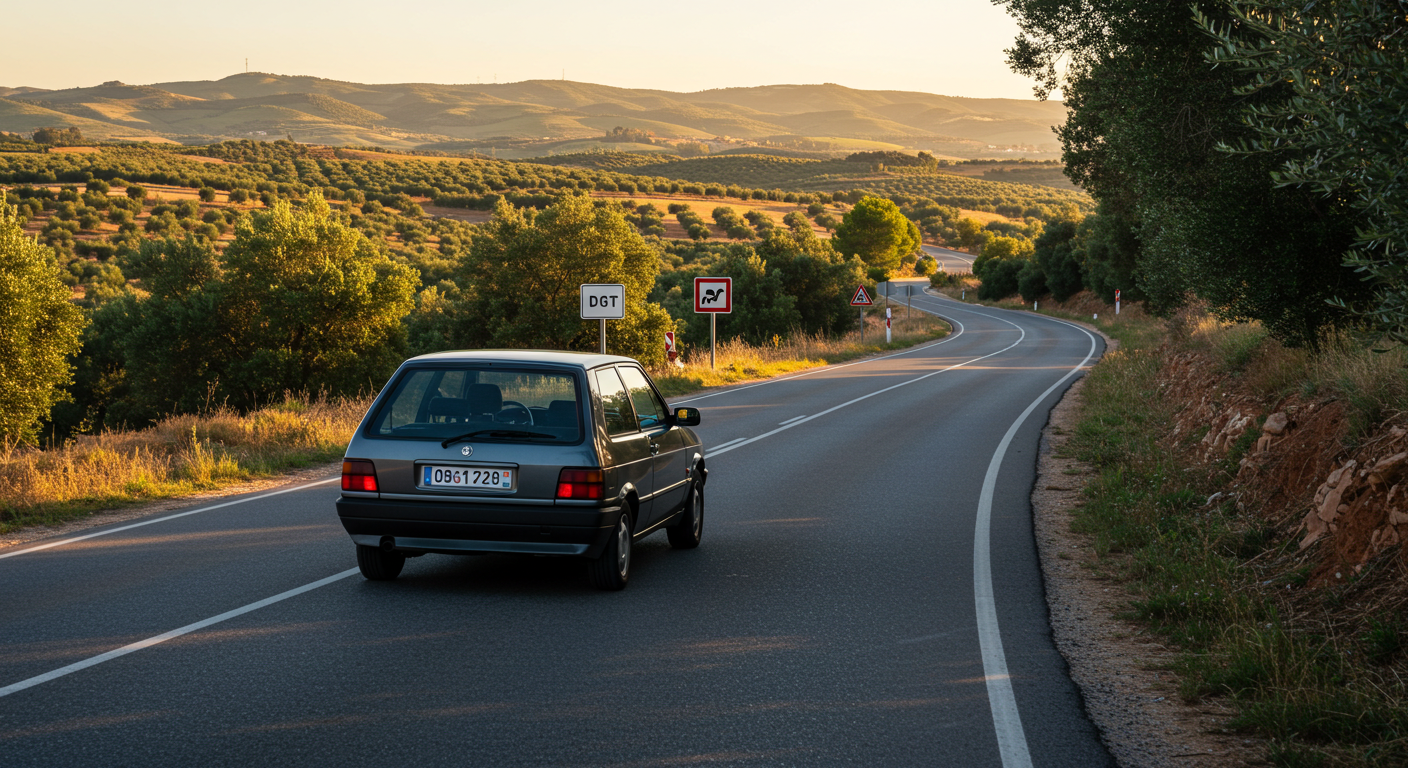
Six months. That is the number most people quote, and it is wrong — or at least dangerously incomplete. The real answer depends on your nationality, your residency status, and which licence you are holding. Get it wrong and you are not just driving illegally; you are uninsured in practice, because most Spanish insurers will refuse a claim if the driver was not properly licensed.
How Long Can You Drive in Spain on a Foreign Licence?
The short, direct answer: EU/EEA licence holders can drive indefinitely on their existing licence after becoming resident, but must exchange it within two years of registering as a resident. UK licence holders have had a specific bilateral agreement since 2022 — they can drive for six months from the date they become resident in Spain, after which they must exchange. US licence holders (and most non-EU, non-UK nationals) get six months from the date of their first legal entry into Spain in any given year, and cannot exchange — they must sit a full Spanish driving test if they want to drive long-term.
Those are the baselines. Now for the detail, because the devil is absolutely in it.
EU and EEA Licence Holders
If you hold a licence issued by an EU or EEA member state, you are in the most comfortable position. Spain recognises these licences automatically under EU mutual recognition rules. You can drive on your German, French, Italian or Dutch licence without any time limit — as a tourist or short-stay visitor.
The moment you become a legal resident — meaning you register on the padrón, get your TIE, and formally establish Spain as your habitual residence — a clock starts. From that point you have two years to exchange your EU licence for a Spanish one. The exchange is administrative: no test, no medical (well, there is a basic vision check at a centro médico de conductores, but it takes about 20 minutes and costs roughly €30–50). You keep your original licence category and any accumulated driving history.
In practice, most EU residents let this slide well past the two-year mark and never get stopped. That is not a strategy I would recommend. If you are involved in an accident and your insurer discovers your EU licence should have been exchanged, you are in difficult territory. Do it properly.
The exchange is handled at the Jefatura Provincial de Tráfico (the DGT office) in your province. Book a cita previa on the DGT website — sede.dgt.gob.es — and bring your TIE, empadronamiento certificate, passport, and the original licence plus a photocopy. Fees are modest, around €25–30 as of 2026, though check the DGT site for the current rate.
UK Licence Holders Post-Brexit
This is where it gets interesting, and where a lot of British residents in Spain have been caught out.
After Brexit, UK licences lost their automatic EU recognition. For a while there was genuine chaos — UK residents in Spain were told they had to sit a full Spanish test, which is expensive (€1,000–2,000 all-in for lessons, tests, fees) and notoriously difficult. The theory exam alone has a high failure rate even among native Spanish speakers.
Then, in late 2022, the UK and Spain signed a bilateral agreement restoring the right to exchange. Under this agreement, UK licence holders who become resident in Spain can exchange their DVLA licence for a Spanish one without sitting a test, provided they do so within six months of becoming resident. Miss that window and — officially — you need to sit the full test.
The six months runs from the date you are registered as a resident, which in practice means the date on your TIE card or your certificado de registro (for those who registered before TIEs were introduced). Not the date you arrived. Not the date you signed a lease. The date of formal residency registration.
Getting your NIE and TIE sorted quickly is therefore not just a bureaucratic box-tick — it is the starting gun on your driving licence deadline. If your TIE appointment is delayed (and NIE wait times in 2026 can stretch to several months in busy cities), you have a genuine problem worth flagging to your gestora or the DGT.
The exchange process for UK drivers: book at your local Jefatura de Tráfico, bring your TIE, padrón cert, original UK licence, a passport photo, and complete form 14107A. The DGT then sends your UK licence back to the DVLA and issues you a Spanish one. Budget around six to eight weeks for the process, though it varies by province.
One thing nobody tells you: during the exchange process, you are given a resguardo (receipt/provisional document) that allows you to keep driving legally while you wait. Do not lose it.
US, Canadian and Other Non-EU Licence Holders
If you are American, Canadian, Australian, or hold most other non-EU licences, the rules are more restrictive and the options are fewer.
As a tourist or short-stay visitor, you can drive in Spain on your foreign licence for up to six months, combined with an International Driving Permit (IDP) if your licence is not in Roman script or if you want to be extra safe. Spain technically accepts US licences without an IDP, but having one costs about £5.50 from the AA or RAC in the UK, or around $20 from AAA in the US, and it removes any ambiguity.
The six months resets each calendar year if you leave and re-enter — but only if you are genuinely a tourist, not a resident. Once you establish residency in Spain (which you are legally required to do if you stay more than 183 days in a year), the clock does not reset. You are a resident, and residents cannot drive indefinitely on a US licence.
Spain does not have a licence exchange agreement with the United States or Canada. That means if you are a US citizen planning to live in Spain long-term — on a digital nomad visa, a non-lucrative visa, or any other route — you will eventually need to sit the Spanish driving test. Full stop. This is a significant undertaking. The theory test is 30 questions (you can fail on two wrong answers), the practical test has a high first-attempt failure rate, and the whole process typically costs between €1,200 and €2,000 when you factor in mandatory lessons at a autoescuela.
Start early. Seriously. Book into a driving school within your first few months of arrival and treat the theory exam like a real exam — because it is.
The Residency Trigger: Why It Matters So Much
The distinction between tourist and resident is the single most important factor in all of this. Spain defines habitual residence as spending more than 183 days per year in the country, or having your primary economic and family interests here. If you meet that threshold, you are legally obliged to register as a resident — and once you do, your foreign licence clock starts.
This catches a lot of people who spend, say, eight months in Andalucía every year but tell themselves they are "just travelling." They are not. And if they are involved in an accident, that distinction will matter.
If you are in the process of sorting your paperwork — empadronamiento, TIE, NIE — it is worth getting everything in order at roughly the same time, so your residency date is clear and your licence exchange deadline is not ambiguous. Many people working through the family relocation process find that driving licence logistics get lost in the shuffle. Do not let them.
Practical Tips for the Exchange Process
Whatever your nationality, a few things apply across the board.
First, check the DGT website (dgt.es) for the current list of required documents before your appointment, because the list does occasionally change and a missing photocopy can cost you a wasted trip. Provincial offices vary in how strictly they apply the requirements.
Second, if you are self-employed or running a business in Spain, having a valid Spanish licence matters more than you might think — it is sometimes required for opening certain business accounts or for vehicle-related insurance policies. Worth keeping in mind if you are also working through registering as autónomo.
Third, if you have penalty points on your UK licence, they do not automatically transfer to Spain. Your Spanish licence starts clean. That is not an invitation to misbehave — the DGT's point system here is perfectly capable of accumulating its own problems — but it is a relief to know.
Finally, if you are in a rural area with limited DGT office access, some provinces allow you to submit the exchange application by post or through a registered gestoría. Worth asking locally.
Sorting your driving licence is one of those tasks that feels easy to defer — right up until you need to make an insurance claim or a Guardia Civil officer pulls you over on the A-7. Get it done in the first few months of residency, and it is off your list for good.
Frequently asked questions
- Can I drive in Spain as a tourist on my UK licence?
- Yes. As a tourist (not a resident), you can drive in Spain on a valid UK licence for up to six months without any exchange. An International Driving Permit is not legally required but can be useful. The six-month rule only becomes a hard deadline once you register as a resident.
- Do I need an International Driving Permit to drive in Spain?
- EU licence holders do not need one. UK licence holders do not legally require one either, following the 2022 bilateral agreement. US and other non-EU drivers are not strictly required to carry one in Spain, but it is recommended — it costs very little, removes ambiguity at the roadside, and is accepted everywhere.
- What happens if I drive in Spain after my foreign licence exchange deadline has passed?
- Technically you are driving without a valid licence, which is an infraction under Spanish traffic law. Fines can reach several hundred euros. More seriously, your car insurance may be voided in the event of an accident, leaving you personally liable for damages. It is not a risk worth taking.
- Can Americans exchange their US driving licence for a Spanish one without a test?
- No. As of 2026, Spain has no licence exchange agreement with the United States. American residents must complete the full Spanish driving test — theory and practical — at a registered autoescuela. This typically costs between €1,200 and €2,000 and can take several months.
- How long does the UK-to-Spanish licence exchange actually take?
- Once you submit your application at the Jefatura de Tráfico, expect six to eight weeks on average, though some provinces are faster. You receive a provisional resguardo that allows you to drive legally during the wait. Your original UK licence is returned to the DVLA.
- Does my six-month driving allowance reset if I leave Spain and come back?
- For genuine tourists, yes — the six months is per visit or per year. But if you are legally resident in Spain, leaving and returning does not reset anything. Your residency is established, and the exchange deadline runs from your registration date, not from border crossings.
- I have penalty points on my UK licence. Do they transfer to my Spanish licence?
- No. Spain's DGT does not import penalty points from foreign licences during the exchange process. Your Spanish licence starts with a clean slate — though the DGT's own points system will apply from that point forward.