Do You Tip in Spain? Restaurants, Taxis & Bars (2026)
Do you tip in Spain at restaurants, bars and taxis? The honest 2026 answer: it's optional, small, and nothing like the US. Here's exactly what locals do.
Tipping in Spain is not compulsory, not expected, and — in a traditional tapas bar — often mildly baffling to the person behind the counter. The short answer to whether you should tip in Spanish restaurants and taxis: yes, sometimes, but the amounts are small, the situations are specific, and leaving 20% will make you look like you've just arrived from JFK. Which, to be fair, you might have.
For a quick, honest summary before we go deeper: in Spain, tipping is genuinely optional. At a sit-down restaurant, rounding up or leaving a few euros is appreciated. At a bar or café, leaving your small change (literally, the coins) is the norm. Taxi drivers rarely expect a tip but won't refuse one. Nobody will chase you down the street if you don't leave anything.
The Spanish Attitude to Tips — and Why It's Different
Spain is not a tipping culture in the way that the US, UK or even Germany is. Hospitality workers here are paid a proper wage — not a sub-minimum one that relies on gratuities to make up the difference. That structural difference matters. Your waiter in Madrid is not financially dependent on your tip. This doesn't mean tips go unappreciated; it just means the social anxiety around not tipping is almost entirely absent.
The Spanish word for tip is propina. You'll hear it occasionally, but you'll almost never be asked for one. Service charge — servicio incluido — is sometimes printed on menus in tourist-heavy areas, but it doesn't go to staff the way a tip would; it's just part of the bill calculation. If you see it, you've already paid it, and any extra is entirely your call.
One thing that genuinely surprises a lot of visitors: in Spain, it's perfectly normal to eat a €40 meal for two, pay exactly €40, and leave. No awkwardness. No disappointed hovering. This is not rudeness — it is simply the custom.
Tipping at Restaurants in Spain: What Actually Happens
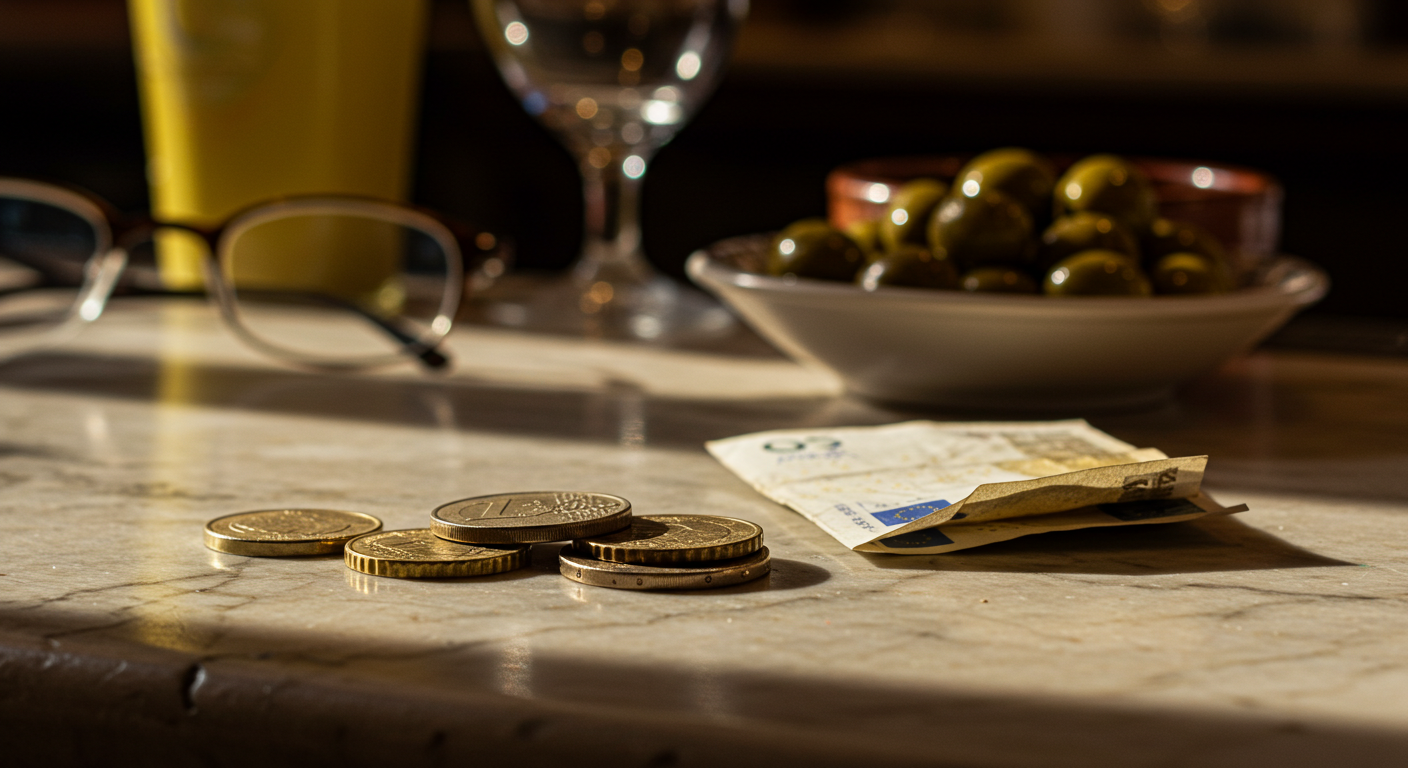
At a proper sit-down restaurant — a restaurante or a marisquería — the general practice among locals is to leave small change, round up, or leave around 5–10% if the service was genuinely good. Not 15%. Definitely not 20%. If your bill comes to €47, leaving €50 is generous. Leaving €3 in coins on the table is also fine. Leaving nothing at all is not a faux pas.
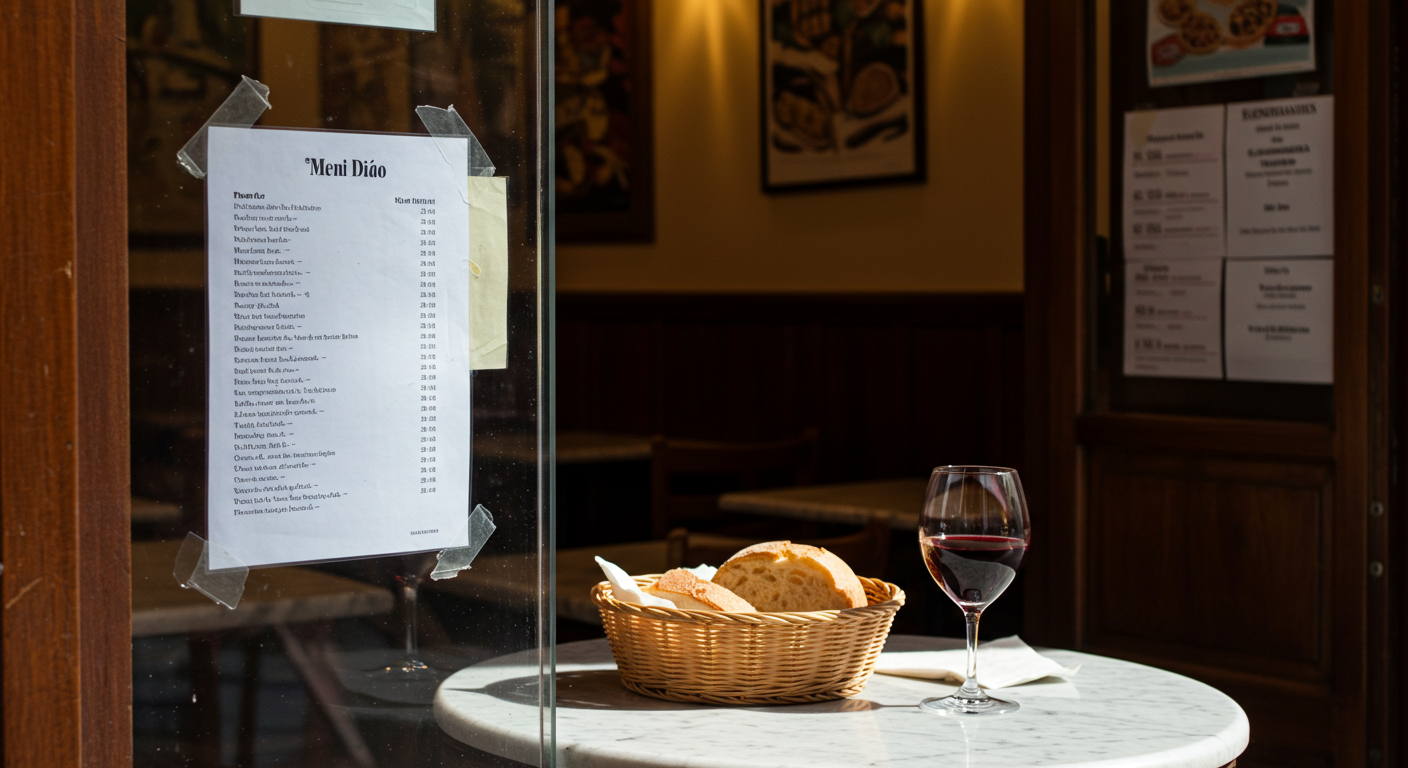
At the cheaper end — a menú del día (the set lunch, usually €10–15 as of 2026), which is what locals eat on weekdays — tipping is rarer still. Maybe a euro or two if the place was good and you're a regular. Otherwise, you pay the price on the menu and move on.
Where things shift slightly: upmarket restaurants in Barcelona, Madrid, or the Balearics, particularly those used to international clientele, have quietly normalised slightly higher tips. Some now have card machines that prompt for a gratuity. You can decline without embarrassment. But if you've just had a €120 tasting menu at somewhere serious, leaving €10–15 is a decent gesture. Eating out is one of the genuine pleasures of beach living in Spain — if you're weighing up where to base yourself, the food scene factors in more than people expect.
A practical note: Spain is still heavily cash-oriented in many restaurants, and tips left on card don't always reach the server. If you want to tip and mean it, leave coins or a note on the table in cash, even if you pay the bill by card.
Bars, Cafés and Tapas: The Small-Change Rule
This is where Spanish tipping culture is most itself. At a bar, you order a caña (a small beer, around €1.50–2.50 in most cities, more in tourist zones), you drink it standing at the counter, and when you pay, you might leave the 20 or 50 cent coins. Or you might not. Both are fine.
In a traditional tapas bar — the kind where the barman slaps down a plate of jamón with your drink — nobody expects anything beyond payment. If you're a regular, tipping occasionally is a nice way to cement that relationship. But as a one-off visitor? Leave your coins if you like. Don't stress about it.
Café culture is similar. A cortado at a neighbourhood café costs around €1.20–1.60. If you pay with a €2 coin and say quédese con el cambio (keep the change), that's a perfectly natural thing to do. Asking for the change back is equally fine.
The one place to be slightly more generous: if you're doing a big round of drinks at a bar for a group, or you've been sitting at a table outside (a terraza) for a couple of hours nursing drinks, leaving a euro or two acknowledges that you've taken up the table. It's not a rule, just courtesy.
Tipping Taxi Drivers in Spain
Spanish taxi drivers do not expect tips. Full stop. The meter runs, you pay what it says, and that's the transaction complete. That said, rounding up is common — if the meter says €8.60, handing over €9 or €10 and saying está bien (that's fine) is a normal thing to do and will be received warmly.
For longer rides — say, from the airport into Barcelona or Madrid city centre, which can run €25–40 depending on the city and time — a euro or two on top is a reasonable gesture if the driver was helpful, loaded your bags, or navigated well. Nobody expects it; nobody resents it if it doesn't come.
App-based taxis (Cabify, Bolt, and to a lesser extent Uber in Spain) have in-app tipping options. Again, entirely optional. The default is to tip nothing, and that's what most Spanish users do.
If you're moving around Spain and relying on taxis a lot, understanding what a fair fare looks like is part of managing your budget — something worth thinking through alongside the overall cost of living if you're considering a longer stay.
Hotel Staff, Tour Guides and Other Services
Hotels are where tipping in Spain comes closest to international norms, simply because the international hotel industry has standardised it. Leaving €1–2 per night for housekeeping is a kind thing to do — leave it daily rather than at the end of your stay, since the staff may change. Porters who carry bags: €1 per bag is fine. Concierges who sort something genuinely useful: a few euros is a nice acknowledgement.
For private tour guides — particularly in cities like Seville, Toledo or San Sebastián — tipping is more established because many guides work freelance or on low base rates. €5–10 per person for a two-hour private tour is reasonable. For free walking tours (the tip-based model), €5–10 per person is the going rate if you felt you got value. Less if you didn't. They know the deal.
At spas, hairdressers and beauty treatments: tipping is not standard in Spain, but leaving a euro or two if you were happy is appreciated and becoming more common in cities.
Regional Differences: Does It Change by City?
Broadly, no — the culture is consistent across Spain. But a few nuances are worth knowing.
In Barcelona, there's slightly more expectation of tipping in tourist-facing restaurants, partly because the city sees so many American and northern European visitors. Don't over-read this: it's still not mandatory, and locals don't tip more than elsewhere. But if a restaurant has a QR code menu and a card terminal that asks for a gratuity, that's a Barcelona-ism.
In the Basque Country — San Sebastián especially — the pintxos bar culture means you're often paying per bite at the counter. Tipping isn't part of that ritual. If you've had a long, indulgent meal at one of the city's serious restaurants, a small tip is appropriate. The food there is exceptional enough that you probably won't begrudge it. If you're planning a visit to San Sebastián, the eating schedule alone is worth planning around.
In rural Spain — a village bar in Extremadura, a roadside venta in Andalusia — tipping can feel slightly out of place, almost over-formal. Paying the stated price and being friendly is the correct move.
In resort areas (Benidorm, parts of the Canaries, Magaluf), the tipping culture has been shaped by decades of British and German tourism. You'll find more places that expect or prompt for tips. You can still ignore it, but the social calculus is slightly different.
The Honest Take: What Should You Actually Do?
If you're a visitor: round up at taxis, leave a few euros at sit-down restaurants if you were happy, leave your small coins at the bar. That's it. You'll be behaving exactly as a considerate local would.
If you're living in Spain: build a small propina habit at your local bar and café — it does genuine good for the relationship and costs you almost nothing. At restaurants, 5–10% when the service was good is plenty. Never feel obligated beyond that.
What to avoid: the American-style 20% tip at a €12 menú del día. Asking the waiter if the tip is included (it almost never is, and the question will confuse them). And tipping on the card when you actually want the money to reach the person who served you — cash is always more direct.
Spain is an affordable country to eat and drink in, which is one of the reasons so many people end up staying longer than they planned. Tipping here should feel light, voluntary and human — not an anxiety-inducing calculation at the end of every meal.
Frequently asked questions
- Is tipping expected at restaurants in Spain?
- No, tipping is not expected at Spanish restaurants. It's appreciated if you leave something, but leaving nothing is completely normal and won't cause offence. A typical tip, if you give one, is 5–10% or simply rounding up the bill.
- How much do you tip a taxi driver in Spain?
- Spanish taxi drivers don't expect a tip. Rounding up to the nearest euro or two is common and appreciated, but paying the exact meter fare is perfectly acceptable. On longer airport runs, €1–2 on top is a generous gesture.
- Do you tip at a bar or café in Spain?
- Leaving small change — the coins you'd get back from a round — is the usual approach. It's common to leave 20–50 cents when paying for a coffee or beer. Leaving nothing is equally fine. Nobody will think badly of you either way.
- Is service charge included in Spanish restaurant bills?
- Occasionally in tourist-heavy areas, menus will say 'servicio incluido', meaning a service charge is built into the prices. This doesn't go directly to staff as a tip — it's just how the pricing is stated. Any additional tip you leave is separate and voluntary.
- Should I tip in cash or by card in Spain?
- Cash is strongly preferable if you want the tip to actually reach your server. Card tips on Spanish terminals often go into a general pool or are handled inconsistently. Leave coins or a note on the table.
- Do you tip tour guides in Spain?
- For private guides, €5–10 per person for a couple of hours is a fair tip if the tour was good. For free (tip-based) walking tours, €5–10 per person is the expected contribution. It's one of the few situations in Spain where tipping is genuinely part of the economic model.
- Is tipping different in Barcelona compared to the rest of Spain?
- Marginally. Barcelona's heavy tourist footfall means more restaurants prompt for tips on card terminals, and staff are more accustomed to receiving them. But the underlying culture is the same — it's optional, and locals don't tip more than elsewhere in Spain.