Slow Travel León and Burgos: Gothic Cathedrals on the Meseta
A slow travel guide to León and Burgos — two Gothic cathedral cities on the Castilian meseta. What to see, eat, skip, and how long to stay.
Two Cities, One Plateau, and a Pace That Suits Them Both
Slow travel through León and Burgos on the Castilian meseta is one of the most underrated things you can do in Spain. These are not flash-and-dash cities. They reward the person who stays three nights, walks the same street twice, and lingers over a glass of Ribera del Duero long enough to notice the light changing on the stone. The direct answer to whether this is a worthwhile detour from Madrid: absolutely yes, and you need at least four to five days across both cities to do them any justice.
I've passed through this stretch of the meseta more times than I can count — once by car in November when the plateau was the colour of old mustard, once by train in April with the poplars just coming in, and several times on foot along the Camino Francés, which runs through both cities. Each time I've found something I missed before. That's the meseta for you.
León First, Burgos Second — and Here's Why
The obvious route from Madrid goes northwest to León first, then east to Burgos before heading home. It makes geographical sense, and it also makes emotional sense: León is the wilder, more melancholy city of the two, and Burgos is the more composed one. Ending in Burgos gives you a sense of resolution.
From Madrid's Chamartín station, the high-speed AVE to León takes around two hours and costs roughly €20–40 on an advance Renfe ticket as of 2026 (check Renfe's website — prices shift constantly). León to Burgos is a slower, more scenic affair on a regional train: about two and a half hours, and the views of the meseta from the window are half the point. Don't rush it.
León: Stained Glass and the Art of Doing Very Little
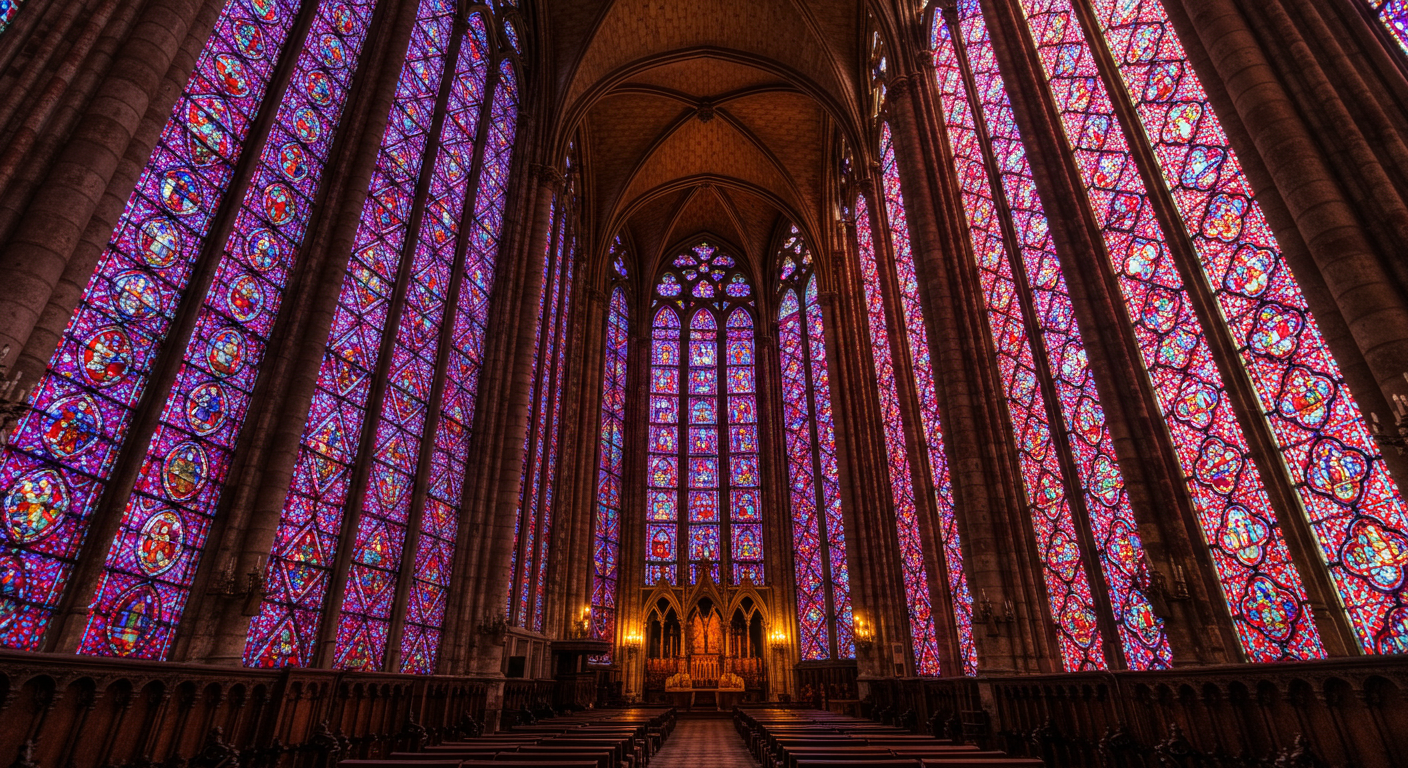
The León Cathedral — the Catedral de Santa María de Regla — is the reason most people come, and it earns the pilgrimage. It has more stained glass per square metre than almost any Gothic cathedral in Europe: around 1,800 square metres of it, according to the cathedral's own count, which I have no reason to doubt given the light show the interior puts on at almost any time of day. Go in the morning when the sun comes through the south nave. Go again in the late afternoon. The colours shift completely.
But don't spend all your time inside. The old quarter — the Barrio Húmedo, which translates, perfectly, as the 'damp quarter' — is where you want to be from about 7pm onwards. León has a tradition of free tapas with every drink, a custom that's increasingly rare in Spain. Order a caña at almost any bar in the Barrio Húmedo and a small plate arrives without asking. The quality varies wildly — sometimes it's a decent pincho de tortilla, sometimes a sad triangle of processed cheese — but the ritual is worth participating in. Calle Ancha and Plaza de San Martín are the epicentre of this.
For food that's actually worth paying for: La Competencia on Calle Tari does a very good cocido leonés, the local chickpea and meat stew. It's heavy, it's winter food even in summer, and it's exactly right. Budget around €14–18 for a full set lunch with wine.
The Real Basílica de San Isidoro is frequently overlooked in favour of the cathedral, which is a mistake. The Romanesque Panteón Real underneath it — the royal pantheon — has 12th-century ceiling frescoes that are genuinely extraordinary. Entry is around €8 as of 2026, and it's rarely crowded.
Where to stay: the Parador de León, inside the old San Marcos monastery, is one of the finest Paradores in Spain. It's expensive — rooms from around €150 a night — but if you're going to do one Parador in your life, this might be it. The cloister alone is worth it. For something more affordable, there are decent mid-range hotels and guesthouses in the old quarter for €60–90 a night.
How long in León: three nights is the comfortable minimum. Two nights is possible but you'll leave feeling rushed.
The Meseta Between: Why the Journey Is the Point
The train from León to Burgos cuts across the southern edge of the Cantabrian mountains before dropping onto the plateau proper. In winter the landscape is almost entirely monochrome — pale brown fields, dark grey sky, the occasional village that looks like it was built and then immediately abandoned. In spring there are poppies. In summer the wheat turns the whole thing gold.
This is the same ground that Camino pilgrims walk for days. If you have the time and the inclination, the stretch from Burgos west to León is one of the less-walked sections of the Camino Francés — fewer pilgrims than the Galician stage, more solitude, and the particular satisfaction of walking into a city you already know from the train window. It's not a beginner's section (it's long, flat, and mentally demanding in a way that hilly terrain isn't), but it's genuinely rewarding.
Even if you're just on the train, look up from your phone. The meseta is one of those landscapes that operates on you slowly.
Burgos: Bone-Cold and Beautiful
Burgos has a reputation for being the coldest city in Spain, which is not quite accurate but not far off either. Sitting at around 860 metres above sea level on the meseta, it gets proper winters — frost, occasional snow, temperatures that can drop to -10°C in January. Even in May it can be sharp at night. Pack a layer regardless of when you visit.
The Catedral de Burgos is a UNESCO World Heritage Site and, alongside León's, one of the two finest Gothic cathedrals in Spain. Where León's cathedral is all about light and colour, Burgos is about mass and intricacy: the spires, the Golden Staircase by Diego de Siloé, the Capilla del Condestable. El Cid is buried here, beneath the crossing, which gives the place a particular weight. Admission is around €8–10 as of 2026.
Spend at least two hours inside. More, if you can. The cloisters are calm and usually half-empty even when the main nave is busy.
The Museo de la Evolución Humana on the riverbank is one of those museums that sounds dry and turns out to be genuinely fascinating — it's built around the Atapuerca archaeological sites nearby, which have produced some of the oldest human remains found in Europe. Entry is around €6, and it's very well done. If you have a half-day spare, it's worth it.
For food: Burgos is morcilla country. The local black pudding — softer and ricier than the British version, spiced with onion and pine nuts — appears in everything from tapas to main courses. Try it at Cervecería Morito on Calle Diego Porcelos, a no-nonsense local bar that's been there forever and charges sensible prices. A glass of wine and a plate of morcilla with bread will cost you €5–7.
The Ribera del Duero wine region starts just south of Burgos. If you're a wine person, this is worth knowing — the wines in local bars are often poured from small, local producers you'll never see exported. Ask the bartender what they're drinking themselves.
Where to stay: the old quarter around the cathedral is the obvious choice. Hotel Mesón del Cid, directly opposite the cathedral façade, is well-located and mid-range at around €80–110 a night. Avoid the chain hotels out near the ring road — they're soulless and the taxis add up.
How long in Burgos: two nights works. Three is comfortable. There's enough here to fill three days without padding.
Practical Notes for the Slow Traveller
Both cities are small enough to walk almost entirely. You don't need a car for the cities themselves, though a car is useful if you want to visit the Atapuerca sites (about 15km east of Burgos) or the wine villages of the Ribera del Duero. Public transport connections to those are thin.
If you're planning a longer stay in Castile and León — say, a month or more, working remotely — you'll want to sort out a few administrative things. Renting an apartment without a Spanish payslip is a common headache; there are ways around it, as covered in detail in Renting in Spain Without a Spanish Payslip: How Foreigners Do It. And if you're thinking about the Spanish Digital Nomad Visa, it's worth understanding whether the income threshold actually makes sense for your situation — Spanish Digital Nomad Visa on Minimum Salary: Is It Worth It? lays that out honestly.
For those already living in Spain and considering a long stay in this region: both León and Burgos have empadronamiento offices that are, in my experience, considerably less overwhelmed than those in Madrid or Barcelona. Getting registered is straightforward — though if you're in a non-standard housing situation, Empadronamiento Without a Rental Contract: Your Real Options is worth reading first.
One more thing on healthcare: if you're between residency statuses and unsure what cover you actually have, Healthcare in Spain Before Your TIE Arrives: What Cover Do You Actually Have? is a useful reality check.
What to Skip
The tourist shops selling Camino scallop shells and miniature cathedral replicas — skip them entirely, obviously. In León, the Casa Botines (a Gaudí building, yes, but a minor one and now a museum with an entry fee that doesn't quite match the content) can be admired from the outside for free; the interior is not essential unless you're a committed Gaudí completist. In Burgos, the Arco de Santa María is photogenic but there's not much inside worth the entry; the view of it from the bridge is the thing.
The meseta doesn't give itself up quickly. That's precisely the point. Come with a slower pace than you think you need, and you'll leave with something that doesn't quite fit into photographs.
Frequently asked questions
- How many days do you need for slow travel through León and Burgos?
- Allow at least four to five days across both cities — three nights in León and two in Burgos is a comfortable minimum. If you try to do both in a single weekend you'll see the surfaces and miss the substance.
- What is the best way to travel between León and Burgos?
- The regional train is the most practical option and, honestly, the most enjoyable one. The journey takes around two and a half hours and the meseta scenery is worth watching. Driving is also fine and gives you flexibility to stop in villages, but the train is simpler and cheaper.
- Which Gothic cathedral is better — León or Burgos?
- They're different enough that the comparison isn't very useful. León's cathedral is unmatched for its stained glass and the quality of light inside. Burgos is more architecturally complex, with extraordinary carved stonework and a grander sense of scale. If you had to pick one, León is the more emotionally affecting experience.
- Is Burgos worth visiting in winter?
- Yes, but go prepared. Burgos is genuinely cold — temperatures below freezing are common from December through February. The cathedral and museums are warm, the bars are welcoming, and the city is far less crowded than in summer. Just bring a proper coat.
- What should I eat in León and Burgos?
- In León: cocido leonés (a hearty chickpea and meat stew) and the free tapas that come with every drink in the Barrio Húmedo. In Burgos: morcilla de Burgos (a mild, rice-based black pudding), roast lamb, and anything from the Ribera del Duero wine region. Both cities have strong, unpretentious food cultures.
- Can you walk part of the Camino de Santiago between León and Burgos?
- Yes. The Camino Francés passes through both cities, and the stretch between them — roughly 180km — is one of the more solitary sections of the route. It's flat, mentally demanding, and rewarding. Most walkers allow eight to ten days for this section. It's not the best introduction to the Camino for beginners, but experienced walkers often prefer it for the quiet.
- Is it easy to get around León and Burgos without a car?
- Both cities are very walkable and you don't need a car to see the main sights. A car becomes useful if you want to visit the Atapuerca archaeological sites near Burgos or explore the Ribera del Duero wine villages to the south, as public transport links to those are limited.