Moving to Spain with Family and Pets: Visas, Schools and the Logistics Nobody Mentions
The honest, practical guide to relocating to Spain with children and animals — visas, school enrolment, pet import rules, housing and the details nobody warns you about.
Moving to Spain as a single adult is complicated enough. Add two children, a Labrador and a cat to the equation, and the paperwork multiplies faster than you can say empadronamiento. This guide is for families who are serious about relocating — not just fantasising about it over a glass of Rioja — and who want to understand the real sequence of decisions before they hand in notice and book a removal van.
Choosing the Right Visa Before You Do Anything Else
The visa question should come first, because it determines almost everything downstream: where you can work, how quickly you gain residency rights, and what documents your children need. As of 2026, the two most common routes for non-EU families are the Non-Lucrative Visa (NLV) and the Digital Nomad Visa (DNV). They look similar on the surface but behave very differently in practice.
The NLV requires you to prove passive or foreign-sourced income — roughly €2,400 per month for the lead applicant, plus around €600 per additional family member as of 2026 — and forbids you from working for Spanish clients or employers. The DNV, introduced under the Startup Law, allows remote work for foreign employers and sets a minimum income threshold of approximately €2,646 per month (200% of Spain's minimum wage). For a family of four, you'll want considerably more than the minimums to satisfy consular officers in practice.
Both visas cover your entire family unit in a single application, which is one of the few genuinely convenient things about the process. Your spouse or partner and dependent children are included as family members. You apply at the Spanish consulate in your home country, and once approved, you have roughly a year to enter Spain and convert the initial visa into a Tarjeta de Identidad de Extranjero (TIE) — the residency card that makes daily life functional.
For a thorough comparison of both routes, see our guide to Non-Lucrative Visa vs Digital Nomad Visa: Which One Is Right for You?, and once you've decided, Getting Your NIE and TIE in Spain: A Step-by-Step Guide for New Residents will walk you through the in-country registration process step by step.
EU/EEA citizens have it considerably simpler: register at the local oficina de extranjería within three months of arrival and obtain a certificate of registration. Your children register alongside you.
The Padrón: The Document Nobody Warns You About
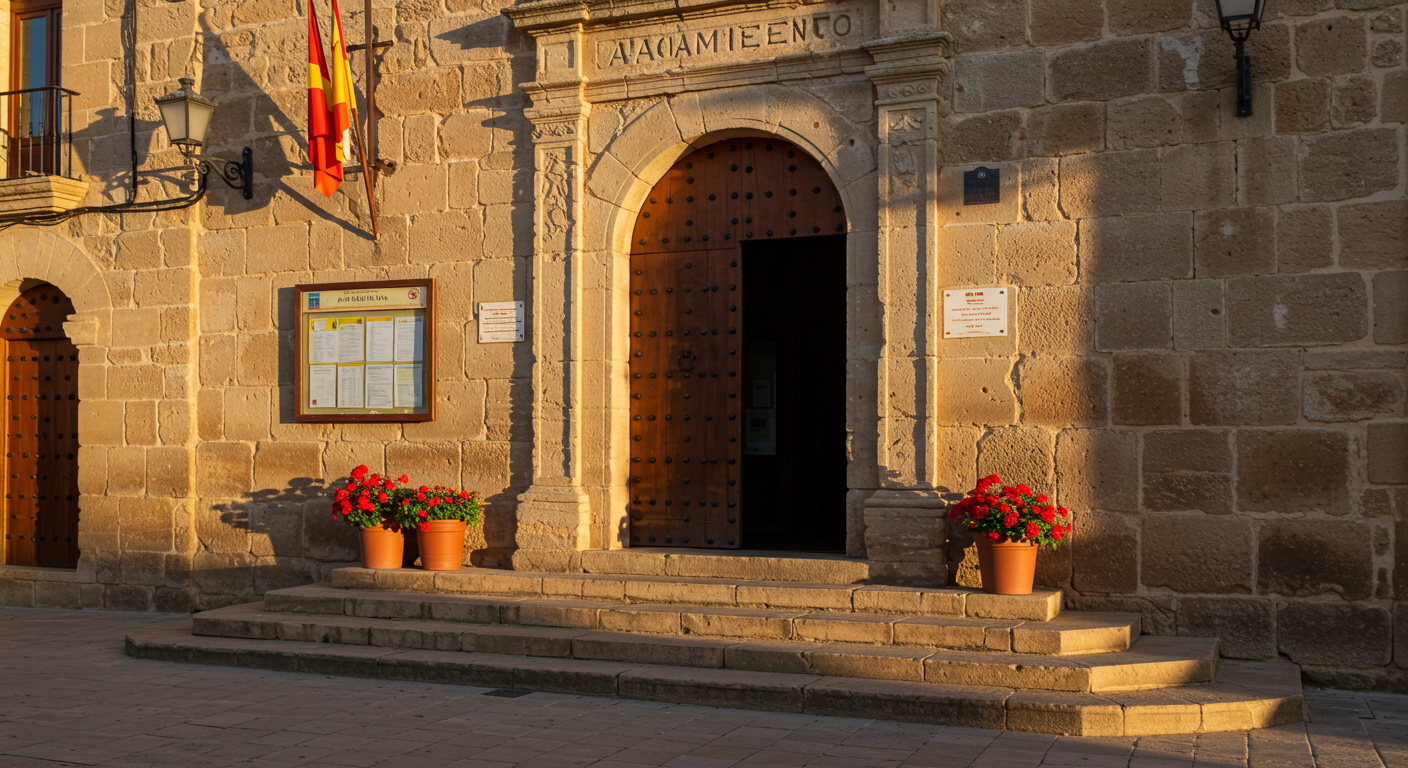
Before you can enrol children in school, register with a GP, open certain bank accounts or access a long list of municipal services, you need to be registered on the padrón municipal — the local census register. You register at your ayuntamiento (town hall) with proof of address: a rental contract, a utility bill in your name, or a letter from your landlord.
The catch: you need an address to get a padrón, but landlords often want to see a NIE before signing a lease. The practical solution is to rent short-term (an Airbnb or serviced apartment for a month or two) while you sort your NIE, then sign a proper rental contract and register on the padrón. Build this buffer period into your timeline and budget — a family of four in a decent short-term rental in Madrid or Barcelona will spend €2,500–€4,500 per month during this limbo phase, as of 2026.
For the financial side of settling in, Opening a Spanish Bank Account and Registering as Autónomo: A Complete Guide covers how to get a bank account open before you have all your documents in place — which is more achievable than it sounds if you know which banks to approach.
Enrolling Children in School
Spain has three school types available to expat families: state (público), semi-private (concertado) and fully private (privado). Understanding the differences matters enormously.
State schools are free and, in most regions, excellent. Teaching is in Spanish (and in the regional language — Catalan, Basque, Galician — depending on where you live). Children are remarkably good at absorbing a new language when immersed young; primary-age children typically reach conversational fluency within six to twelve months. Secondary-age teenagers have a harder adjustment.
Concertado schools are state-funded but privately run, often by the Catholic Church. They charge small fees (€50–€200 per month is typical) and may have a religious character. Quality varies widely.
Private international schools teach in English (or another language) and follow British, American, IB or other curricula. They are expensive — €8,000 to €22,000 per year per child is realistic in Madrid or Barcelona as of 2026 — but provide continuity if your children are older or if your stay is uncertain in duration.
Enrolment in state and concertado schools happens through the regional education authority (consejería de educación), not the school itself. Each autonomous community has its own system and timetable, but the general process is: submit an application during the official period (usually February–April for the following September), list your preferred schools in order, and await assignment. Priority is given to children who live within the school's catchment zone — another reason why your rental address matters strategically.
Don't assume international cities are automatically better for school choice. Smaller cities like Seville, Valencia and Málaga have strong state schools with experienced teachers of Spanish as a second language (apoyo lingüístico), and the competition for places is less brutal than in central Madrid or Barcelona.
Healthcare Registration for the Whole Family
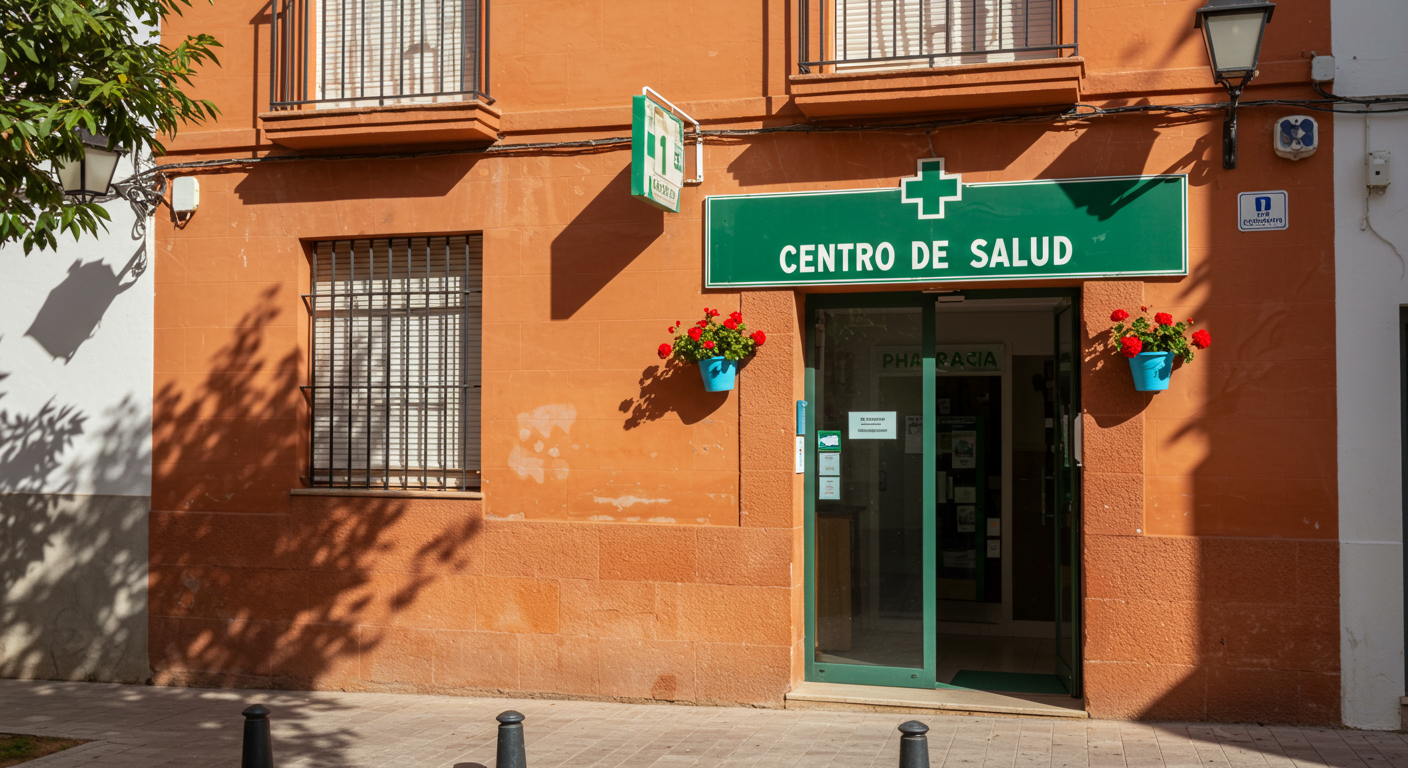
Once you have your padrón certificate and TIE (or NIE in the interim), you can register with the Sistema Nacional de Salud (SNS) at your local health centre (centro de salud). Each family member registers individually. Children are assigned a paediatrician (pediatra) rather than a GP up to around age 14–15, depending on the region.
NLV holders are not automatically entitled to public healthcare — this is one of the visa's significant drawbacks. You must hold private health insurance as a condition of the visa, and that insurance must be comprehensive (no co-payments, no coverage limits below €30,000). Expect to pay €100–€200 per month per adult and €50–€80 per child for solid private cover as of 2026. Sanitas, Adeslas and Asisa are the three largest providers and all have English-speaking customer service lines.
DNV holders, by contrast, can access the public system once they are contributing to Social Security — either as employees or as autónomos.
Vaccination records matter. Spain follows its own childhood immunisation schedule, and schools may request evidence that your children are up to date. Bring certified copies of all vaccination records and have them officially translated (traducción jurada) before you leave.
Bringing Pets to Spain
This section is where families consistently underestimate the complexity. Spain is an EU member state, and importing pets from non-EU countries requires compliance with EU animal health rules — which are strict and unforgiving of last-minute preparation.
Dogs and Cats from Non-EU Countries
Your dog or cat must have:
- A microchip (ISO 11784/11785 standard) implanted before rabies vaccination
- A rabies vaccination administered after microchipping
- An EU-format animal health certificate completed by an official government veterinarian in your country of origin, within ten days of travel
- A rabies antibody titre test (blood test) if travelling from a country not on Spain's approved list — results must show adequate immunity, and there is a mandatory three-month waiting period after a satisfactory result before the animal can enter the EU
The three-month wait is the killer detail. If you're coming from the UK, USA, Canada or Australia, plan your pet's travel timeline at least five months before your intended move date to allow for testing, waiting and certificate preparation. Airlines have their own rules about cabin versus hold travel for animals, and some routes do not accept pets in hold during summer months due to heat restrictions.
Once in Spain, dogs must be registered on the Registro de Animales de Compañía (the regional pet registry) and must be licensed in your municipality. Annual registration fees are typically €15–€40. Dogs in public spaces must be on a lead; certain breeds (American Staffordshire Terrier, Rottweiler and others) are classified as razas potencialmente peligrosas and require a special licence, third-party liability insurance and a muzzle in public.
Finding Pet-Friendly Housing
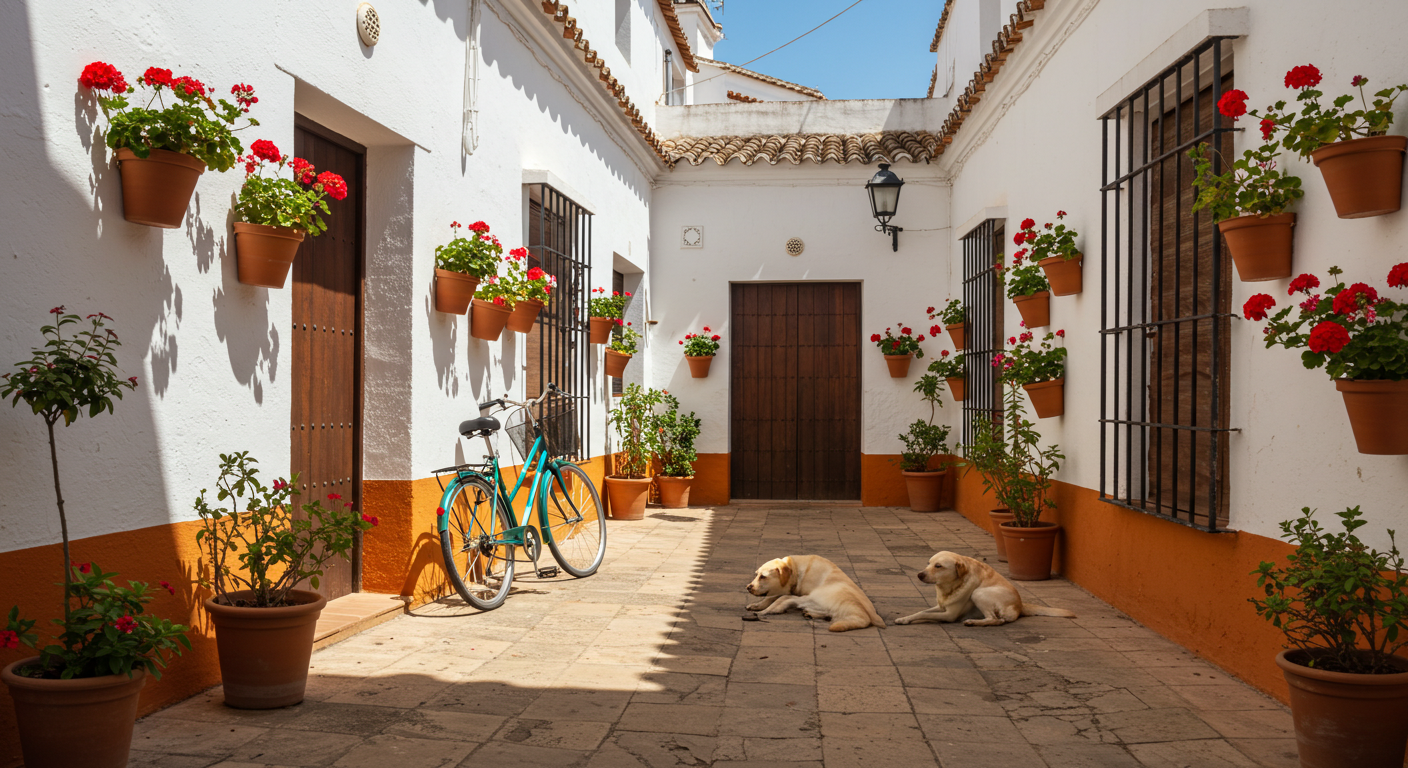
This is genuinely difficult. Many Spanish landlords — particularly in cities — refuse pets, and the standard rental contract (contrato de arrendamiento) often includes a clause prohibiting them. Be upfront in your search and expect to pay a higher deposit (landlords may request an additional month's rent as security). Platforms such as Idealista and Fotocasa allow you to filter for pet-friendly listings, but supply is thin in central urban areas. Ground-floor flats with a small terrace or houses with gardens are more likely to accept animals.
If you're open to smaller cities or towns, life becomes considerably easier. A house with a garden in Extremadura, rural Andalusia or inland Valencia will cost a fraction of the equivalent in Madrid, and landlords tend to be more flexible. For a sense of what genuinely liveable, slower-paced Spanish life looks like, A Slow Travel Guide to Granada: How to Actually Live the City captures the texture of a mid-sized Andalusian city well.
The Logistics Nobody Mentions
School Hours and the Working Day
Spanish school hours are not what British or American families expect. State primary schools typically run 09:00–14:00, with an optional afternoon comedor (lunch and supervision) until around 16:00. Secondary schools may run split shifts. This does not align neatly with a standard working day, and childcare infrastructure outside school hours — breakfast clubs, after-school clubs — is less developed than in the UK or US. Private schools often have more extended hours. Factor this into your working arrangements before you arrive.
The August Problem
If you plan to arrive in August, prepare for near-total administrative paralysis. Government offices operate on reduced summer hours (jornada intensiva), appointment slots at the extranjería are scarce, and many private services — solicitors, estate agents, schools — are on holiday until September. Arriving in September or October gives you a full autumn of administrative momentum. Arriving in January is equally practical.
Driving Licences
Non-EU licence holders must exchange their licence for a Spanish one within six months of becoming resident, or retake the full Spanish driving test — a prospect nobody wants. The UK and Spain have a bilateral agreement allowing direct exchange (no test required) as of 2026, though the process involves a queue at the DGT (traffic authority) and can take several months. Apply early. In the interim, your foreign licence remains valid for driving.
Banking and Money Transfer
Spanish banks are conservative about opening accounts for newly arrived foreigners. Sabadell and CaixaBank have historically been more accommodating; BBVA and Santander less so. In the meantime, Wise and Revolut accounts are widely accepted for day-to-day spending and are invaluable for managing international transfers during the transition. Once you have your TIE, a full Spanish current account becomes straightforward to open.
Tax Residency
If you spend more than 183 days per year in Spain, you become a Spanish tax resident and must declare your worldwide income to the Agencia Tributaria. This applies to your whole family. The implications are significant: pension income, rental income from property abroad, investment returns — all may be taxable in Spain. The Beckham Law (now extended under the Startup Law) offers a flat 24% income tax rate for qualifying DNV holders for up to six years, which can be highly advantageous for higher earners. Get independent tax advice before you move, not after.
Making the Choice of Where to Live
For families, the where matters as much as the how. Madrid offers the largest concentration of international schools, the best transport links and a genuinely cosmopolitan family life — but housing costs have risen sharply, with a decent three-bedroom flat in a good school catchment costing €2,200–€3,500 per month to rent as of 2026. Barcelona is comparable in cost and adds Catalan-language schooling to the mix, which some families embrace and others find daunting.
Valencia offers a compelling middle ground: excellent state schools, a strong expat community, a coastline within easy reach, and rents roughly 30–40% lower than Madrid or Barcelona. Seville, Málaga and Alicante are popular with British families in particular, with established expat networks and good private school options.
For families drawn to the north — greener, cooler, with outstanding food culture — the Basque Country and Galicia offer superb quality of life, though the Basque school system's emphasis on Euskera (Basque language) is a factor worth researching carefully.
Moving a family to Spain is genuinely achievable, and for most families who do it properly, it transforms daily life in ways that are hard to overstate — slower rhythms, outdoor living, excellent food, and children who grow up bilingual. But it rewards those who plan methodically and punishes those who assume it will sort itself out on arrival. Start with the visa, build your timeline backwards from your target school-year start, and give the pets their own project plan. The chaos is finite. The life on the other side of it is worth it.
Frequently asked questions
- Can my whole family be included on one Spanish visa application?
- Yes. Both the Non-Lucrative Visa and the Digital Nomad Visa allow you to include a spouse or partner and dependent children as family members on a single application. Each family member will still need their own TIE (residency card) once you are in Spain, but the initial visa application is submitted as a family unit at your Spanish consulate.
- How long does it take to enrol children in a Spanish state school?
- State school enrolment runs through the regional education authority on a fixed annual timetable — applications typically open in February or March for the following September. If you arrive mid-year, schools can usually accommodate children outside the normal cycle, particularly at primary level, but you'll need your padrón certificate and proof of residency. Allow two to four weeks for the process once you have the right documents.
- Do I need private health insurance if I move to Spain on a Non-Lucrative Visa?
- Yes, it is a mandatory condition of the NLV. Your policy must be comprehensive — no co-payments and adequate coverage limits — and must be from an insurer authorised to operate in Spain. As of 2026, expect to pay roughly €100–€200 per month per adult and €50–€80 per child. Digital Nomad Visa holders who register with Social Security can access the public health system instead.
- How far in advance should I start the process of bringing my dog or cat to Spain from a non-EU country?
- At least five months before your intended travel date, and ideally longer. If your country requires a rabies antibody titre test (which includes the UK, USA, Canada and Australia), there is a mandatory three-month waiting period after a satisfactory result before your pet can enter the EU. Add time for microchipping, vaccination, finding an accredited vet and obtaining the official health certificate, and the timeline fills up quickly.
- Will my children need to learn Spanish or a regional language to attend a state school?
- State schools teach in Spanish, and in regions with a co-official language (Catalan in Catalonia, Basque in the Basque Country, Galician in Galicia), that language features prominently too — in some Catalan schools, Catalan is the primary language of instruction. Primary-age children typically adapt within six to twelve months. Most state schools offer additional language support (apoyo lingüístico) for newly arrived pupils. Secondary-age teenagers generally take longer to adjust.
- Can I drive in Spain on my foreign licence after becoming a resident?
- You can drive on a foreign licence for up to six months after becoming resident. After that, you must exchange it for a Spanish licence. UK licence holders benefit from a bilateral agreement with Spain that allows direct exchange without retaking the test, as of 2026, though the process at the DGT can take several months. Apply as soon as you have your TIE.
- Is it difficult to find pet-friendly rental housing in Spain?
- It can be, particularly in large cities. Many Spanish landlords prohibit pets in standard rental contracts. Your best approach is to be upfront in your search, filter specifically for pet-friendly listings on platforms like Idealista or Fotocasa, and be prepared to offer an additional month's deposit as security. Ground-floor flats with outdoor space and houses with gardens are more likely to accept animals. Smaller cities and towns tend to be considerably more flexible than Madrid or Barcelona.