How Many Days Do You Need in San Sebastián? A Realistic 2–3 Day Itinerary
Wondering how many days you need in San Sebastián? Two full days is the honest minimum; three is the sweet spot. Here's a realistic itinerary with no filler.
Two days is the honest minimum. Three is the sweet spot. If someone tells you San Sebastián is a day trip from Bilbao, they've either never been or they spent the whole time eating pintxos on Calle Fermín Calbetón and called it done — which, fair enough, but you'd be missing half the city.
San Sebastián (Donostia in Basque) is compact but dense. The old town, La Concha beach, Monte Igueldo, the Gros neighbourhood, the Aquarium, the covered market — none of it is far, but all of it takes longer than you think because the food keeps stopping you. That's the real San Sebastián problem: the itinerary always runs late because someone ordered one more gilda.
How Many Days Do You Need in San Sebastián, Realistically?
For most visitors, two full days gets you through the essentials without feeling rushed — the Parte Vieja, La Concha, at least one proper txoko-style lunch, and a walk up to Urgull or along the promenade at dusk. Three days lets you breathe, add a half-day in Gros, get up Monte Igueldo without sacrificing anything else, and do a proper sit-down meal rather than just counter pintxos every night. Four days starts to feel indulgent unless you're using it as a base for day trips to Hondarribia or Getaria.
If you're arriving by train from Madrid (the Alvia takes around five hours and twenty minutes from Atocha, as of 2026) or flying into Bilbao and taking the bus, two nights means you lose your first evening to travel and your last morning to checkout. Three nights is what actually gives you two full working days in the city.
Day One: The Old Town, the Market, and the Bay
Start at the Mercado de la Bretxa on Calle Pescadería. It opens early — the fish hall is worth seeing before 9am when the stalls are still being set out and the smell of the Atlantic is almost aggressively present. You're not shopping; you're calibrating. This is what the sea looks like when a city takes it seriously.
From there, walk into the Parte Vieja. The old town is small — genuinely small, about fifteen blocks — but every other doorway is a bar, and the pintxo culture here operates on different rules from the rest of Spain. Most places put their spread out at lunchtime and again from about 7pm. The classic morning move is a café con leche and a tortilla slice somewhere quiet; save the serious pintxo crawl for the evening.
Spend the mid-morning at the Museo San Telmo, which sits just inside the old town walls near Plaza de Zuloaga. It's the oldest museum in the Basque Country, free on Tuesdays, and around €6–8 on other days (check current prices at the door — they adjust). The building alone — a converted Dominican convent with a modern wing bolted on — is worth the entry. The Basque cultural history section is genuinely interesting; the contemporary art is hit and miss.
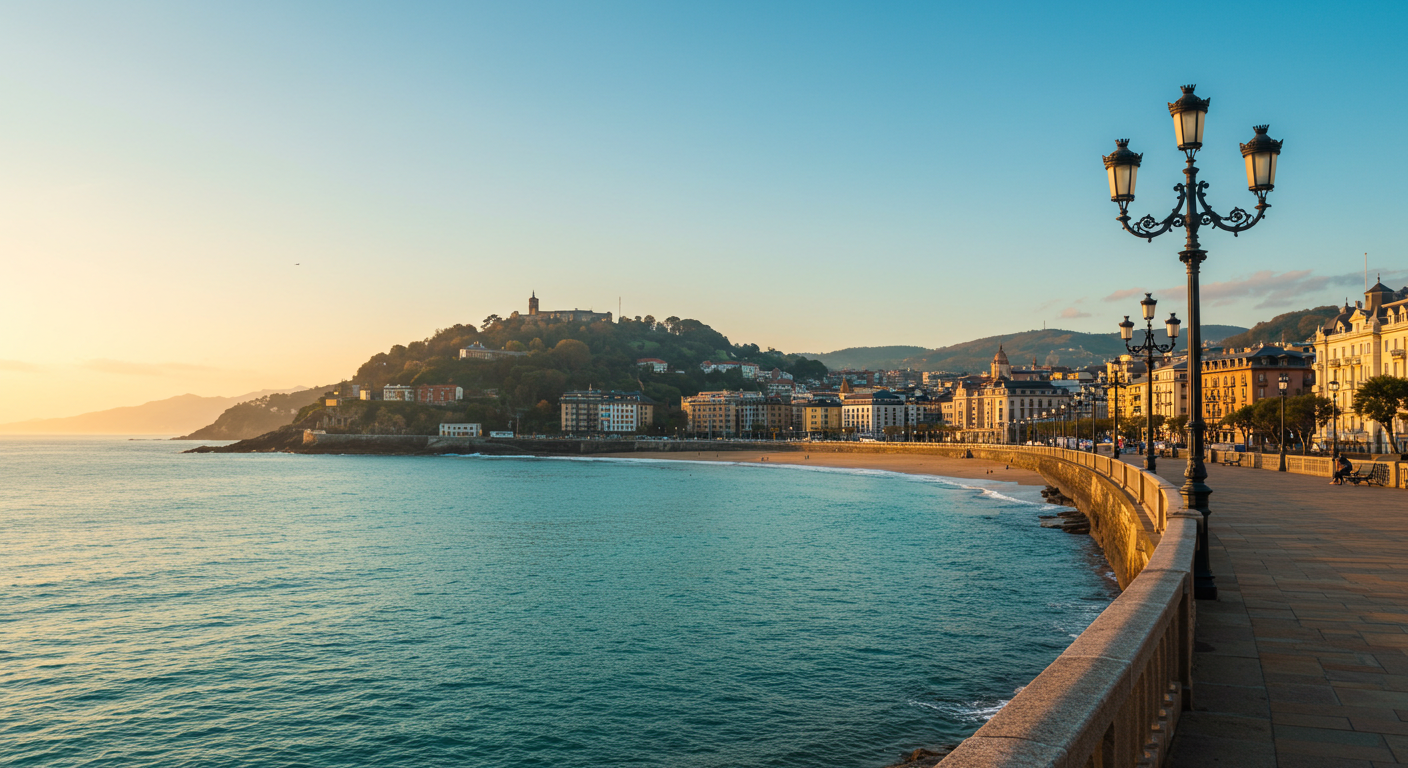
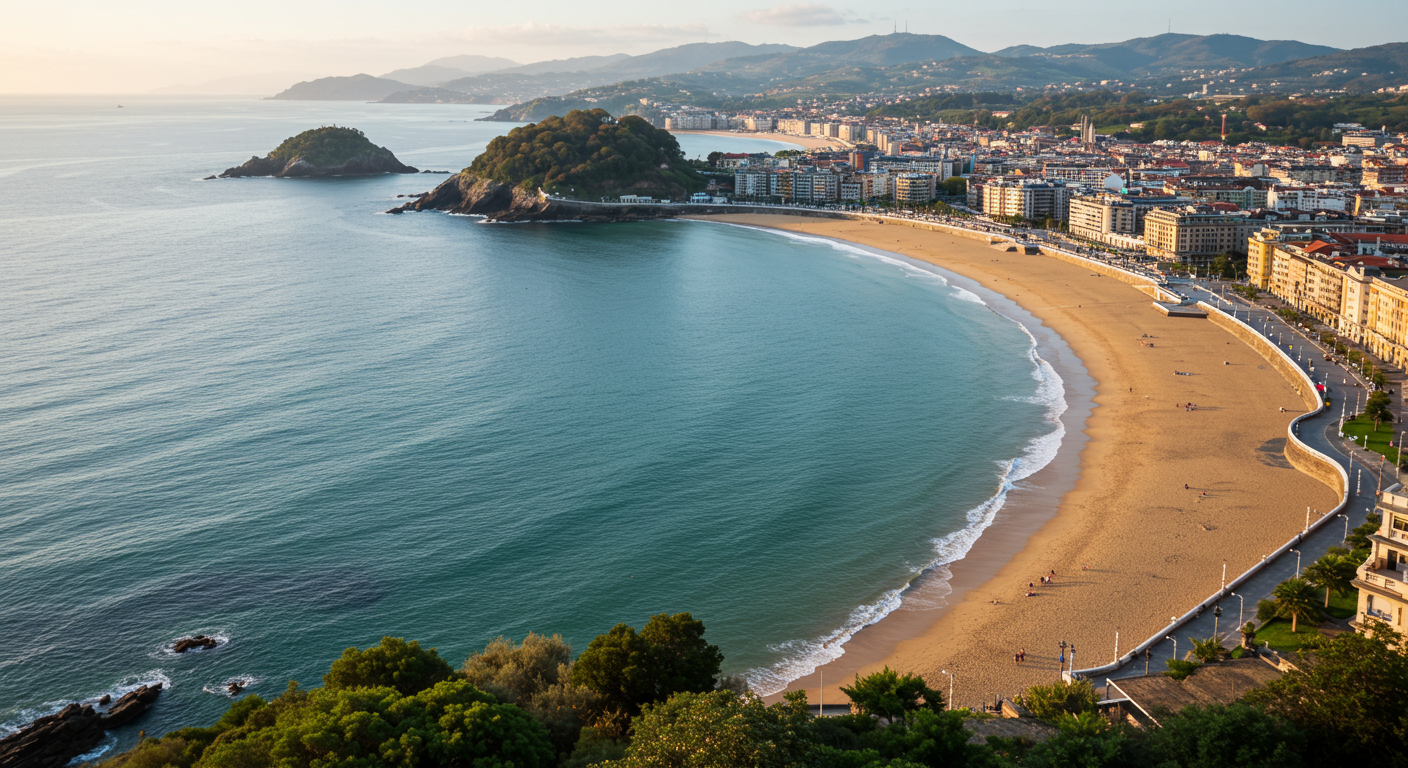
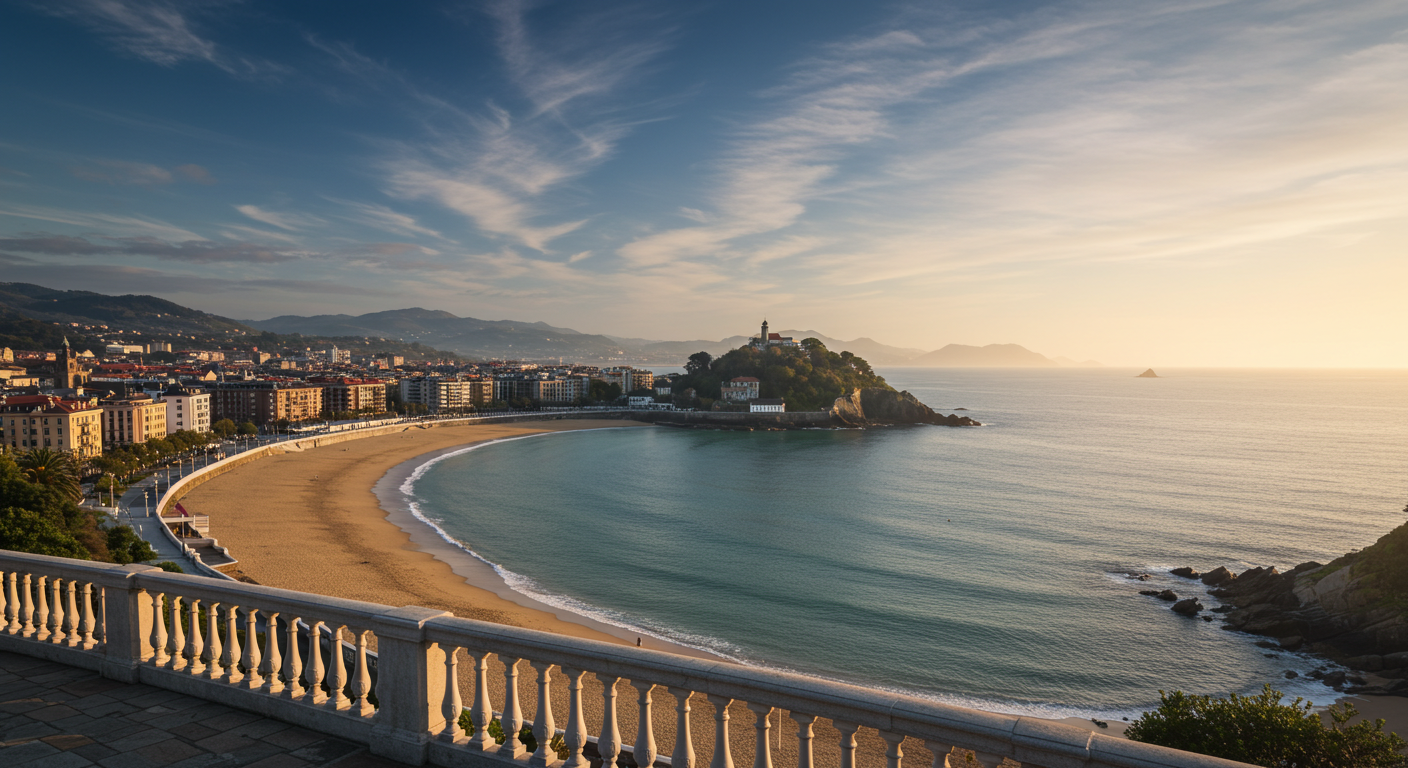
After the museum, walk out to La Concha. The beach curves in a near-perfect arc between two headlands, with the promenade — the Paseo de La Concha — running along its length. In summer it's packed by 11am. In October or November it's almost meditative, and the water is still swimmable if you're not too precious about it — the sea temperature around the north coast in autumn is worth knowing about before you pack. The Basque coast runs colder than the Med, typically 17–19°C in October, so it's doable but bracing.
Lunch should be a proper sit-down affair. Bar Nestor on Calle Pescadería does the most talked-about tortilla in the city — they make two a day, one at lunchtime, one in the evening, and you need to put your name down in the morning. Worth the effort. If you missed it, Gandarias on Calle 31 de Agosto is reliable and doesn't require a reservation for the bar area.
The afternoon is for the headlands. Walk east along the beach and up to Monte Urgull — the hill that sits above the old town and the port. There's a castle at the top (Castillo de la Mota, free to enter) and a huge statue of Christ that you either find moving or slightly absurd depending on your mood. The views over La Concha bay and across to the island of Santa Clara are worth the twenty-minute climb. It's not a hike; it's a walk. Comfortable shoes, not boots.
The pintxo crawl starts around 7:30pm. The drill: one or two pintxos per bar, a glass of txakoli (the local young white wine, poured from height to aerate it — they're not showing off, that's actually why), then move on. La Cuchara de San Telmo on Calle 31 de Agosto does more inventive, plated pintxos rather than the bread-topped classics — the foie with apple is the thing to order. Borda Berri nearby is tiny and gets rammed; the risotto de hongos and the carrillera (braised cheek) are both excellent. Don't eat dinner. This is dinner.
Day Two: Gros, Monte Igueldo, and a Proper Meal
Gros is the neighbourhood on the other side of the Urumea river, and most tourists barely go there. That's their loss. It has its own pintxo bar scene (Calle Zabaleta is the main drag), a surf beach — Zurriola — that's rougher and less postcard-perfect than La Concha, and a slower, more local feel. Spend the morning here. The Kursaal building, the twin glass cubes on the riverbank designed by Rafael Moneo, is worth seeing from the outside; it's one of the better pieces of late-twentieth-century architecture in the north.
After a coffee in Gros, take the bus or a taxi out to Monte Igueldo. The old funicular still runs (check seasonal hours — it sometimes closes on Tuesdays, and winter hours are reduced). At the top there's a slightly knackered amusement park that's been there since the 1910s, which you can ignore, and views that are categorically better than from Urgull — you see the full sweep of La Concha, the island, the city, and the coast stretching west toward Zarautz. Come on a clear morning. Afternoon haze can flatten it.
Back in the city by early afternoon, this is the day for a longer lunch if your budget allows. San Sebastián has more Michelin stars per capita than almost anywhere on earth — the figure is often cited as the highest density in Europe, though this should be double-checked against the current Michelin guide. Arzak (three stars, in the Alza neighbourhood, a short taxi ride out) is the famous one; you'll need to book weeks or months ahead and budget €250–300 per person for the tasting menu. Kokotxa in the old town (one star) is more accessible and often has shorter lead times. If Michelin isn't your thing — and it isn't for everyone — Bodegón Alejandro on Calle Fermín Calbetón does excellent traditional Basque cooking at roughly €40–60 for a full lunch with wine.
The afternoon after a long lunch is for wandering. The Aquarium on the port is genuinely good — the tunnel walkway under the main tank is impressive — and costs around €13 for adults (2026 prices; check their website). Or just walk the promenade again. San Sebastián is a city that rewards re-walking the same ground at different times of day.
If You Have a Third Day
Sleep in. This is the day the city reveals itself as somewhere people actually live rather than a backdrop for your itinerary.
The Cristina Enea park in the east of the city is lovely in the morning — formal gardens, a duck pond, old trees, almost no tourists. Then take the train (the narrow-gauge Euskotren, not Renfe) along the coast to Zarautz — it's about twenty minutes and costs a few euros each way. Zarautz has a long surf beach, a decent old town, and a handful of good pintxo bars. It's the kind of place that makes you understand why Basques don't feel the need to leave the Basque Country very often.
Alternatively, head to Hondarribia, a fortified medieval town at the mouth of the Bidasoa river on the French border — about forty minutes by bus from San Sebastián's Amara bus station. The upper town, with its fifteenth-century walls and colourful Basque houses, is quietly spectacular in a way that doesn't shout about itself.
Getting Around and Practical Notes
The city centre is entirely walkable. You will not need a car — and actually, if you're driving in from elsewhere in Spain, parking is a genuine headache; the underground car parks fill up and charge accordingly. Leave it outside the city if you can. For context on driving logistics in Spain more generally, this piece on using a foreign licence in Spain covers the basics.
The airport nearest is Bilbao (BIO), about an hour by bus. The Pesa bus runs directly and costs around €17–20 each way (as of 2026). San Sebastián does have its own small airport at Hondarribia, but scheduled services are limited — check what's running before you plan around it.
Weather: the Basque Country is the green, wet corner of Spain. It can rain any month of the year, and it frequently does. Pack accordingly. The upside is that the landscape is genuinely green and the rivers actually run, which feels exotic after time in Castile or Andalusia.
On budget: San Sebastián is expensive by Spanish standards. A pintxo at the bar is typically €2.50–4.50 each; a glass of txakoli €3–4. A mid-range dinner for two with wine runs €70–100 without trying very hard. It's not Madrid or Barcelona prices, but it's not Valencia either — if you want a sense of what a more affordable Spanish city looks like month to month, the Valencia cost of living breakdown gives a useful contrast.
If you're considering spending more time in the Basque Country — or Spain generally — and wondering about the practicalities of living here, the question of how well you can get by without Spanish in different cities is worth thinking about. Donostia is interesting: Basque (Euskara) is widely spoken and signage is bilingual, but Spanish works fine and English is more common in tourist areas than you might expect.
Three days in San Sebastián will feel like not quite enough. That's intentional — the city is designed, or has evolved, to make you want to come back. Book the return trip before you leave.
Frequently asked questions
- Is two days enough in San Sebastián?
- Two full days is the workable minimum — enough for the Parte Vieja, La Concha, Monte Urgull, and a proper pintxo crawl. But you'll feel slightly rushed and won't have time for Gros, Monte Igueldo, or a longer lunch. Three nights (giving you two complete days plus an arrival evening) is the honest recommendation for most people.
- What is the best area to stay in San Sebastián?
- The Parte Vieja (old town) puts you in the middle of the pintxo bars, but it can be noisy at night — especially on weekends. The Centro neighbourhood around the Buen Pastor cathedral is quieter and still very central. Gros is a good choice if you want a more local feel and don't mind a ten-minute walk to the old town.
- When is the best time to visit San Sebastián?
- June and September are the sweet spots — warm enough for the beach, less crowded than July and August, and the pintxo bars aren't overwhelmed. The Semana Grande festival in August is worth experiencing once but the city is absolutely rammed. January's Tamborrada drum festival (20 January) is genuinely special and the city is quiet and cheap around it.
- How do you do a pintxo crawl in San Sebastián properly?
- Start around 7:30–8pm. Pick two or three pintxos per bar, have one drink, then move on. Don't try to eat at one place — the whole point is the crawl. Stick to Calle Fermín Calbetón, Calle 31 de Agosto, and the streets around Plaza de la Constitución for the best concentration of bars. Avoid the tourist traps on the main square itself; the better spots are one street back.
- Can you swim at La Concha beach in San Sebastián?
- In summer, absolutely — La Concha is one of the finest city beaches in Europe. In autumn the water drops to around 17–18°C, which is cold but manageable for a short swim. The beach is sheltered by the bay so it's rarely rough. Zurriola in Gros is the surf beach and has stronger currents.
- Is San Sebastián worth visiting in winter?
- Yes, with adjusted expectations. The pintxo bars are full of locals rather than tourists, prices drop noticeably, and the city has a completely different atmosphere. Rain is likely. The beach is for walking, not swimming. The Tamborrada festival on 20 January is a genuinely good reason to time a winter trip.
- How do you get from Bilbao to San Sebastián?
- The easiest option is the ALSA or Pesa bus from Bilbao's Termibús station, which takes about an hour and fifteen minutes and costs around €7–10 each way (check current fares — they vary). The Renfe train also runs the route but takes longer and involves a change. Driving is straightforward on the AP-8 motorway but tolls add up.