Best Day Trips from Barcelona by Train: Montserrat, Sitges, Girona & Costa Brava
Montserrat, Sitges, Girona and the Costa Brava — the best day trips from Barcelona by train, with real times, prices and honest advice for 2026.
Four of the best day trips from Barcelona by train are Montserrat, Sitges, Girona, and the Costa Brava towns of Figueres and Calella de Palafrugell. All are reachable without a car, most cost under €20 return, and all four are genuinely worth doing — though not all in the same way or at the same time of year. Here's what I'd actually tell a friend.
Why Train Is the Right Call
Barcelona's road access to the coast and interior is fine until about July, at which point the AP-7 motorway becomes a car park on Fridays and Sundays. The train sidesteps all of that. Rodalies (the local commuter network) and Ferrocarrils de la Generalitat (FGC) cover Sitges and Montserrat respectively. Renfe's regional and high-speed trains handle Girona and the Costa Brava corridor. Tickets for all of these are bookable online, and the platforms at Sants and Passeig de Gràcia are well-signed in English.
One practical note if you're newer to Spain and still sorting your paperwork: none of these trips require residency or a Spanish bank card. A foreign Visa or Mastercard works fine on Renfe's website and at the machines. If you're at the stage of sorting things like your empadronamiento or TIE card, these trips make excellent weekend breathing room from admin.
Montserrat: Go for the Mountain, Not the Monastery
I'll be honest — the monastery itself is fine, but it's the reason the mountain gets overcrowded. The real reason to go is the rock. Montserrat's serrated limestone pinnacles are unlike anything else in Catalonia, and the hiking trails that fan out from the cable car station are largely empty once you get 20 minutes from the main terrace.
The route up to Sant Joan — about 45 minutes of moderate walking — rewards you with views that stretch to the Pyrenees on clear winter days. In summer, go early or go late. The 9:17am FGC train from Plaça Espanya (take the metro to Espanya station) gets you there before the tour buses arrive. Return tickets on the FGC to Monistrol de Montserrat cost around €11 as of 2026; add the rack railway or cable car (around €14–16 return) unless you fancy a steep road walk.
Skip the overpriced restaurant at the top. Pack a bocadillo and eat it on the Sant Joan ridge. You'll thank yourself.
Practical details: Journey time from Plaça Espanya is about 1 hour 15 minutes including the rack railway. The mountain gets cold fast — even in April, bring a layer. Last rack railway down is around 6:45pm in winter, later in summer; check the FGC website the week before because schedules shift seasonally.
Sitges: The Best Beach Day Without a Car
Sitges is 35 minutes from Barcelona Sants by Rodalies R2 Sud, costs roughly €4.60 return on a T-Casual card, and has 17 beaches along a 5km stretch. It also has a genuinely good old town — the Carrer del Pecat strip of bars, the Museu Cau Ferrat (a modernista artist's house perched over the sea), and the kind of seafront promenade that makes you remember why you moved here.
The beaches closest to the station are the busiest. Walk 10 minutes southwest past the church headland to Platja de Sant Sebastià and Platja dels Balmins — the latter is nudist, very calm, and far less packed. In late June or early July, the water is already warm enough to swim comfortably.
Sitges has a strong international and LGBTQ+ community and is noticeably more relaxed and cosmopolitan than many Catalan beach towns of similar size. Carnival here in February is one of the best in Spain — chaotic, colourful, and worth planning a visit around if you're based in Barcelona for the winter.
For lunch, avoid the seafront terrace restaurants on Passeig Marítim — they're tourist-priced and mediocre. Head one block inland. El Pou Cafè on Carrer de Sant Pau does a solid menú del día for around €13–15, which is good value for Sitges.
Girona: The Day Trip That Makes You Want to Move There
Girona is 38 minutes from Barcelona Sants on the AVE high-speed train (around €15–25 return depending on when you book — book early). On the slower regional Media Distancia it's 1 hour 20 minutes and considerably cheaper, around €10–12 return. Both are fine; it depends on your day.
The old city — the Call, the cathedral, the Barri Vell, the coloured houses along the Onyar — is one of the best-preserved medieval centres in Spain. The cathedral's single Gothic nave is the widest in the world, which sounds like a boring superlative but is actually genuinely impressive when you're standing inside it. The city was used as a filming location for Game of Thrones, but don't let that put you off; the crowds it brought have thinned out considerably.
The Passeig Arqueològic, the old city walls you can walk along above the rooftops, is free and takes about 30 minutes. Do it first, before it gets busy.
Girona has a serious food scene. El Celler de Can Roca — three Michelin stars, regularly ranked among the world's best restaurants — is here, though you'll need to join a waiting list months in advance if you want to eat there. More realistically, the market (Mercat del Lleó, on Plaça Calvet i Rubalcaba) is excellent on weekday mornings, and there are several good pintxos bars in the new town near the station. Siddharta on Carrer de la Cort Reial does a menú del día that's a cut above.
If you're considering Girona as a base — and plenty of Barcelona expats have made exactly that move, lured by lower rents and a 38-minute commute — the practical side of it is worth thinking about. Sorting things like renting without a Spanish payslip or understanding what bank account options you have as a non-resident are the real friction points, not the commute.
The Costa Brava: Pick Your Town Carefully
The Costa Brava is a long stretch of coastline north of Barcelona, and the quality varies enormously. Some of it — Lloret de Mar, Blanes — is package-holiday territory, crowded and charmless. Other parts are spectacular. The trick is knowing which train gets you where.
Figueres is on the main Renfe line to France, about 55 minutes from Sants on the regional train (around €12–15 return). The Dalí Theatre-Museum here is one of the strangest and most entertaining art museums in Europe — Dalí designed it himself as his own tomb and final work, and it shows. Queues can be long in summer; book tickets online in advance at salvador-dali.org. The town itself is unremarkable, but the museum alone justifies the trip.
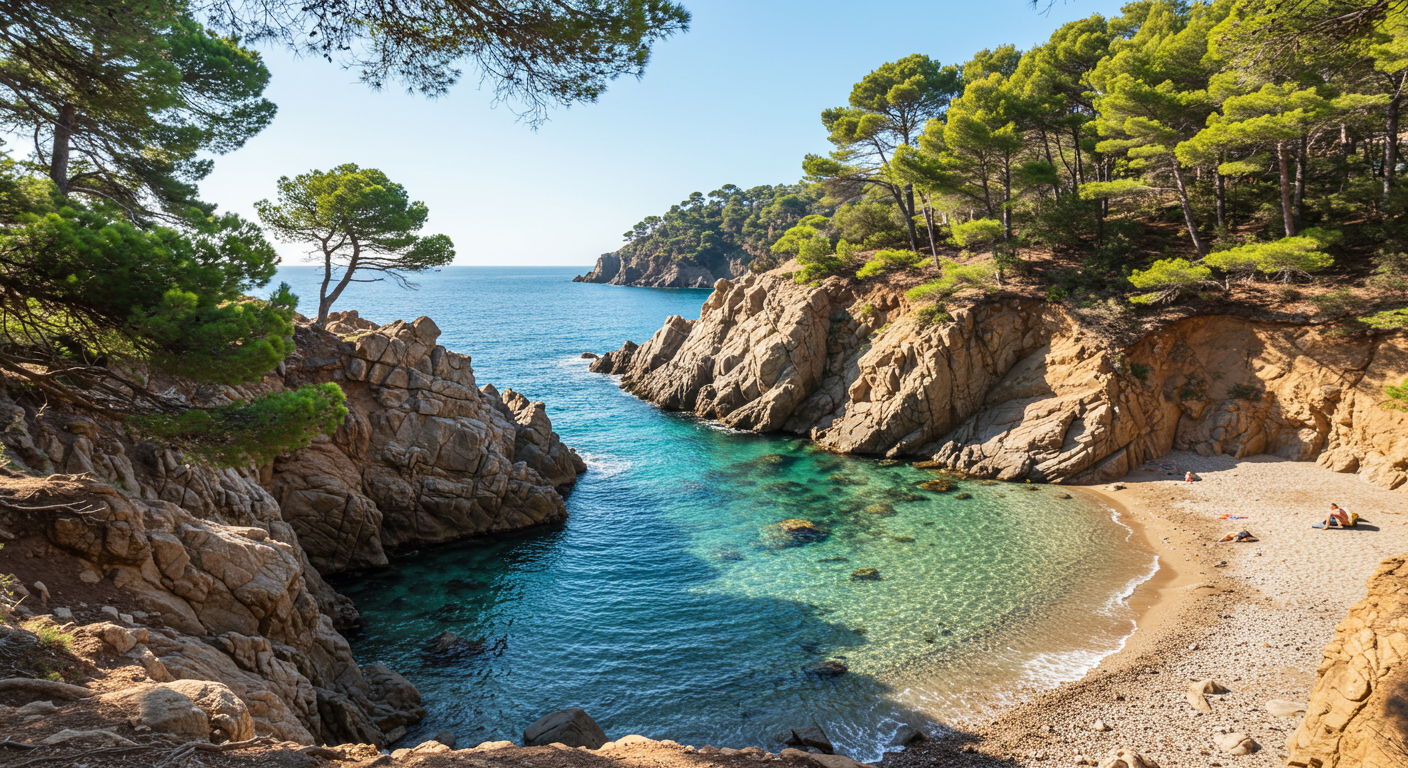
Calella de Palafrugell, Llafranc, and Tamariu — the southern Costa Brava coves — require a bit more effort but are the payoff. Train to Girona or Flaçà, then a bus (the SARFA company runs seasonal services). From Barcelona, total journey time is 2 to 2.5 hours. These are not easy day trips, and in high summer the buses fill up. But the calas here — small rocky coves with pine trees down to the water, genuinely clear water — are among the best on the Mediterranean coast. Go in late May, early June, or September. July and August, the roads and buses are rammed.
Cadaqués is the prettiest town on the Costa Brava, full stop. White houses, a beautiful bay, the Cap de Creus headland nearby. It's also the hardest to reach without a car: train to Figueres, then a SARFA bus that runs a few times a day. Allow 2.5 hours each way and check the last bus back before you leave Barcelona. It's doable as a day trip but only just. Some people find it more rewarding as an overnight.
The Best Day Trip from Barcelona by Train: A Blunt Ranking
If someone asked me to rank them honestly:
- Girona — most rewarding, best food, genuinely lovely city. Go any time of year.
- Sitges — easiest, cheapest, best for a beach day. April to October.
- Montserrat — best scenery, requires the most physical effort to get the most from it. Avoid August weekends.
- Figueres/Dalí — essential if you haven't been, but it's a single-attraction day.
- Cadaqués — the most beautiful, the most logistically annoying. Worth it if you plan ahead.
A Few Things Nobody Tells You
The Rodalies trains have a reputation for delays, particularly on the R2 line to Sitges. Give yourself buffer time on the return if you have dinner plans in Barcelona. The FGC to Montserrat is generally reliable.
Sunday afternoon return trains from Sitges in summer are packed — standing room only sometimes. If you're day-tripping with kids or heavy bags, aim for a 5pm or 6pm return rather than waiting until after dinner.
Most of these towns have luggage storage options near the station (Consigna services, or Bounce/Stasher network lockers), which matters if you're coming from or going to the airport on the same day.
And if you're thinking about what it would actually look like to base yourself in Catalonia longer-term — working remotely, sorting your digital nomad visa or just understanding the bureaucratic side of things — these trips give you a good feel for which towns have the infrastructure for daily life and which are purely seasonal.
Girona has everything. Cadaqués does not. That's not a criticism of Cadaqués — it's part of the charm.
Frequently asked questions
- How much does a day trip from Barcelona to Montserrat cost by train in 2026?
- The FGC train from Plaça Espanya to Monistrol de Montserrat costs around €11 return. The rack railway (cremallera) or cable car from Monistrol to the monastery adds roughly €14–16 return. Budget around €25–30 all in, excluding food.
- Which is the best day trip from Barcelona for a beach day without a car?
- Sitges is the clear answer. It's 35 minutes from Barcelona Sants on the Rodalies R2 Sud, costs under €5 return on a T-Casual card, and has 17 beaches plus a good old town. Go mid-week in June or September for the best experience.
- How do you get from Barcelona to Girona by train, and how long does it take?
- On the AVE high-speed train from Barcelona Sants, Girona takes 38 minutes and costs €15–25 return depending on when you book. The slower regional Media Distancia takes about 1 hour 20 minutes and costs €10–12. Both depart from Sants and arrive at Girona station, a 10-minute walk from the old city.
- Is Cadaqués reachable from Barcelona without a car?
- Yes, but it requires planning. Take a Renfe train to Figueres (about 55 minutes from Sants), then a SARFA bus to Cadaqués — which runs a handful of times a day and takes around 1 hour. Total journey time is 2.5 hours each way. Check the last bus back to Figueres before you leave Barcelona, as missing it means a taxi or staying overnight.
- When is the best time of year for day trips to the Costa Brava from Barcelona?
- Late May, June, and September are the sweet spot — the sea is warm enough to swim, the crowds are manageable, and the buses run reliably. July and August are peak season: the calas are beautiful but transport is rammed, prices go up, and accommodation in coastal towns fills months in advance.
- Do you need to book Montserrat train tickets in advance?
- You don't need to book FGC trains in advance — they run frequently and you can buy at the machine. However, the rack railway (cremallera) can have queues in summer, and the Dalí Museum in Figueres absolutely requires advance booking in July and August. For Montserrat specifically, arriving before 10am avoids the worst of the crowds.
- Can you do Girona and Figueres in the same day from Barcelona?
- Technically yes, but it's rushed. Figueres is about 25 minutes north of Girona by regional train. If you spend 2–3 hours in Girona in the morning and take the train to Figueres for the Dalí Museum in the afternoon, you can be back in Barcelona by 8–9pm. It's a long day and you won't do either place justice. Better to pick one.