Where to Eat Cocido Madrileño and Madrid's Classic Tabernas
The best places to eat cocido madrileño, callos, and old Madrid dishes in the city's classic tabernas — with honest picks, prices, and what to skip.
Where to Eat Cocido Madrileño in Madrid's Classic Tabernas
The best place to eat cocido madrileño in Madrid is La Bola, on Calle de la Bola near the Palacio Real — it's been cooking the same pot since 1870 and still fires its cocidos individually in ceramic vessels over carbon, not gas. If you want one definitive answer, that's it. But the fuller picture is more interesting, because cocido madrileño is only one dish in a whole repertoire of old Madrid cooking that is genuinely worth tracking down — and the tabernas that serve it are, collectively, among the best arguments for living in this city.
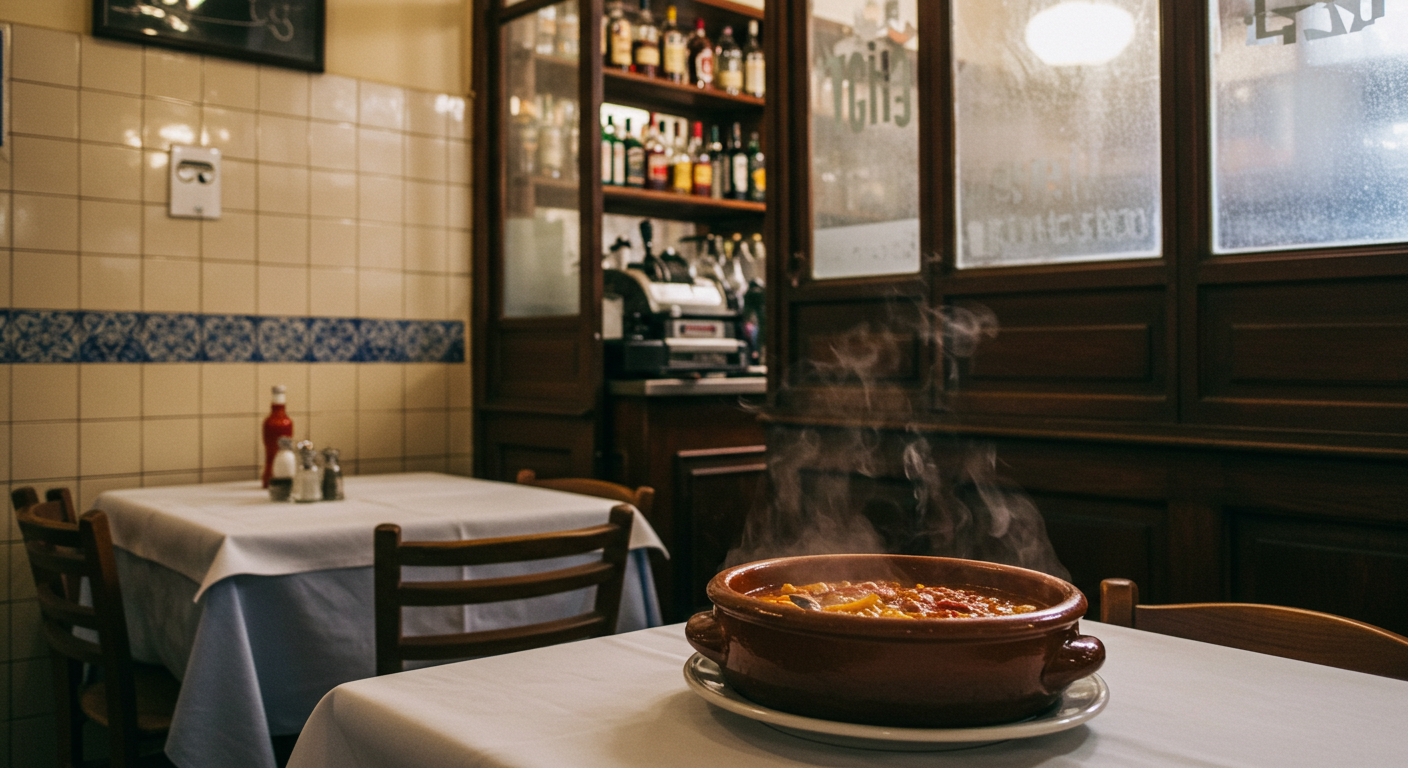
Madrid's classic tabernas are the old-fashioned tavern-restaurants that have been feeding the city since the nineteenth century, sometimes earlier. Tiled walls, dark wood, a bar up front, a dining room behind. They do lunch, they do it properly, and they generally close or go quiet in the evenings because the regulars — pensioners, civil servants, lawyers from the nearby courts — have gone home. If you show up at 2:15 on a Tuesday, you will eat better and cheaper than almost anywhere else in western Europe.
Cocido Madrileño: What It Actually Is
Cocido is a three-course chickpea stew served in reverse order of cooking — which means you eat the broth first (as a soup with fideos, thin pasta), then the chickpeas and vegetables, then the meat. The meat course is the reason people come back: morcillo (beef shin), chorizo, morcilla, tocino (salt pork belly), sometimes a chicken wing or two, occasionally a bone marrow so good you want to embarrass yourself in public.
It takes hours to make properly, which is why most places only serve it at lunch, usually Thursday or Friday, and often only by booking ahead. This is not a dish you can spontaneously order on a Wednesday at 1pm and expect to get the real thing. Plan accordingly.
A full cocido madrileño at a serious taberna will cost you somewhere between €18 and €28 per person as of 2026, depending on the place and whether wine is included. It is filling enough that you will not need dinner.
La Bola: The Standard-Bearer
La Bola Taberna on Calle de la Bola 5 is the most famous, and famously it deserves to be. The individual ceramic pot cooking method is not a gimmick — it produces a more intense, slightly caramelised broth that you do not get from a communal vat. The room is small and ancient and the service is brusque in the way that means they are busy and serious, not rude. Book a week in advance for weekends; a day or two is usually fine for a weekday lunch.
One caveat: it is not cheap. The cocido here runs to around €28 per person before drinks, and the wine list is not the point. Go for the food, drink the house red, and don't expect to rush.
Malacatín: The Neighbourhood Choice
Malacatín on Calle de la Ruda 5, in La Latina, is where madrileños who are not performing for tourists tend to go. It has been open since 1895. The room is tiled and loud and the cocido is served family-style — the pot comes to the table and you serve yourself. The broth arrives first in a separate tureen. It costs a few euros less than La Bola and the atmosphere is livelier.
This is a Thursday institution. Come Thursday, or don't bother asking about cocido. Book ahead by phone — they are not especially active on online reservation platforms.
Lhardy: History You Can Eat In
Lhardy on Carrera de San Jerónimo 8 is something else entirely. Opened in 1839, it is the oldest restaurant in Madrid still in its original location, and the ground floor is a delicatessen and tea room where you can drink consommé from a silver samovar standing at the bar — which is one of the more civilised things you can do in this city on a cold December afternoon. Upstairs is the formal restaurant, where the cocido is served on Thursdays and Fridays.
Lhardy is more expensive and more formal than the others. It is also genuinely beautiful — the mirrors, the dark wood, the Belle Époque fittings. If you are the kind of person who finds that the room matters as much as the food, it is worth the premium. If you just want the best cocido per euro, go to Malacatín.
Callos a la Madrileña: The Other Classic
Callos — tripe stewed with chorizo, morcilla, and smoked paprika — is the other dish that defines old Madrid cooking. It is polarising. If you like offal, properly made callos are rich and deeply flavoured and absolutely the right thing to eat on a grey November day. If you don't like offal, nothing will persuade you, and that's fine.
The best callos in Madrid are not at a famous address. They are at Casa Amadeo on Plaza de Cascorro 18, in the Rastro area. This tiny bar has been serving callos since 1942 and the recipe has not changed. It is a standing-at-the-bar situation — there are a few small tables but they fill immediately — and a ración costs around €8 to €10. They also do a good oreja (pig's ear), if you want to commit fully to the experience.
Another reliable address for callos is Taberna de la Daniela on Calle del General Pardiñas 21, in the Salamanca neighbourhood. Daniela is better known for its cocido (they serve it every day, which is unusual) but the callos are solid and the room is more comfortable if you want to sit down properly.
Other Old Dishes Worth Seeking Out
Calamares a la romana in Madrid is not what you get at the beach. The bocadillo de calamares — a crusty roll stuffed with fried squid rings — is a specifically madrileño institution, eaten at the bars around Plaza Mayor at any hour of the day. The best ones cost around €3 to €4 and the squid should be crispy, not chewy. Bar La Campana on Calle de Botoneras 6, just off Plaza Mayor, is the traditional address, though the area has been tourist-heavy for years and quality varies. Cervecería Museo del Jamón on Carrera de San Jerónimo also does a respectable version and is less of a scrum.
Sopa de ajo — garlic soup with bread, egg, and paprika — is on the menu at almost every old taberna and is chronically underordered by people who go straight for the cocido. Try it once. It is warming, cheap (around €5), and tastes like someone's grandmother made it, which in many cases is not far from the truth.
Bacalao a la vizcaína (salt cod in a dried pepper and onion sauce) appears on the menus of older Madrid restaurants as a holdover from the days when fresh fish was expensive and unreliable inland. Casa Ciriaco on Calle Mayor 84, which has been open since 1917, does a good version.
The Tabernas Worth Knowing by Neighbourhood
For La Latina and the old centre, Taberna de Antonio Sánchez on Calle del Mesón de Paredes 13 is the most atmospheric option — bull's head on the wall, sawdust on the floor in the old days (less so now), and a wine list that leans heavily on Valdepañas. It dates from 1830 and somehow does not feel like a museum piece.
In Chueca and Malasaña, the taberna tradition is thinner, but Bodega de la Ardosa on Calle de Colón 13 in Chueca is worth knowing for vermouth at the bar and a decent montadito selection. It is not a lunch restaurant in the classic sense but it is genuinely old (opened 1892) and genuinely not performing.
Near the Retiro, Taberna Pedraza on Calle Ibiza 40 is newer in spirit but does excellent old Madrid dishes — particularly the stewed meats — and is consistently good without the pilgrimage-site atmosphere of the more famous places.
Practical Notes for Eating Like This
Lunch is 2pm to 4pm. If you arrive at 1:30 you will be early; if you arrive at 3:45 you may be turned away. Kitchens close, seriously, and the Spanish do not eat lunch at noon.
Book ahead for cocido specifically. Most places require a reservation and some require a minimum number of diners. La Bola wants at least two people; some places ask for four. Check before you go.
The menú del día — a fixed-price lunch of two courses, bread, and a drink — is available at most tabernas and costs between €12 and €16 at the places mentioned here, as of 2026. It is not always cocido or callos; those are usually à la carte or a specific day. But the menú del día at a serious taberna is one of the better-value meals in Europe.
Cash is increasingly less necessary but some of the older places still prefer it for small bills. Have a card; have some cash anyway.
If you have just arrived in Madrid and are still sorting out the administrative side of things — finding somewhere to live, getting registered — you might find it useful to read about renting in Spain without a Spanish payslip, since landlords in Madrid can be particularly demanding about guarantees. Getting your empadronamiento sorted early also matters, and it is worth knowing that it does not always require a formal rental contract.
Once you have a base, the taberna circuit is one of the things that makes Madrid feel like a city worth staying in. The food is not fashionable. It is not photographed well. It is very good.
Frequently asked questions
- What day is cocido madrileño traditionally served in Madrid?
- Most classic tabernas serve cocido madrileño on Thursdays, and sometimes Fridays. A few places — notably Taberna de la Daniela — serve it every day, but Thursday is the traditional day and the day you'll find the most authentic versions at places like Malacatín. Always book ahead regardless of the day.
- How much does cocido madrileño cost in Madrid in 2026?
- Expect to pay between €18 and €28 per person for a full cocido madrileño at a classic taberna, before drinks. La Bola is at the higher end (around €28); Malacatín comes in slightly cheaper. The price typically includes all three courses — broth, vegetables and chickpeas, and the meat platter.
- Is La Bola really the best cocido in Madrid?
- La Bola is the most famous and its individual ceramic pot method genuinely produces a different (and excellent) broth. But 'best' is subjective — Malacatín has loyal regulars who prefer its family-style serving and livelier atmosphere. Both are worth trying at least once. La Bola is more of an occasion; Malacatín feels more like how madrileños actually eat.
- Where can I eat callos a la madrileña in Madrid?
- Casa Amadeo on Plaza de Cascorro 18 in the Rastro area is the most respected address for callos — it's been serving them since 1942. Taberna de la Daniela in Salamanca is another reliable option if you want to sit down in more comfort. Most classic tabernas in the city centre will have callos on the menu, but quality varies considerably.
- What is a bocadillo de calamares and where should I eat one in Madrid?
- A bocadillo de calamares is a crusty bread roll filled with fried squid rings — a Madrid street food staple, especially around Plaza Mayor. Bar La Campana on Calle de Botoneras 6 is the traditional address, though the area is touristy. Expect to pay around €3–€4 for a decent one. They're eaten at any time of day, including mid-morning.
- Do I need to book ahead at Madrid's classic tabernas?
- For cocido specifically, yes — almost always. Some places require a minimum of two or four diners and will not serve it without a reservation. For the menú del día or other dishes, you can often walk in, but popular tabernas fill quickly after 2pm on weekdays and are very busy on Sundays. A quick phone call the day before is rarely wasted.
- Are Madrid's traditional tabernas good for vegetarians?
- Honestly, not really. Cocido, callos, and most of the classic dishes are heavily meat-based. Some tabernas will do a vegetable-only version of cocido if asked, but it's not the point of the dish and not all places will accommodate it. If you're vegetarian, the menú del día at a taberna might offer a fish option but the old Madrid cooking tradition is built around chickpeas cooked with pork. Best to manage expectations.