Best Casas Rurales in Spain for a Slow Countryside Escape
The best rural hotels and casas rurales in Spain for a slow countryside escape — from Galician stone farmhouses to Andalusian cortijos. Real picks, real prices.
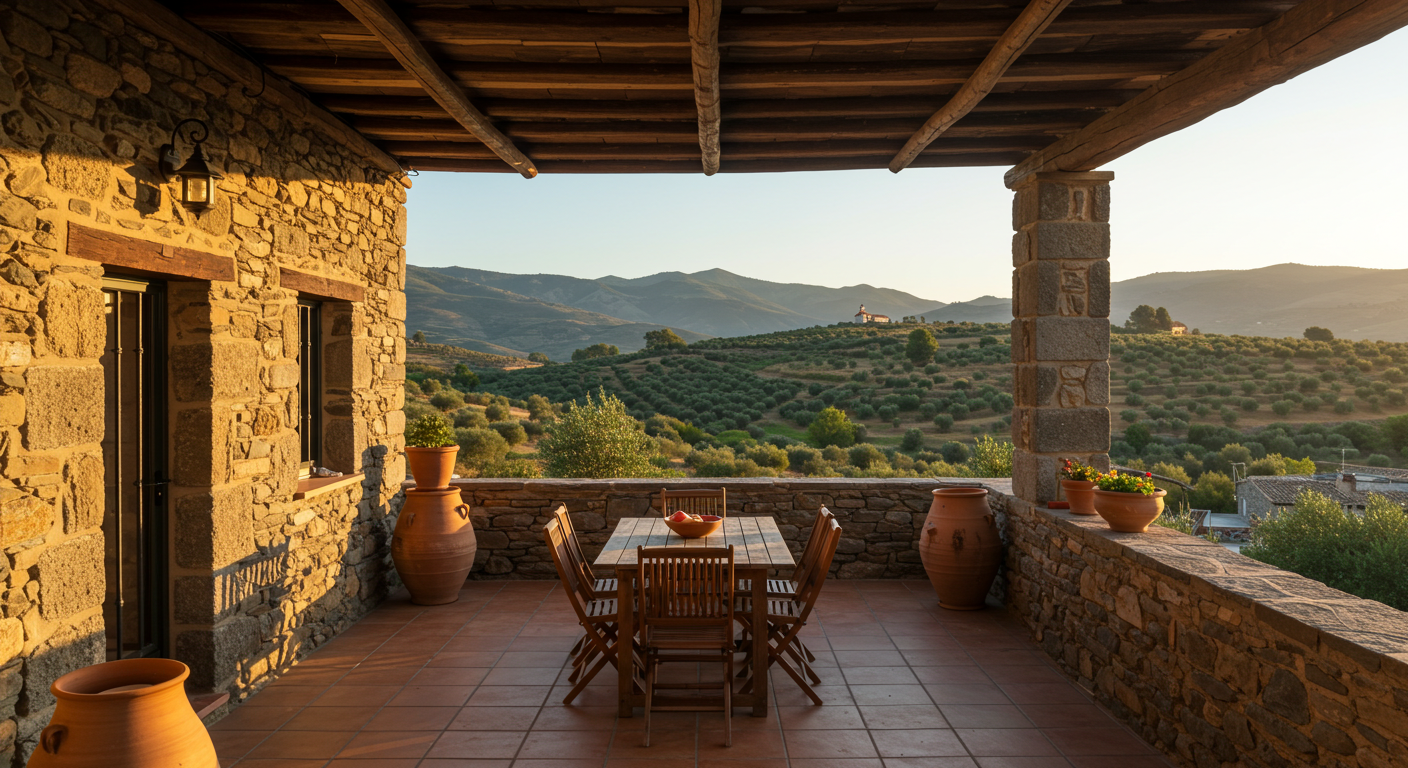
Spain has more registered casas rurales than almost any country in Europe — somewhere north of 15,000, though the exact figure shifts year to year as places open, close, or quietly stop renewing their licences. The point is: there is no shortage of options. What there is a shortage of is good ones. The kind where the sheets smell clean, the owner leaves a bottle of local wine on the kitchen table, and the nearest noise at night is a dog barking three valleys over.
The best rural hotels in Spain for slow travel tend to share a few things: they're small (under twelve rooms, often under six), they sit in landscapes that reward doing nothing in particular, and they're run by people who actually chose to be there. That last part matters more than any TripAdvisor rating.
Below are the regions and specific places worth your time — along with a few I'd skip.
What 'Slow Travel' Actually Means in a Spanish Rural Context
It's not a marketing term here, or at least it shouldn't be. In practice, it means arriving somewhere for three nights minimum, eating lunch at 2pm because that's when the kitchen opens, and learning the difference between the two local olive oils. It means not driving anywhere on day two. Spain's rural interior is extraordinarily good at this — partly because the infrastructure for rushing around doesn't really exist. The bus comes twice a day, if at all.
The casas rurales that work best for this kind of trip are the ones with a kitchen or a trusted nearby restaurant, outdoor space that earns its keep in all weathers, and owners who know the walking routes without having to Google them.
Galicia: The Green Quarter Nobody Talks About Enough
The northwest corner of Spain is wet, dramatic, and deeply underrated. The Ribeira Sacra — the steep river canyon country inland from Ourense — is one of the most quietly extraordinary landscapes in the country. Terraced vineyards drop to the Sil river, the villages are made of granite, and the handful of rural places to stay feel genuinely removed from the rest of the world.
Pazo de Galegos near the Sil canyon area is a restored pazos (Galician manor house) that offers the full package: stone walls a metre thick, a working vegetable garden, and breakfasts built around local cheese and honey. Rates run roughly €90–€140 per night for a double as of 2026, depending on season — not cheap by rural standards, but a pazo is a pazo.
If you want to go simpler and cheaper, look at the network of turismo rural properties around the Camino Primitivo, the oldest Camino route from Oviedo to Santiago. These are mostly family-run, €50–€80 a night, and you don't need to be walking the Camino to use them. Some of the best are near Lugo, which also happens to have the finest intact Roman walls in Spain and a food scene that punches well above its size.
One caveat: Galician weather is not Andalusian weather. Pack accordingly, and check that your chosen property has central heating if you're going in October or November. Some older stone buildings are beautiful and freezing.
Andalusia: Cortijos, Olive Groves, and the Sierra Nevada Foothills
Everyone knows Andalusia means sun and whitewashed villages. What fewer people plan for is that the interior — particularly the Alpujarras, the area of steep valleys on the southern flank of the Sierra Nevada — offers something quite different from the Costa del Sol. Villages like Bubión, Capileira, and Trevélez sit above 1,400 metres and have a North African architectural character left over from the Moorish period. Walking between them on the old caminos takes a morning and costs nothing.
La Almería de los Caños and similar small cortijo conversions in this area offer stone-built rooms with wood-burning stoves, terraces with views across to Africa on a clear day, and host-cooked dinners that are worth staying in for. Expect to pay €80–€130 for a double including breakfast. Many require a minimum two-night stay at weekends, which is fair enough.
Further west, the Serranía de Ronda — the hill country around Ronda itself — is another reliable area. Ronda the town has become quite touristy (the bridge views are real, the restaurants on the main drag less so), but ten kilometres out of town you're in genuine farming country. There are a handful of converted farmhouses here that rent as whole properties — ideal for a group of four to six — at €200–€350 per night for the whole place. Spain Rural and Rusticae both list them, and the quality control on Rusticae in particular is decent.
In the Axarquía, the crinkled hill country east of Málaga, you'll find cheaper options and fewer English-speaking visitors. The villages around Cómpeta and Canillas de Albaida are worth investigating. It's also worth knowing that if you're considering making a longer stay of it — renting rather than staying in a hotel — renting in Spain without a Spanish payslip is genuinely possible, even in rural areas, though landlords outside cities can be more conservative about what paperwork they'll accept.
Catalonia: The Pyrenean Foothills and the Volcanic Garrotxa
The Garrotxa, in the province of Girona, is built on ancient volcanic craters — forty-odd of them — now thickly forested and laced with walking paths. It's one of those places that looks better in person than in photographs, which is unusual. The main town, Olot, is functional rather than pretty, but the countryside around it is extraordinary.
Can Jou near Sant Pau de Segúries is the kind of rural hotel that gets recommended quietly, person to person. It's a converted masia (Catalan farmhouse) with a genuinely good restaurant attached — the kitchen uses produce from the garden and from local farms, and the cooking is Catalan without being performatively so. Rooms run €110–€160. Book well ahead in spring and autumn.
Further north in the Pyrenees, the Val d'Aran has some of the most attractive mountain scenery in Spain and a handful of proper rural hotels that don't rely on ski-season visitors to stay afloat. Look around the villages east of Vielha — Salardú, Tredòs — for smaller, owner-run places. The Aranese language (a variant of Occitan, still spoken here) is one of those details that makes you feel properly somewhere.
One note for anyone thinking about making this a longer base: Catalonia is popular enough that the bureaucracy of settling in is worth understanding before you arrive. Things like getting your empadronamiento sorted are easier in cities, but rural town halls are often perfectly helpful if you speak some Spanish.
Castilla y León: The Meseta, Properly Done
Most people drive across the central meseta with the cruise control on and the windows up. This is a mistake. The Arribes del Duero — the deep gorge country on the Portuguese border, west of Salamanca — is one of the most undervisited landscapes in the country. Eagles, wildflowers in spring, and almost nobody else.
The rural accommodation here is basic by the standards of the Alpujarras or the Garrotxa, but it's also very cheap. Small family-run casas rurales in villages like Fermoselle or Villarino de los Aires charge €45–€70 for a double room. The owners usually cook dinner if you ask, and it will be lentil stew or roast lamb and it will be exactly right.
The Picos de Europa, technically split between Cantabria, Asturias, and Castilla y León, is more visited but still manageable outside July and August. The village of Sotres — reached by a road that requires concentration — sits at 1,000 metres and has a couple of small rural hotels that are genuinely remote. Walking from here into the Cares Gorge is one of the great day walks of Spain.
Extremadura: The Slowest Region of All
Extremadura has no coastline, no major city that draws international tourism, and approximately the right number of visitors. The dehesa landscape — cork oaks and holm oaks scattered across rolling grassland, with black pigs and red kites and not much else — is unlike anywhere else in Europe.
La Cañada Real and similar rural properties near Trujillo or Cáceres offer the full Extremaduran experience: silence, excellent jamón ibérico from pigs that lived well, and skies dark enough for proper stargazing. Some of these places have started marketing themselves to slow-travel audiences, which means the quality of the welcome has improved even as the prices remain modest — €65–€100 for a double is typical.
Jertes Valley, north of Cáceres, is worth a separate mention. In late March the cherry trees blossom across the whole valley simultaneously, and it's genuinely spectacular without being overrun. Rural properties here book out weeks in advance in blossom season, so plan early.
How to Book Casas Rurales in Spain: A Few Practical Notes
Rusticae is the most reliable curated platform — they actually visit properties before listing them. Toprural covers more volume but with less quality control. Booking.com has many casas rurales on it now, which is convenient, but the smaller places often prefer direct booking and will sometimes offer a small discount if you call or email.
Many rural properties in Spain have minimum stays (two nights on weekends, three nights in high season), and cancellation policies can be strict — some require full payment upfront for short stays. Read the small print. If the property is listed only in Spanish and the owner speaks only Spanish, that's usually a good sign rather than a deterrent.
For anyone considering a longer rural stint — a month or more working remotely from the countryside — it's worth thinking about the practical side before you go. The Spanish digital nomad visa has specific income requirements that are worth understanding if you're planning to stay legally for an extended period, and rural areas can have patchy internet, so ask specifically about connection speeds before committing.
The best casas rurales in Spain reward the guest who arrives without a packed itinerary and leaves with a list of things they want to come back and do. That's not a bad definition of a successful trip.
Frequently asked questions
- What is the difference between a casa rural and a rural hotel in Spain?
- A casa rural is typically a private house or farmhouse rented out to guests, often as a whole property or with a handful of rooms. The term is regulated by each autonomous community, so standards vary. A rural hotel (hotel rural) follows standard hotel regulations and tends to be larger, with a reception desk and more services. In practice, the best slow-travel experiences often come from casas rurales, where the owner is present and the experience is more personal.
- How much does a casa rural in Spain cost per night in 2026?
- Prices vary widely by region and quality. In Extremadura or inland Castilla y León, a double room in a family-run casa rural can be as low as €45–€70 per night. In Andalusia's Alpujarras or Catalonia's Garrotxa, expect €80–€160 for a well-converted property. Whole-property rentals for groups of four to six people run €180–€400 per night depending on season and facilities.
- Which region of Spain is best for a slow rural escape?
- It depends on what landscape you want. For dramatic river canyons and green hills: the Ribeira Sacra in Galicia. For Moorish mountain villages and hiking: the Alpujarras in Andalusia. For volcanic forests and good food: the Garrotxa in Catalonia. For absolute quiet and dehesa landscapes: Extremadura. All of them reward staying put for at least three nights.
- Can you stay in a casa rural in Spain without speaking Spanish?
- In tourist-facing areas, yes — many owners speak English or French. In more remote rural areas (parts of Extremadura, inland Galicia, the Arribes del Duero), English is less common. A few basic phrases in Spanish go a long way, and Google Translate handles the rest. The language barrier is rarely a dealbreaker, and owners in very rural spots are often more welcoming precisely because foreign visitors are unusual.
- What is the best time of year to visit rural Spain?
- Spring (late March to May) and autumn (September to November) are the sweet spots almost everywhere. Summer is fine in the north (Galicia, Cantabria, the Pyrenees) but brutally hot in Extremadura, Castilla, and Andalusia's interior. Winter can be beautiful in the south but cold and wet in the northwest. Cherry blossom season in the Jerte Valley (late March) and wildflower season in Extremadura (April) are specific highlights worth timing a trip around.
- Are casas rurales in Spain suitable for working remotely?
- Some are, some definitely aren't. Fibre broadband has reached a surprising number of rural villages in Spain, but coverage is patchy. Always ask the owner specifically about internet speed before booking — 'tenemos WiFi' can mean anything from 50 Mbps fibre to a 4G hotspot that drops signal when it rains. If remote work is the priority, look for properties that specifically mention 'fibra óptica' in their listing.
- How do I find and book the best casas rurales in Spain?
- Rusticae is the most curated platform — they inspect properties before listing them, so the quality floor is higher. Toprural has more volume across all regions. For the cheapest and most local options, search '[region name] turismo rural' on Spanish Google and book directly with the property. Booking direct often saves 5–10% and means your booking is less likely to get quietly deprioritised during busy periods.