Asturian Cider Sidrerías: What to Eat, Drink and Know
What to eat in an Asturian sidrería, how the escanciado pour works, and which dishes to order. A real guide to cider culture in Asturias.
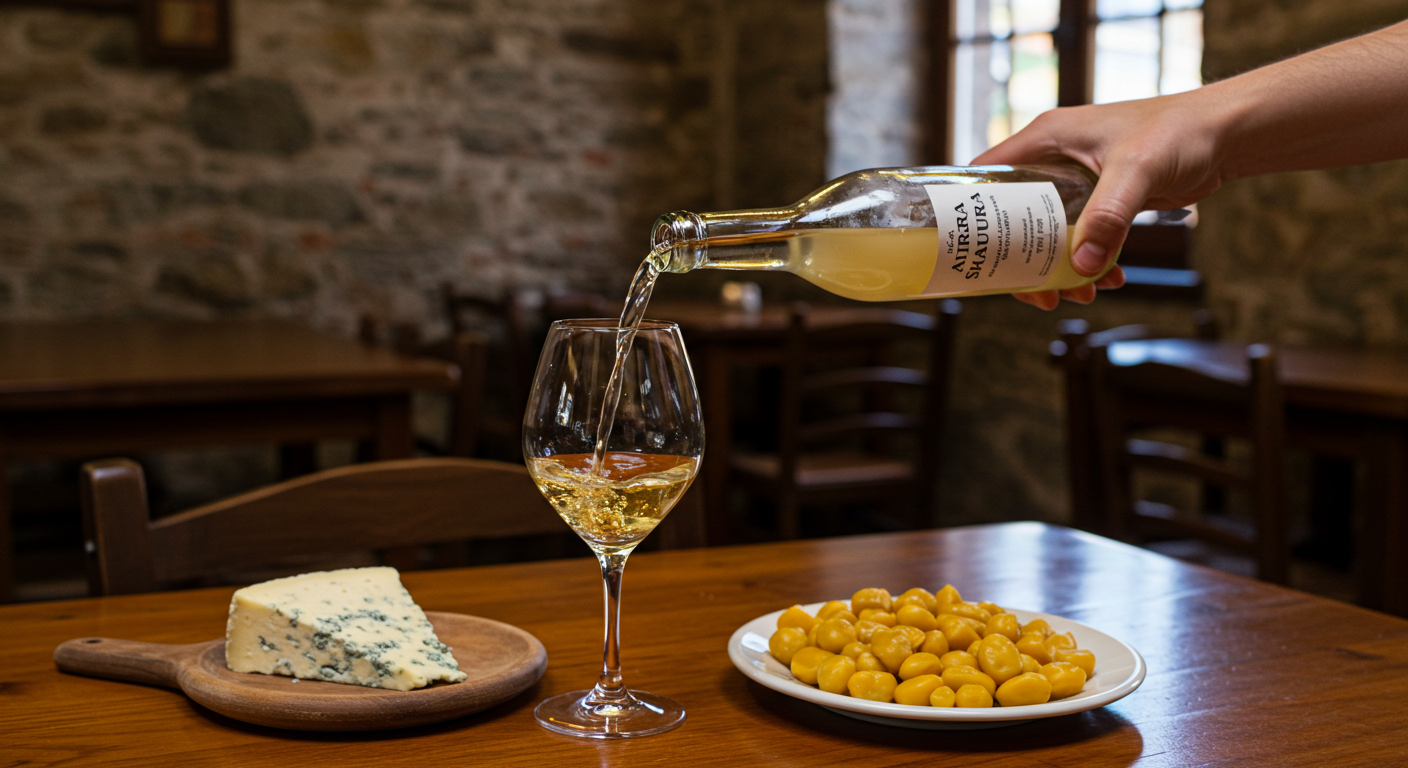
What to Eat in an Asturian Sidrería (And How to Drink the Cider)
The first time someone pours cider from a metre above their head and hands you a glass with two fingers of cloudy liquid in the bottom, you assume it's theatre. It isn't. The escanciado — that high, arcing pour — is functional: it aerates the cider, gives it a brief fizz, and you are expected to drink it immediately, in one go, leaving a small splash at the bottom to rinse the glass. Then you wait for the next pour. This is how Asturias drinks, and once you've spent a few hours in a proper sidrería doing exactly this, everything else about the region starts to make sense.
If you're planning a visit and wondering what to eat in an Asturian sidrería, here's the short answer: cachopo, fabada, and a wedge of Cabrales cheese are the backbone of the menu. Order at least one of the first two, and do not skip the cheese. Everything else — the grilled chops, the morcilla, the tortilla — is supporting cast, and good supporting cast at that. Now for the full picture.
The Cider Itself: What You're Actually Drinking
Asturian sidra natural is nothing like the sweet, carbonated stuff sold in British supermarkets. It's dry, slightly funky, low-alcohol (typically around 5–6% ABV), and made from dozens of local apple varieties — reineta, raxao, durona de Tresali — that you won't find anywhere else. It tastes tart, faintly tannic, occasionally a little barn-y in the best possible way. If you're expecting Magners, recalibrate entirely.
The cider comes in 70cl bottles, usually shared between two or three people, and the waiter (or you, once you've watched enough times) pours small amounts repeatedly throughout the meal. The glass is a wide, short tumbler — a culín. You don't top it up like wine. Each pour is fresh. The ritual slows the meal down in a way that's actually pleasant once you stop fighting it.
Most sidrerías charge somewhere between €3 and €4.50 per bottle as of 2026, though prices vary by establishment and whether you're in Oviedo's old town or a roadside lagar outside Villaviciosa. The lagar — the cider house attached to a working press — is generally cheaper and more atmospheric, though you'll need a car to reach most of them.
The Escanciado: How the Pour Actually Works
You hold the bottle straight up above your head in one hand, the glass low in the other, angled slightly. The cider falls in a thin stream, hits the inside of the glass, and splashes into a brief foam. The point is oxygenation, not showing off — though it does look good.
In a sidrería, the waiter does this for you. In a lagar or at a festival, you're expected to have a go yourself. Most people spill a fair amount the first time. The floor of a traditional sidrería is often bare stone or tile for exactly this reason, and nobody cares. Don't try to pour into a full glass; the culín should never be more than a third full.
If you're the kind of person who plans to actually live in Spain rather than just visit, you'll find cider culture is one of those things — like the pace of bureaucracy — that rewards patience and punishes hurry. Speaking of bureaucracy: if you're in the middle of sorting your residency paperwork while travelling through the north, the article on healthcare in Spain before your TIE arrives is worth a read before you set off.
What to Eat: The Sidrería Menu, Dish by Dish
Cachopo
This is the one. Two thin escalopes of veal, battered and fried, with ham and cheese melted inside. A good cachopo is the size of a small laptop and arrives golden, crisp, and slightly absurd. A bad one is greasy and flavourless, and you'll find both in equal measure depending on where you eat.
The best I've had was at a sidrería on the edge of Gijón — no name on the door worth mentioning, just a hand-painted sign — where they used local Asturian cheese rather than generic processed slices. Prices for cachopo tend to run €16–€24 depending on size and quality. Some places do half-portions. If they don't offer one, ask — you'll sometimes get lucky.
Skip any sidrería that has cachopo on a laminated photo menu near the door. That's a tourist trap version. The real ones write it on a chalkboard or just tell you what they have.
Fabada Asturiana
Fabada is a slow-cooked white bean stew with morcilla (blood sausage), chorizo, and lacón (cured pork shoulder). It's one of the great dishes of Spanish cooking, and Asturias makes it better than anywhere else — partly because the fabes de la granja (the local large white beans) have a texture that tinned beans cannot replicate.
Order it as a starter and share it. It's heavy. A full bowl for one person, followed by cachopo, is only advisable if you're planning a two-hour walk afterwards, which, given that you're in Asturias, is entirely possible.
Fabada is typically €10–€16 for a generous serving. Some places serve it only at lunch; call ahead if you're going for dinner.
Cabrales Cheese
Cabrales is a blue cheese made in the mountains of eastern Asturias, aged in limestone caves, and it is properly aggressive — more so than Roquefort, more pungent than Gorgonzola. It arrives on a wooden board with a knife. You eat it with cider. That's it.
A plate of Cabrales is usually €6–€9. Don't order it if you're squeamish about strong cheese; do order it if you're not. There's a milder local alternative called Gamonéu if you want something in the same family but less confrontational.
Chuleta and Grilled Meats
Many sidrerías double as asadores — grill houses. The chuleta de buey (ox chop) and the chuletón de ternera (veal rib) are often excellent, cooked over wood or charcoal, served rare unless you specify otherwise. Prices vary wildly: €20–€40 is realistic depending on weight and provenance.
The morcilla asturiana — softer and less spiced than its Burgos cousin — is worth ordering as a tapa if it's on offer. So is the tortilla de patatas, which in a good sidrería comes thick, slightly runny in the middle, and made with local eggs that are noticeably more orange than the supermarket variety.
What to Skip
The mixed seafood platters at inland sidrerías are usually mediocre — the coast is where you want fish. If you're near Avilés, Luanco, or Ribadesella, eat seafood there. At a sidrería in Oviedo or the rural interior, stick to meat, cheese, and fabada.
Also skip the bottled wine at most sidrerías. It's not what they do. If you genuinely don't like cider, ask for agua con gas and enjoy the food without the drink — nobody will judge you.
Where to Go: Sidrerías Worth Seeking Out
Oviedo has the highest concentration of sidrerías per square metre of anywhere in Spain. The Calle Gascona — known locally as the Boulevard de la Sidra — is the obvious starting point, and it's genuinely good despite being well-known. El Ferroviario, La Fábrica, and several unmarked neighbours have been serving the same menu for decades.
Gijón's Cimadevilla neighbourhood (the old fishing quarter) has a cluster of sidrerías that are slightly less polished but often more interesting. The Mercado del Sur area also has a few worth finding.
For a lagar experience — cider direct from the barrel, eaten at rough wooden tables, in a building that smells of fermented apple — head towards Nava, which calls itself the cider capital of Asturias and hosts an annual cider festival in late August. The surrounding villages have working lagares that welcome visitors, especially at weekends.
Cider Season and Festivals
Asturian cider is made in autumn and ready by January or February. The new vintage — sidra nueva — arrives in January and is celebrated with something approaching religious fervour. If you're there in January or February, sidrerías will have chalkboard signs announcing the nueva, and it's worth trying alongside an older bottle to taste the difference.
The Fiesta de la Sidra Natural in Gijón (usually late August) involves competitive escanciado, outdoor drinking, and a general atmosphere of cheerful excess. It's free to attend, easy to navigate, and one of the more genuinely local festivals in northern Spain.
Practical Notes for Visitors
Sidrerías keep Spanish hours — lunch from 1:30pm to 4pm, dinner from 9pm onwards — but many also open as bars from mid-morning, serving cider by the glass with a pincho. If you arrive at 7pm expecting dinner, you'll be turned away or seated at an empty restaurant with a bored waiter. Come at 2pm or 9:30pm.
Reservations are sensible on Friday and Saturday evenings, especially in Oviedo. Many sidrerías don't take online bookings — call, or just turn up early.
If you're planning a longer stay in the north and working through the practicalities of living in Spain — banking, residency, that sort of thing — the guide to opening a Spanish bank account as a non-resident is a useful companion read. And if you're considering the slower, more settled kind of travel that lets you actually eat your way through a region properly, the piece on the Spanish Digital Nomad Visa covers whether the income threshold makes it viable.
One last thing: bring cash. Some of the best sidrerías, particularly the rural lagares, don't take cards. €50 in your pocket is sensible. The ATMs in small Asturian towns are there, but not always where you'd expect them.
Asturias rewards slow travel more than almost anywhere else in Spain. The cider culture is part of that — it's built around sitting down, eating well, and not rushing anywhere. Go with that, and you'll eat some of the best food in the country.
Frequently asked questions
- What should I order at an Asturian sidrería if I've never been before?
- Start with fabada asturiana (the white bean stew) to share, then cachopo (the breaded veal escalope with ham and cheese) as a main. Add a plate of Cabrales cheese and you have the essential sidrería meal. Wash it all down with bottles of sidra natural poured in the traditional high-arc style.
- How does the escanciado pour work and do I have to drink it all at once?
- Yes, essentially. The cider is poured from height into a wide glass, and you drink the small measure (a culín) immediately to get the brief fizz before it goes flat. You leave a tiny splash at the bottom to rinse the glass before the next pour. The waiter refills repeatedly throughout the meal.
- Is Asturian cider the same as British or Irish cider?
- No — it's completely different. Sidra natural is dry, cloudy, low-carbonation, and slightly funky in flavour, made from local Asturian apple varieties. It has none of the sweetness of mainstream commercial cider. If you're used to Bulmers or Kopparberg, expect a significant adjustment.
- How much does a meal in an Asturian sidrería cost in 2026?
- Budget roughly €25–€40 per person including cider, depending on what you order. A bottle of cider is €3–€4.50, cachopo runs €16–€24, and fabada is typically €10–€16. Rural lagares tend to be cheaper than city-centre sidrerías in Oviedo or Gijón.
- When is the best time of year to visit Asturias for cider?
- Any time of year works, but January–February brings the sidra nueva (new vintage), which is a particular event in itself. Late August in Gijón coincides with the Fiesta de la Sidra Natural. Avoid August if you hate crowds — Asturias is extremely popular with Spanish holidaymakers in summer.
- Can I visit a working lagar (cider press) in Asturias?
- Yes. The area around Nava is the most accessible, with several lagares open to visitors, especially at weekends. Some offer tastings and sell bottles to take away. Call ahead or check local tourism websites — opening times are irregular and some close without notice.
- Do Asturian sidrerías take card payments?
- City sidrerías in Oviedo and Gijón generally do. Rural lagares frequently don't. It's worth carrying €40–€60 in cash if you're planning to eat outside the main towns.